The Beach

Santa Cruz

The ocean doesn’t factor much in my memories. If anything, it was a trickster. When I was a child in Hawaii, it would lull me with its disarmingly benign surface, warm and inviting, only to upend me with a sudden swell that turned my world upside down. I emerged gasping and chastened, salt water filling my throat and churning in my stomach. When we crossed the ocean, I looked out from our ocean liner in fear, aware that our vessel was no more than flotsam in the unending sea that stretched from one vista to the other.

This is different.

We spent New Year’s eve and morning with two families we have known since we were young invincibles. Before kids. Back then we sat in tight huddles (the women), punched each other’s shoulders (the men), sat on laps (the couples), drank too much and stayed up late. The talk was salty, silly and sometimes serious. If we talked of the past, it was about our childhoods, our relationships with our siblings, mothers and fathers. If we talked of the future, it drifted toward where we would travel, the possibility of jobs and whether our children would like one another. Through years of three-day weekends spent together, one belly after another swelled with pregnancy. We carried the future in front of us.

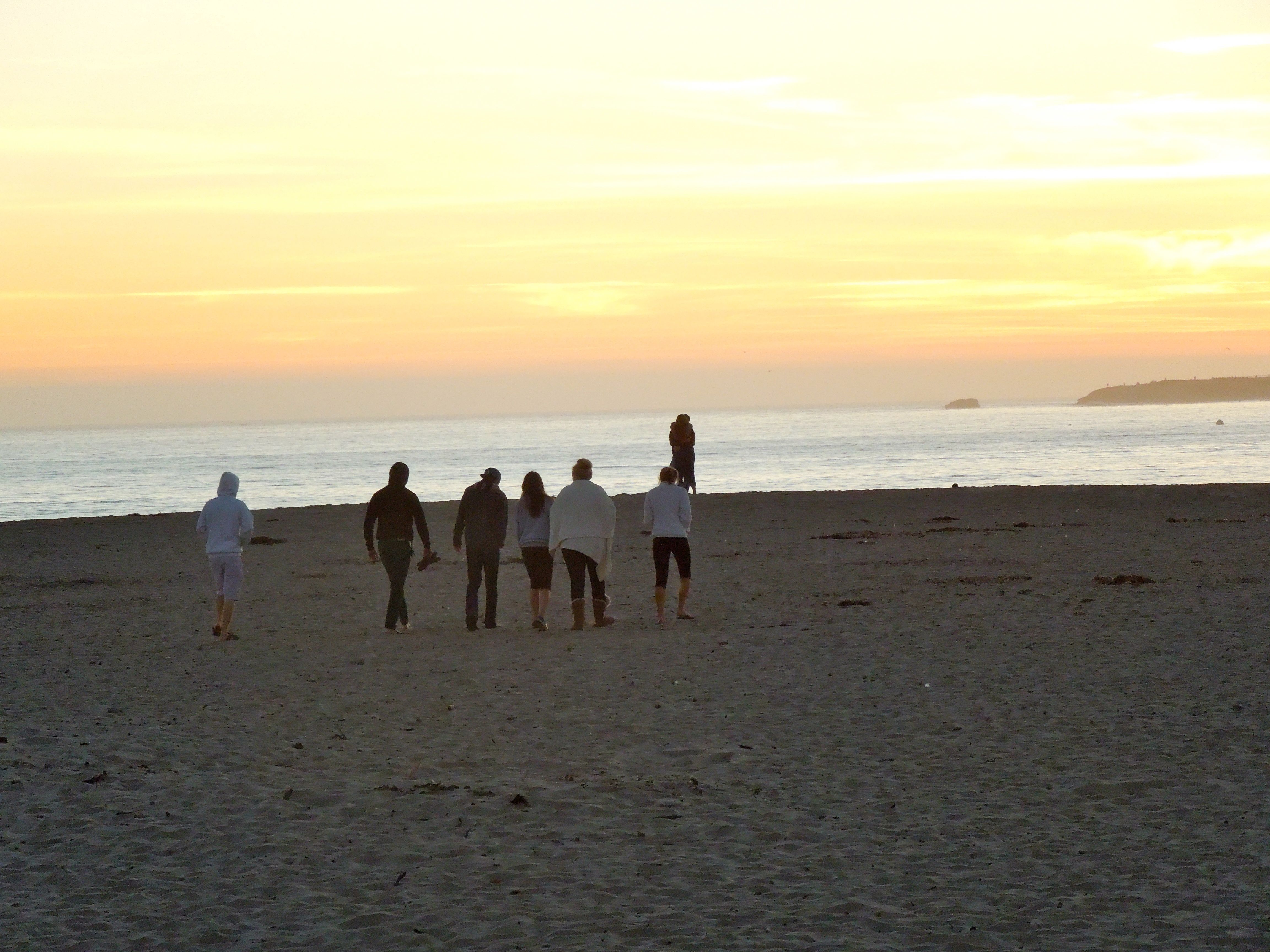
Three girls and three boys we had between us. For a time, when the kids were small enough to curl up in sleeping bags on the floor, we crammed into a house together. A house on the beach. We hiked through the cut in the dunes down to the blustery shore where the kids would run up and down, chased by the waves, laughing. I see us adults clustered on the shore, bathed in orange light, watching contentedly. At night, the children dropped into exhausted sleep to adult chatter punctuated with regular bursts of laughter.

Pulled by the demands of jobs and families, we reformed in occasional twos and fours — girls’ weekends, and less often, guys’ weekends. Dinner with two families. Our gatherings became more infrequent.

We planned to gather on December 22 for a long-anticipated reunion, all twelve of us, at the instigation of our young adult children. But instead of twelve, we were eleven. Debbie — Debbie the Loyal, Debbie the Connector, Debbie the Loving — Debbie was suddenly and irrevocably gone forever. A hole had been punched in our universe.

We gathered again on New Year’s Eve in Santa Cruz. Eleven, not twelve. As we walked on the beach, listened to our kids riffing on guitar, poured the wine, gathered over dinner, played a raunchy game, and finally watched 2013 turn into 2014, I kept thinking, “Debbie would have loved this.”

And this: “Where two or three are gathered in my name.” Jesus understood the power of community as a way to bring Him present.

When we gather, I do not feel a void where Debbie should be. I feel her presence. But I ache that she is just beyond my reach, beyond the thin veil that separates her world from ours, that I cannot tell her how much I love her and miss her.

It is our last full day at the beach. My children, now grown, are sleeping downstairs. The ocean laps nearby, seagulls cry and sea lions bark. Of all of us, Debbie loved the beach. I think of this as where Debbie lives now, watching the surfers stream like otters toward the horizon where the swells are biggest, grinning at the children who delight in their wet sand creations, turning to me with love. She is smiling at all of us.

I look for the words that fail me, and find this:
Something there is,
(With my lips soothing thee, adding I whisper,
I give thee the first suggestion, the problem and indirection,)
Something there is more immortal even than the stars,
(Many the burials, many the days and nights, passing away,)
Something that shall endure longer even than lustrous Jupiter
Longer than sun or any revolving satellite,
Or the radiant sisters the Pleiades.
 
From “On the Beach at Night” by Walt Whitman

2 Comments

Filed under Uncategorized

Love Three Times Over

When my husband asked me to marry him thirty-two years ago, I’d have said yes right away, if I hadn’t missed the proposal.

That Christmas afternoon, I was downstairs, watching TV in my bathrobe, happy for a day off work. The gifting was over, I’d helped Mom get the turkey in the oven, and I was well and properly sated from our big holiday breakfast.

“Bets!” Mom yelled from the top of the stairs, “You should get dressed!”

“Why?” I asked her.

“Your brothers are coming!”

My brothers were not a good reason to vacate my cozy spot by the fire. I could have cared less if my brothers thought I had fallen to ruin.

A little while later, I heard a commotion by the front door, a very quiet commotion. Now a “quiet commotion” may seem like an oxymoron but it’s the only way I can describe it. The doorbell rang, my mother walked rapidly from the kitchen across the entry hall slate floor, and there was a quick squeak of greeting followed immediately by silence. Usually you’d hear greetings exchanged and conversation. The soundproofing between floors wasn’t great and my mother was by no means quiet.

The door at the top of the stairs opened and someone proceeded down the steps, the third from the bottom squeaking as always (left hand side, a dead give away if you were trying to sneak in or out). I leaned to the side of the recliner so I could see who was arriving.

My boyfriend, Todd, was smiling at me from the foot of the stairs. My heart performed a little pirouette and I jumped out of the chair and into his arms. He was supposed to be to be at his folks’ house in Sacramento.

We’d been dating for thirteen months, the last four long distance, while I tried to get a foothold in my chosen career by taking the second opportunity to come my way, an advertising agency in Los Angeles. The first I’d been offered after sending out seventy-five resumes: a plum job in the marketing department of a regional food manufacturer. In New Orleans. Todd had comforted me on the beach in Tahoe while I cried, weighing my decision. Taking that job would most likely lead to the end of “us.” It was just too far — too expensive — to sustain a long-distance relationship.

Commuting to see each other between Los Angeles and Sacramento had proven hard enough. We reserved cheap midnight seats from LAX to Oakland on Trans World Airlines. Back in the day, you could snag cheap seats without paying for them in advance. But even at fifty dollars or so a trip, we could only afford to see each other every three weeks or so.

Just seeing Todd thrilled me. Seeing him for Christmas was even better.

After dinner was over and we’d spent hours talking, it was finally time for bed. Mom directed Todd to sleep in my brother Dean’s former room below the kitchen. My room was on the far side of the recreation room. After long, luxurious kisses goodnight, I followed the house rules and retired to my own bedroom. On my pillow was a final gift, along with an envelope.

I opened the small square package to find a picture of the two of us taken a few weeks prior. We sat smiling beneath Todd’s mother’s flower pots on her front porch. The envelope turned out to contain airline tickets for two to Hawaii.

I ran back to his room and jumped on the bed, thanking him with kisses. We were going to Hawaii!

“Well?” Todd asked.

“Well, what?”

“Well, will you?”

“Will I what?”

“Did you read the back of the picture?”

The blank look on my face was his answer. “Go read the back! And look at the tickets!”

I returned to my room and flipped over the picture. There, on the back, was a proposal. For marriage. And the tickets were made out for Mr. and Mrs. Todd Stone.

My heart thundered. I was thrilled and terrified. This was not my plan. I was a product of the late 70s, when women were told they could have it all. I was fully subscribed to the idea that I would pursue my career full tilt and not have children until I was 35. First I would live my life. Marrying Todd would mean leaving my job and moving to Sacramento. I couldn’t see being a long-distance newlywed.

If I said “not yet” to Todd, I knew he would understand but the moment would be lost, deflated.

I returned to his room, where he waited impatiently. I said yes. We stayed up for hours, taking it in, talking (and not talking). We were engaged. Just like that. The planner’s plan foiled, a new life born.

But that’s not the end of the story. The next scene is what I thought of when I first awakened this morning.

That December 26 was my parents’ fortieth anniversary. Just before dinner that evening, Todd and I asked my mother and father to join us in the dining room. They stopped their preparations for a small cocktail gathering of friends — Mom was finishing some “pupus” and Dad was setting up the bar, fishing liquor bottles out of the small hutch that served as his liquor cabinet.

They broke into smiles when they saw my grandmother’s gold rimmed slipper champagne glasses. “We wanted to toast your anniversary,” Todd began. He popped the cork and filled our glasses. Tiny bubbles danced upward.

All four of us lifted our glasses in unison. Todd interrupted, “And I wanted to ask for your daughter’s hand in marriage.”

That had been part of our discussion in the early morning hours. Should he “ask for my hand” or announce our engagement? We followed tradition.

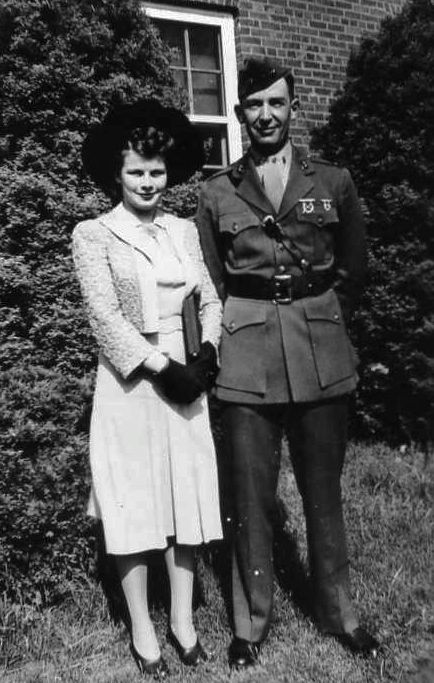
Forty years before, Mom and Dad had found a minister to marry them the day after Christmas, while Dad was given twelve hours leave for that purpose. It was nineteen days after Pearl Harbor. More attacks on American soil were expected. A submarine could sail right up the Potomoc and attack the nation’s capital. Granting leave for purposes of getting married was not part of the drill in Quantico.

Getting married wasn’t part of Dad’s plan, either.

After Pearl Harbor, Mom had cabled Dad that she was taking the next train east, to be married. Knowing the mortality rate of Marine Corps second lieutenants in war, he didn’t want her to be widowed and therefore had avoided settling on marriage, but it didn’t surprise him that she had ignored his objections and declared victory.

Today is a triple anniversary. Today would have been Mom and Dad’s sixty-second anniversary. Today marks the thirty-second anniversary of my engagement. And today is the first December 26 when neither Mom nor Dad are here to mark the date.

None of those anniversaries are forgotten.

Leave a comment

Filed under Uncategorized

The Year-Agos

Figgy Pudding 2012

I started writing this post yesterday, and then I received an email from my brother Bruce about how he was brought up short when he reviewed his holiday card database and realized he would not be sending a card to Dad this year.

Little static-electricity jolts triggered by seemingly meaningless moments constantly zap you the first year after losing someone. Last year, addressing holiday cards was a necessary but unremarkable task. This year, it’s a reminder.

A year ago Friday night, December 6, I dined with two girlfriends friends in Seattle and strolled the Figgy Pudding outdoor caroling event snugly bundled up in matching winter white hats, mufflers and gloves. I felt full of holiday spirit, braced by the cold air, a little buzzed from the cocktails we shared over dinner. I never suspected that Dad’s decline had already begun.

My brother Scott, who was caring for Dad at my house, called the next morning to say that Dad was unable to urinate and in extreme pain. What should he do? At the doctor’s urging, he took Dad to urgent care where they removed over one liter of urine.

When I returned to Sacramento that afternoon, Dad was significantly weaker. He’d had a recent bout of extreme shortness of breath and then pulled a muscle. With the bladder problem, there was no question of him returning back to his assisted living community. By Tuesday, he was in extreme pain again, unable to urinate. He was sent home from the ER with a catheter that we hoped would come out after a week.

I was frantic. The catheter gave him a sensation that felt like urinary urgency, so he tried to rise every 15 minutes or so. If he was not watched at night, he would attempt to get up for the bathroom and fall. 

Ten days later, he stopped being able to walk.

My world had transformed from light to dark. From an evening lit by sparkling decorations, cheeks blushing pink from the cold, lilting carols soaring in harmony, I sat by my father’s bedside, worrying.

Instead of making me sad, that turning point reminds me that a year ago, Dad was still here. A year ago, I had every reason to expect he would recover from this latest health setback. A year ago, I knew Dad would feel better when the winter lifted and spring bloomed again.

Today I leave Seattle, headed for home again. The house is already decorated. Dad’s room will be orderly and quiet. When I walk in the house, I will remember that it was the beginning of Dad’s final decline. The hard part is over. He is worth remembering, worth loving and worth every moment spent comforting him.

Leave a comment

Filed under Uncategorized

An Address Served by Prayer

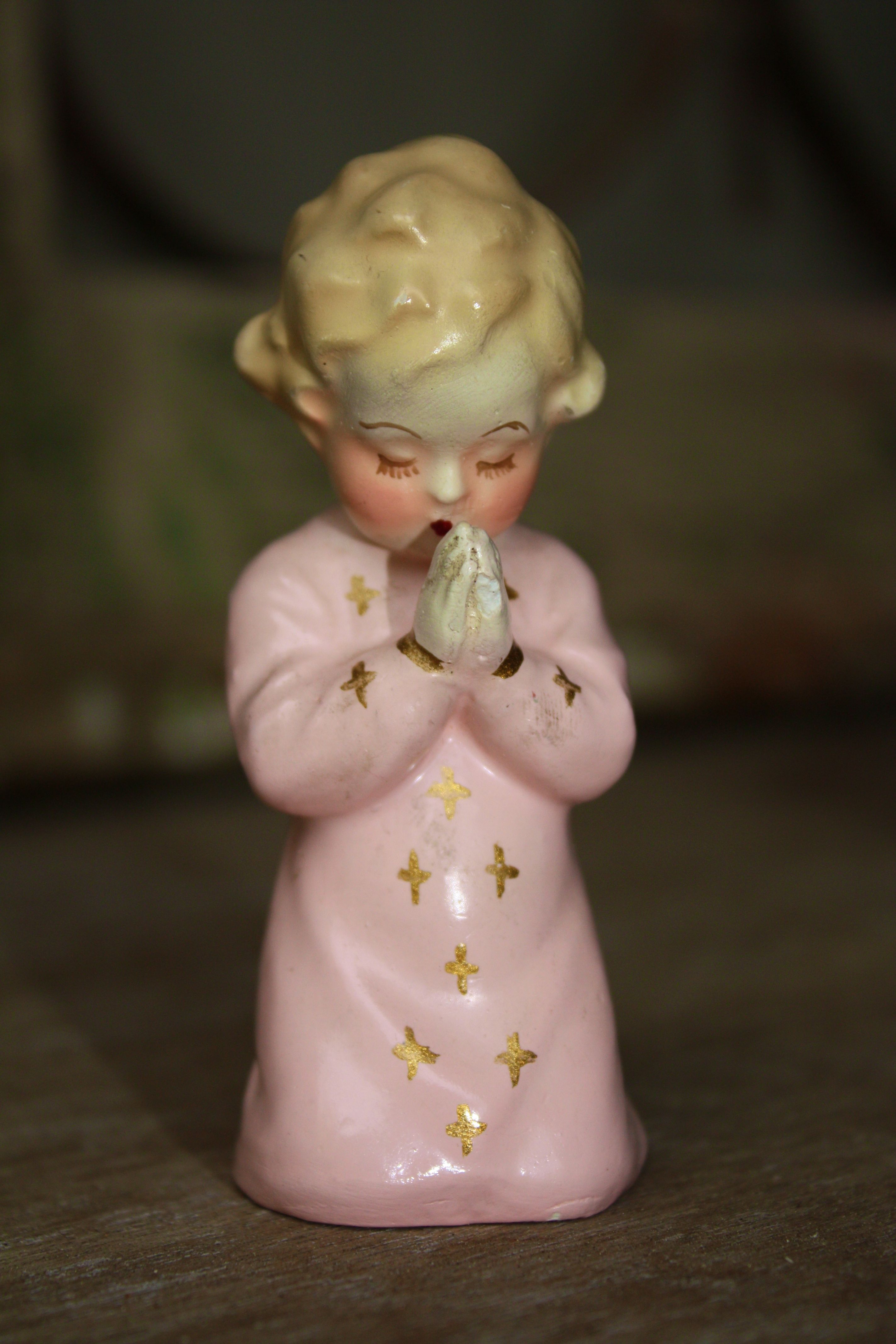
Eileen's angel

Yesterday’s email carried this message from my brother, Bruce. I know just how he feels:

I finally started my holiday preps by digging out the Christmas cards and printing out my Christmas database lists. As I begin the task, I am suddenly brought up short by Dad’s name and his address at the Chateau. After Mom died, I always sent him a card to help him keep the holiday spirit, and I continued that after he moved to Sacramento. I always sent the card to him at the Chateau, and sent his gift to him care of Betsy.

Seeing his name reminded me of this annual rite, and forced me to acknowledge once again that he has moved on, to an address served only by prayer. Momentarily, I felt guilty about deleting the entry, as though he would be dying once again, taken aback. I thought about leaving it alone. Then I felt his presence in my heart and knew he would want me to move on, and remember him in the uplands of heaven.

In the end, I deleted the entry, along with the one in my cell phone. Merry Christmas, Dad, and thanks for raising an optimist.

Leave a comment

Filed under Faith journey

Trying to See

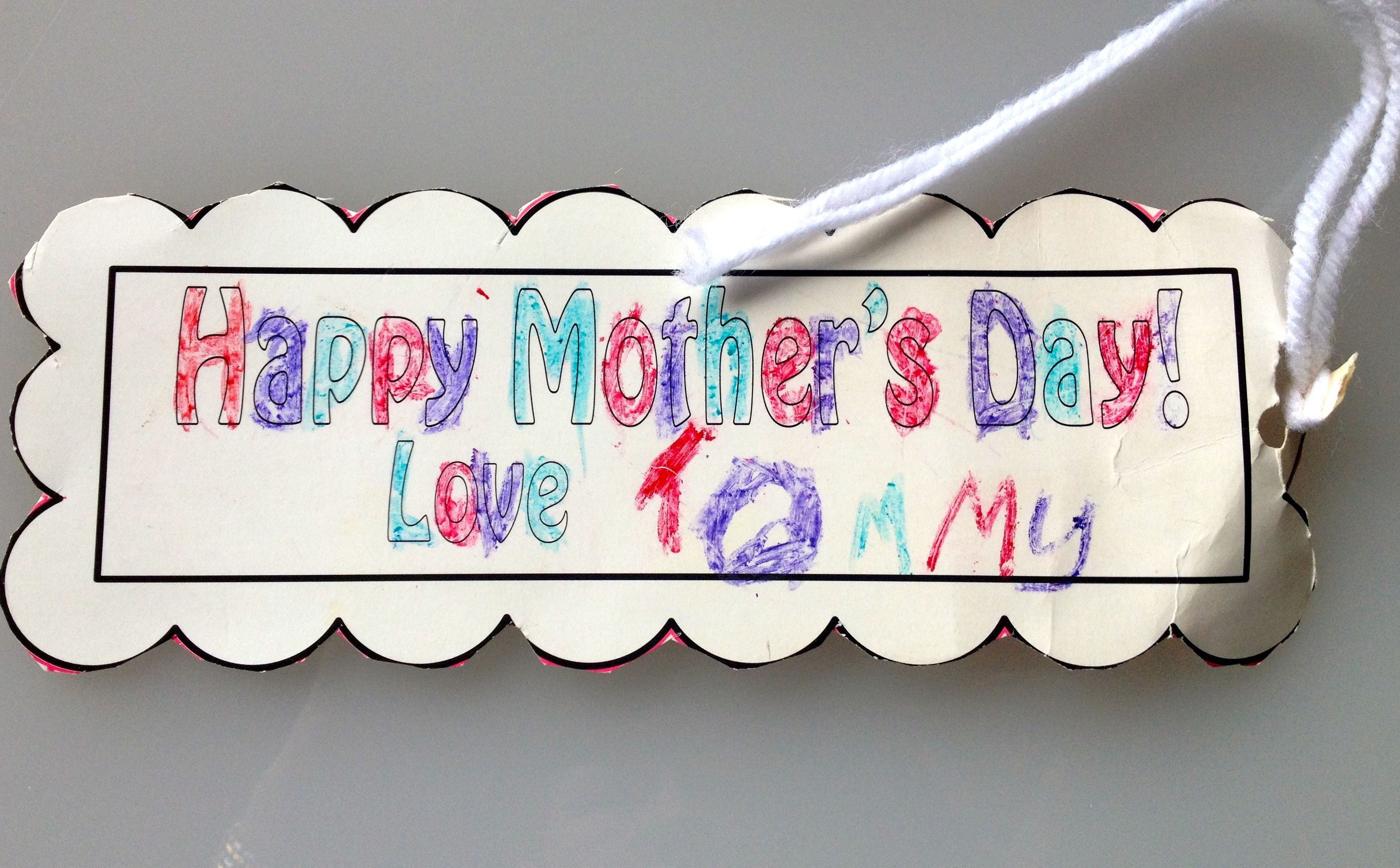
Bookmark by Tommy StoneAs I finished my last blog post, my daughter was quietly singing Billie Holiday’s hit, “I’ll be seeing you.” She sang the last line as I put the coda on my post.

After my father’s death, my mentor Jim suggested that I focus less on DO-ing and more on BE-ing. Other friends have passed along their systems for appreciating the blessings in our everyday lives including the 21-Day Gratitude Challenge. But I feel like I have to take a step even further back, back to seeing.

My third grade teacher observed that I could read quickly, but didn’t retain what I read. I was too impatient. My bedside table at home looks like a mini-library because I tend to start one book only to become distracted by another. I flit between categories: travel literature, memoir, nonfiction about death and dying, novels and what I like to call “Cheetos” literature for its complete lack of nutritional value and dependence on artificial coloring. Such escapist reading leaves nothing behind except the tell-tale orange ring around one’s lips.

I have to write a critical essay about a book that changed my life. That’s a tall order, one I don’t think I can fulfill. But the first book that came to mind was one I never finished. At the time, I found it beautiful but tedious. The book was Annie Dillard’s Pilgrim at Tinker Creek.

Since we moved from Davis to Sacramento, I have maintained a discipline about how many books I can keep. I have room for about 150 books, and it’s survival of the fittest. If I add a book that I want to keep, I force myself get rid of others. Otherwise the whole house will start looking like a giant version of my bedside table. I know I am at risk of book hoarding.

Why did Dillard’s book come first to mind when I didn’t even like it?

A handmade bookmark with a scalloped edge and yarn tie extended out of the book. The outlined letters were colored in with crayon, reading, “Happy Mother’s Day! Love Tommy.” On the reverse, Tommy had colored a tulip red and a vase robin’s egg blue.

It marked page 33, where I read this:

“Seeing is of course very much a matter of verbalization. Unless I call my attention to what passes before my eyes, I simply won’t see it. It is, as Ruskin says, ‘not merely unnoticed, but in the full, clear sense of the word, unseen.’ My eyes alone can’t solve analogy tests using figures, the ones which show, with increasing elaborations, a big square, then a small square, then a small square in a big square, then a big triangle, and expect me to find a small triangle in a big triangle. I have to say the words, describe what I’m seeing…. I have to maintain in my head a running description of the present. It’s not that I’m observant; it’s just that I talk too much. Otherwise, especially in a strange place, I’ll never know what’s happening. Like a blind man at the ball game, I need a radio.

When I see this way I analyze and pry…. But there is another kind of seeing that involves a letting go. When I see this way I sway transfixed and emptied. The difference between the two ways of seeing is the difference between walking with and without a camera. When I walk with a camera I walk from shot to shot, reading the light on a calibrated meter. When I walk without my camera, my own shutter opens, and the moment’s light prints on my own silver gut. When I see this second way, I am an unscrupulous observer.”

When did Tommy make that bookmark for me, I wondered? He might have been five, six or seven — young, anyway. If he was seven, Maddie was 12. And my mother was dying.

I worked for an international public relations firm where I led the firm’s West Coast health care practice. I was at a meeting of the practice in New York City when I got the call that my mother was in the hospital with lungs full of fluid. They confirmed advanced lung cancer, and expected that she had only weeks to live.

My boss told me to take all the time I needed. With the help of hospice, Mom stabilized when we were finally able to get her home. We watched her fade before our eyes for three and a half months.

When I returned to work, my functional boss had to deliver the ultimatum that came down from on-high. Get business up, fast. Mom, he acknowledged, had taken too long to die for the taste of our overseers.

Somewhere during that period, I was trying to read Dillard.

My impatience has caused me to miss a lot, but I find that the images are still there, and I am slowly making my way backward, making sense of my experiences. I am reconnecting with people who have been important to me, but with whom I had lost touch. I am visiting places and imagining them through the eyes of my father, as I did when I visited Marine Barracks last spring and summer. I am retracing my own steps and remembering how I felt when I walked the same path a year ago.

I am trying to see.

I’ll find you in the morning sun/ And when the night is new/ I’ll be looking at the moon/ But I’ll be seeing you.

Leave a comment

Filed under Uncategorized

Gratuituous Grace On Thanksgiving

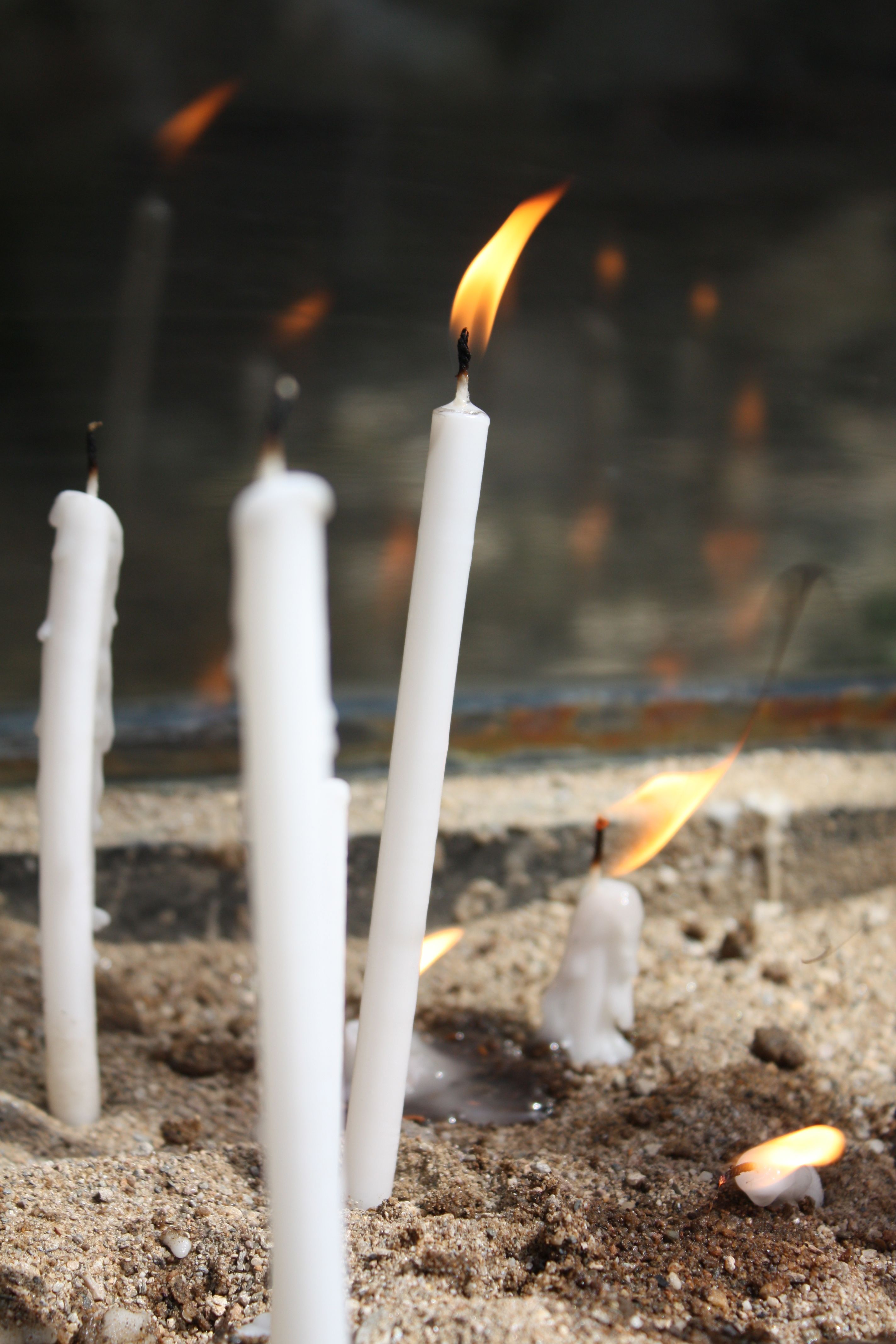
candle

Eighteen days ago, one of my oldest friends was suddenly ripped away from all of us who love her. Five days later, her husband asked me contact a couple of her friends, friends that dated back to our college days. He closed our phone conversation with, “I love you.”

That wasn’t something he normally would have said to me. But a terrible loss like this one is a reminder of how dear people are to us, and how quickly things can change. We are shaken by the shoulders and reminded to notice things that hover just beyond our attention, people for whom we are grateful. Now.

I’ve been re-reading Annie Dillard’s Pilgrim at Tinker Creek this week. Yesterday I recorded this quote, “Seeing is of course very much a matter of verbalization. Unless I call my attention to what passes before my eyes, I simply won’t see it.”

As Thanksgiving approaches, I look around me and see so much beauty. I see you, husband, my personal Mighty Mouse who continually saves (my) day by being so utterly reliable and unfailingly loving and who puts up with my Gemini self. I see you, daughter, not only for your talent, but your wisdom in being able to sense when people are going through difficult periods and your ability to be ready to support them even when they are not yet ready to accept help or support. I see you, son, your burgeoning talents, authenticity, sense of wonder and openness to all kinds of people.

I see you brothers, through our differences, for the loving, honorable and enduring presence that you are in my life. I see you, beloved nieces, nephews, and even great nephews, for the light in your eyes when we meet, which is nowhere near as often as I would wish. I see you, in-laws, for the umbrella of security and acceptance that you have created for my family, and for me. I see you, family who are more than family, Lynn, Louise and Mary, who always seem to reach out at just the right moment.

And I see you, friends. I’ve talked most about my female friends, who have been my pillars, but my guy friends have always been stalwart supports in my life. I see you, Howie, Bill, Pete, Jim and Mario.

And, yes, you female friends who always stand by: Ellen, Sandy, Lisa, Tammy, Cheryl, Collette, Wendi, Tracy, Sharon, Debbie O, Linda, Nancy, Judee, “Babes” (you know who you are) and probably more who I have inadvertently left off.

There is one name missing from that inventory of people I hold dear today, one who is gone from this world but smiling from the next. It is you, Deb, who is reminding me from afar to pay attention. I did not hold you close as I could have — should have — in recent years. Sure, I have decent excuses, but none of them seem good enough right now. I list you last, but not least.

Dillard wrote:

“Unless all ages and races of men have been deluded by the same mass hypnotist (who?), there seems to be such a thing as beauty, a grace wholly gratuitous… (B)eauty and grace are performed whether or not we will or sense them. The least we can do is try to be there.”

I am trying to be there and notice you all, you who I love.

Leave a comment

Filed under Uncategorized

Insomnia

Screen Shot 2013-11-20 at 4.29.34 AM

I might as well get up.

The last few nights I’ve awakened around 3 a.m., my thoughts flying to my friend who died suddenly on November 8 at 57 years old.

I recognize this, this peculiar alarm clock that rings in the deep night to remind me that something is wrong.

In the days after my mother died in 1999, and my Dad died this past January, I awakened with a racing heartbeat, momentarily panicked, feeling that there was something I should do. This is different.

I awoke with her face floating gently in front of me, smiling. My awareness grew to include the percussion of the long-awaited rain tapping lightly and steadily in the metal gutter just outside my bedroom window. Rain reminds me of home.

In my adolescence in Tacoma, rain was often the last sound I heard before dropping into dreams and the first when I awakened. It surrounded me, drops splashing on the rear concrete patio to my left and rivulets sluicing off the sloped path behind me at window height, inches from my headboard. Periodically the white noise of the mammoth furnace would overtake it, but even that was a comforting sound. Above me, I heard the occasional creak of my father’s bedsprings as he adjusted his position in sleep.

The cat is concerned, padding over the papers on my desk to approach me at keyboard height, his tawny eyes observant. When I lean forward, he abrades my face with his rough tongue, scouring me with affection. I pick him up for the moment he will tolerate being cradled in my arms, and he purrs. For him to turn on his motor is a rarity, a sign of affection he seldom confers.

I don’t know what I’m doing up either. I know if I post this that friends will worry how I’m handling my friend’s loss, but to awaken and think of her is not a sign of distress. It’s more like communing with someone dear, someone worth missing.

Here comes the rain again. Shakespeare springs to mind,

“The quality of mercy is not strained./It droppeth as the gentle rain from heaven/ Upon the place beneath. It is twice blessed:/ It blesseth him that gives and him that takes.”

3 Comments

Filed under Uncategorized

Dreaming, Again

Pt. White sunset by Betsy C Stone

I dreamt of water again.

Friday afternoon I received the unbelievable news that one of my oldest friends died suddenly; a freak, bolt-of-lightning, one-in-a-million medical event tore her away from us, and in the process, ripped a hole in the universe.

The hours between 3:30 in the afternoon, when I received the call, and 12:30 a.m., when I collapsed in a hotel bed, felt numberless.

I awakened early with the fragmentary memory of floating on water. How did I get there? Slowly I followed bread-crumbs of crazy images backward as far as I could.

I was in the attic of a four-story ramshackle Victorian. Around me were strange but genial characters who resembled figures out of stories: a giant, an old man with a long beard, and a curly-headed individual who resembled Merry Brandybuck but initially seemed neither male nor female.

I was happy to see “Merry” in my dream. As I hugged her in reunion – by then this character was a she — it had the feeling of simultaneous greeting and farewell.

Then the house collapsed. It had been unstable to begin with, with floors no longer square above the other, the attic teetering on top, off balance. We had already taken note of a gash in the wooden floorboards, below which we could see sky.

The attic suddenly gave way, but rather than crashing to earth as we expected, the room transformed into an aircraft. A fuselage of patched boards took shape and the walls tore away, revealing long extensions on both sides: wings.

Immediately, the house-turned-plane dived downward, out of control. Though shocked, Merry and I weren’t afraid. I looked at Merry, smiling and sending a silent message that said, “I love you… I’m grateful you were in my life… we’ll be together again.”

Just before the moment of impact, our craft stabilized into a glide, inches above the water. We floated above a gently meandering river, safe. Then as we rounded a bend, tall trees on both sides sheared off the wings. Now, surely, we would die.

A plume sprayed up on both sides. Miraculously, our craft held. The convex hull buoyed us on the water. We were safe.

After Dad died, I hoped that I would be sent the kind of dream that comforted me after the death of my mother: a vision of her happy and whole, sitting at the kitchen table in her favorite pink satin bathrobe. Instead, I had water dreams. In the first, I heroically forded a cold river to rescue a boat that was to be used in a race. In the second, I returned home to find the ferryman Charon, replete with black swim cap, seated in my living room, waiting to help Dad cross over.

I dreamt of water again. This time, I got to say goodbye and tell her we would meet again.

Source of all blessings, you bless us with dreams-dreams while we sleep and dreams in our most wakeful moments. May I be responsive to both forms of dreams and pass these blessings on by living a life that is faithful to their guidance. — Brother David Steindl-Rast

2 Comments

Filed under Uncategorized

Dad Deconstructed

Dad comes to me in pieces.

As I approached what would have been his 97th birthday, it was his smile that came to me, the smile I felt he saved for me, the one I thought of as my smile.

This week, I’ve been thinking about his voice.

During the years when he was at the peak of his career in the Marine Corps, his voice was a primary instrument of his authority. Years of practice leading men in war and ceremonial parades at Marine Barracks afforded him the ability to issue a command like a rifle report. Without moving a muscle, he could expel a directive so that it burst out of him, sharp and clean. It was the voice that brought me to heel when I was out of line, that sliced up my spine and froze me in my tracks.

After Dad was forced into retirement following his heart attack, his command voice was repurposed for domestic use. It became a vehicle for entertainment. When family or friends lingered around Mom’s dinner table, Dad might without warning boom, “Speak!” Having gained the startled attention of the audience — for it was an audience then — Dad would continue, “Speak thou fearful guest, who, with thy hollow breast still in rude armor drest, comest to daunt me!” His voice would slip into a conversational “just between us” tone as he launched into Antony and Cleopatra, “The barge she sat in, like a burnish’d throne, burned on the water: the poop was beaten gold; purple, the sails, and so perfumed that the winds were love-sick with them.” Or he would channel Richard Burton, dropping his voice a register, intoning, slowly, “Alone, alone, all, all alone, alone on a wide wide sea! And never a saint took pity on my soul in agony.”

His Marine Colonel voice still made rare but memorable appearances. When my newborn son arrived home from the hospital with an inch and a half of black hair, standing on end, my five year old daughter approached her brother with a pair of scissors. Dad, reading the paper in our family room, suspected her plan was benign but as a father of five children knew something of the jealousies of older siblings. He ordered, “Stop! Put The Scissors DOWN!” For several seconds, she didn’t even expel a breath. Then she put the scissors down.

Dad’s voice continued to make an impression on my daughter, even though he never again raised it to her in anger, as far as I know. This week, I ran across a get well greeting in the form of a comic strip that my daughter created while in third grade to send Dad when he was hospitalized. The first frame was easy enough to understand: a drawing of a hand holding a balloon. The second frame stumped us for a bit. The hand held the balloon in front of a man labeled “you,” for my Dad. The speech bubble above him read, “tehupt!” In the third frame, the balloon appeared to be vibrating, rocked by Dad’s voice, and in the fourth, it had popped. Above the second frame, my daughter had drawn an arrow pointing to the speech bubble next to which she wrote, “My Dad said this is how you spell it.” She wanted to exonerate herself of any blame for the phonetic spelling of the call-to-attention drill command that Dad would demonstrate upon request.

Something happened to Dad’s voice over time. It dropped in pitch and took on a gravelly character. His voice, his calling card, led some people to falsely assume that he was a curmudgeon, or worse.

In 2003, after blowing out a tire on a new curb on a familiar side street in Tacoma, he decided to give up driving and moved to an assisted living community just two blocks from my brother Dean’s home. When I visited the first weekend after his move, I passed the front desk where I heard the staff member describing Dad at the request of a resident. “He’s very angry,” she said, “he might even be dangerous.” She had gone so far as to file an incident report with the nursing staff.

After a small stroke two years before he died, a speech therapist suggested we have an ENT physician examine his vocal chords with a scope, suspecting organic damage to the vocal chords. The physician found evidence that Dad had been experiencing acid reflux without knowing it. Although we tried a medication to control it, the damage was done.

In Dad’s last years, his voice was sometimes more breath than speech. He had to actively concentrate to gather his breath and push it through his vocal chords to produce sound. Reciting his favorite poetry required conscious effort to break the long passages into phrases supported by more frequent breaths.

Two nights before he died, when my husband came home from work, Dad was determined to greet the head of household, his host, properly.

“How was your day, sir?” he boomed, sharp and clean.

I hear it still.

2 Comments

Filed under Uncategorized

Completing the Circle

I’ve had some powerful experiences in the past two weeks. Some would call them synchronicities. Others would call them mere coincidences. Whatever they were, they gave me a feeling of connectedness, a feeling of being remembered even though I am (I think) too much of a skeptic to believe my father is sending me messages from the great beyond.

The night before what would have been Dad’s 97th birthday, I was flooded with reminiscences of prior celebrations, memories I captured in Birthdays Remembered. His actual birthday was a travel day, filled with last-minute details and a losing battle to cram nine days worth of clothing into a carry-on.

Around 1 p.m., I wrote an email message to my three brothers: I know we all know what today is. I’m sure we’re remembering it in our own ways. I can’t think of Dad’s birthday without thinking of all of you, and I wish we were together somehow. But I am with you in spirit and somehow, I think Mom and Dad are with US in spirit.

A few minutes later, I received an unexpected call from Kline Memorials, the company that was creating a monument for my father’s, mother’s and sister’s gravesite in Arlington National Cemetery. Back in September, we completed some forms requesting approval for its installation from Arlington. Kline’s representative told me that the granite marker had just been installed. On Dad’s birthday.

After my trip to the Northwest, I side tripped to see (or as I liked to say, “meet”) a piece of art that I asked an artist-friend to create a painting as a way to remember and honor not only my father, but my mother. After Dad resided for so many years in a bedroom in my home, I needed to reclaim that space, to remove the telltale signs of Dad’s final weeks, to re-imagine it as a welcoming space for guests and a sanctuary for me.

That’s asking a lot of a painting.

What this very personal memorial is not is an attempt at “closure.” I’m not trying to conclude anything, least of all my relationship with my father. He and I had no unfinished business.

A painting was a way to literally put myself back in the picture with my mother and father, at a time when our security was both threatened (by my father’s heart disease) and protected (by their fierce brand of love and family loyalty).

My artist-friend followed my journey with Dad long before I thought about asking her to create a painting. Though she was inspired by a bit of free verse I wrote for her last spring, The Kingdom of the Wing Chair, I immediately saw details that she had pulled from past blog posts and conversations. Books of his favorite poets, for example, sit on a shelf behind the central image, a wing chair.

Since my verse had mentioned that a Spaniel was often seated next to Dad’s chair, she decided to include a Springer Spaniel. My Dad always loved Springers, great family dogs with good noses for hunting upland birds. Our first was Boot, an unusually large male with a head shaped like an anvil, who was just as hard-headed. Boot was followed by two litter mates, Katie and Beall. The dog in the painting looked just like Beall, with her white “feathers” extending from her legs and her eyes locked on to a spot where Dad would sit.

Only I never mentioned a Springer in my verse, just a Spaniel. My friend took the liberty of including a Springer because she needed a pattern to balance the bold green and red solids in the painting.

When we went to dinner, I asked her about the meaning of a gold ring tied to a string and hung from the book shelf so that it dangled next to the chair. “That was to put your mother in the picture,” she told me. She used the iconic image of a gold band since she didn’t know what my mother’s wedding ring looked like.

“You mean like this?” I asked. From my left hand, I removed a thin gold band I’ve been wearing since Dad died. The inside is engraved, “E.D.C. to H.S.C. 26 Dec. ’41.”

We talked about how painting is more than a one-way conversation.

“It’s a circle,” she said. “And the circle is only completed when the viewer brings their experience to it.”

Circles don’t need to close, and they are never broken.

Leave a comment

Filed under Uncategorized