Tag Archives: caregiver

When nothing is something

One of the unexpected consequences of our Pilgrim upbringing is a tremendous emphasis on work as a moral virtue. Time we are sitting can seem like time we are wasting, or at the very least, remind us of our endless lists of uncompleted tasks.

When a parent is growing older but not really “up there,” it’s easy to find ways to brighten their days: lunch or dinner in a restaurant, an outing to the theater, a trip to see family. But as the burden of age sets in, making “play dates” with a parent can get hard on the caregiver and care recipient. It’s easy to revert to  the mode we grew accustomed to when our children were small.

A little while ago, I offered to take Dad out for his daily walk, and he said, “I don’t know what’s wrong but I really don’t feel up to it today.” So I heated up some leftovers for his lunch and started tidying up in the kitchen. And then I realized: this is it. Through shared meal times, I can give Dad some normalcy. So I sat down. Ate a peanut butter and jelly sandwich. He read the paper. I read the paper.

These moments of nothing have the potential to be something. For the older person, perhaps having someone sit with you at the kitchen table mirrors the mundane (but missed) moments they may have had with their spouse. It’s quiet but companionable. For the adult child, these quiet moments say, “I’m willing to stop my life long enough to just be present with you.” Or, “I’m here if you have a memory that comes to mind.” Or, “I just like sitting with you.”

We don’t always have to do something to make the time pleasurable. Sometimes nothing is everything.

2 Comments

Filed under Uncategorized

When an aging parent dies: the underground river

This week a friend of mine posted on Facebook: “My Dad has been gone for 13 years or thereabouts, just thought of him. I sure hope all of your dads are still alive. I miss him.”  Immediately five friends posted responses. Here’s one example: “(Dad’s) been gone for 11 years now. His boots are by my back door. There’s never a day that I don’t think about or miss him. We never, nor should we ever get over the loss of our parents. We just figure out another way to live without them.”

Then today, I received a call from the daughter of my Dad’s next-door-neighbor at his assisted living community (I’ll post her name if the family gives me permission). Her Mom died in late March at 97 after a rough couple of years. I really miss seeing their Mom – who had a remarkable spirit and great sense of humor – and had written the daughters a note.

One of the things “E” said to me really hit home, “This is a special experience no one knows about until you’ve had it.”

And she’s right. Since my Mom died in 1999, I have often thought of this shared experience as an underground river. When you lose a parent, people suddenly come forth with a deep empathetic response based on their own experience. Not just a few people, but many, people you never thought would express themselves in such emotional terms. These are people who have been in your life all along, but you never knew that they were still feeling their own deep-seated loss.

“E” said that she was surprised that so few families seem to visit at the assisted living community. A friend of mine and senior expert, Marsha Vacca, once told me that people have to sort through “what they will do, what they won’t do, what they can do, and what they can’t do” when it comes to supporting a parent.

Many people are too far away, have too much on their hands or are too financially constrained to be much of a presence. Others choose not to. As “E” said, when a parent gets older, it’s time to get over “smoldering issues” that lie in the past.

There are exceptions. A dear friend’s mother may have given birth to her, but has treated her badly for many years. She is justified in keeping her distance.

“E” also reminded me about the ways that siblings can each make a contribution to an aging parents’ happiness. “We all had our role,” she said. “For example, my sister felt it was important to provide a festive atmosphere for our mother, and she was the one to set out gin and tonics on cocktail napkins.”

Finally, we talked about what people say when your parent dies, and we both admitted that we would write a few sympathy cards over if we had the chance. “He/she lived a good long life” turns out not to be very comforting, even if your parent is 96 or 97. You can never have someone that you love in your life for long enough.

If you’re fortunate, you’ll know that you made a difference in their quality of your aging parent’s life. But you will still feel the urge to stop by for an impromptu visit or pick up the phone to talk to him or her. For a long, long time.

Leave a comment

Filed under Uncategorized

“I’m not really a Dad anymore”

Walking with my Dad on the American River Bike Trail yesterday, he was feeling his age. During a rest stop, he looked out at the birds circling over the river and said, “I’m not really your Dad anymore.”

I stopped and stood in front of him, wanting to be sure that he not only heard my response, but saw my face as I said it: “You are and will always be my Dad. No one could ever love me the way you do.”

He replied, “And you’ll always be my Bets.”

2 Comments

Filed under Uncategorized

Expectations and aging: finding pleasure in what we CAN do

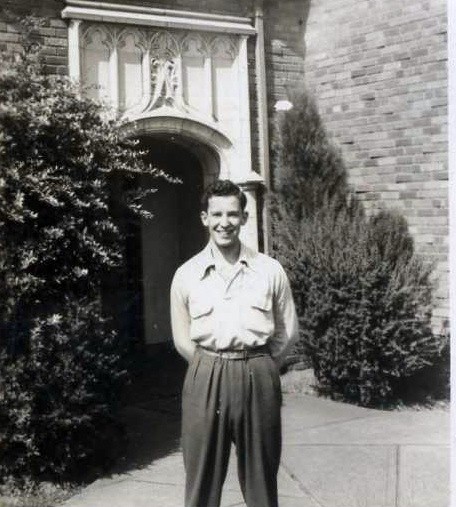
Dad with the world before him, in 1939

If you’ve seen one person over 80, you’ve seen one person.

I have a large number of older people in my life, including my 95-year-old Dad, to whom this blog is dedicated. A rare few, like Win, a 95-year-old compatriot of my Dad’s, seem to have found a magic elixir. Win recently wrote that he is still driving, keeping up a 4 bedroom house and pool, and only has physical difficulties rising from a chair.  Sheesh! He sounds like me!

Another important person in my life is getting older, and he’s kicking and screaming his way into his “golden years.” He is pissed that women treat him like – well – an old guy. In his mind, he is still virile and desirable. Physically, he’s doing pretty well. He’s a good conversationalist, still enjoys athletic pursuits, and remains involved in business. Emotionally, however, he’s not very happy about this aging thing.

As I’ve written, my Dad’s world is rapidly shrinking. His poor hearing cuts him off from most conversations, and now he has chest pain every time we go for a walk. He’s had to give up beloved pursuits like hunting and fishing. And yet, most of the time, he’s in a good mood. I’d go so far as to call him an optimist. Even though he often comments, “Lo, how the mighty have fallen,” when he carefully tackles the four stairs descending from my house, he takes heart from the fact he can complete a walk at all. “Now that’s the Henry I know,” he’ll say when a walk has gone well.

What’s the difference? Why do some people, even in the face of medical or physical challenges, remain fairly happy?

I was really struck by an article in today’s New York Times about the impact of one’s expectations on one’s well-being. Research reported in Your Brain at Work by David Rock suggests that dopamine is released, causing a feeling of pleasure when something positive happens — that is, if it beats our expectations on the upside. Unfortunately, when an experience is worse than we expect, our negative feelings are stronger than the positive ones we get from the favorable better-than-expected experience. (For you engineers and math lovers, Mr. Rock puts it algebraically: “If we expect to get x and we get x, there’s a slight rise in dopamine. If we expect to get x and we get 2x, there’s a greater rise. But if we expect to get x and get 0.9x, then we get a much bigger drop.”

The article concludes:

It seems as if it is best to have low expectations of things out of our control, realistic expectations of things we can control to some degree and high expectations of ourselves.

My Dad has had a lot of experience in his life with things that are outside of his control. He had an influence on the progress of battles for the Pacific in WWII, but he didn’t have control. He couldn’t control the leukemia that eventually claimed my sister in the 1950s. And he could not control his way out of heart disease, although he has been able to successfully manage it since 1963.

He also epitomizes what the article describes in terms of having high expectations for himself. He has emotionally muscled his way through many difficult circumstances.

Who’s happier? The fighting-every-step-of-the-way senior, or my Dad, with far more disabilities at 95. I think I have to conclude that my Dad is. He’s an optimist, but apparently is able to roll with it when things don’t turn out as hoped.

I know we Baby Boomers are going to have a VERY difficult time coming to terms with age. We have changed our world through our sheer numbers, but we will not be able to get God – and medicine – to serve up challenge-free “golden years.” It’s up to us to manage our expectations… and choose happiness.

Leave a comment

Filed under Uncategorized

The consequences of Dad losing his “filter”

In most ways, my Dad has mellowed as he’s gotten older.  I’ve read that, when it comes to anger, older people – especially women — are less likely to let things make them mad.  They have better control of their emotions internally and externally.

Very old people, however, are less likely to “edit” when a thought crosses their mind that would be inappropriate or uncomfortable for those around them.

This can lead to awkward but hilarious situations, especially when the very old person in question has hearing problems and speaks a little louder than the average person.  Six or seven years ago, our house was on the market and we left to give the REALTOR a chance to show it to a couple who was interested.  They arrived in front as we left in back.  I couldn’t close the window fast enough to mute my Dad’s comment, “She certainly knows how to fill a pair of pants.”  And he didn’t mean that in a good way.  We did not get an offer from that couple.

Or there was the time my Dad commented while still within ear shot, “That must have been quite a hat… before she sat on it.”  Or, “She has a face like a pudding.”

I am a slow learner when it comes to asking if my Dad likes the dinner I’ve prepared.  Occasionally I get a thumbs up, but I am equally likely to get the “so-so” fluttering hand signal.  And once he offered this little gem, “It looks like the dog’s breakfast.”

I shouldn’t be surprised that my Dad complains when he has to return to his assisted living community.  He hates it there.  It’s a good enough place, and he probably would like it if it wasn’t compared on a weekly basis to life at my house.

My house is, well, a house.  With a family that he’s part of.  With lots of room to move around, and people who bring you coffee and wine, serve up three square meals a day and talk to you.  His experience at his assisted living community simply can’t compete with that.

So why is it so painful to me when he complains that returning to the “hacienda” (as he calls it) is like going to prison?  Or that he’s in a drought when he’s there for a few days?  Or that he can’t get the temperature right at night and it’s like an oven (although he was wearing a wool sweater when I picked him up)?

He can no longer filter his comments, and his short term memory loss means that he will keep feeling and commenting on the same anxiety about returning to his apartment, over and over.  It’s the perfect recipe for my guilt.

It isn’t that different than when I had to drop my son or daughter off at day care, and they didn’t want to be there.  They might cling or cry, but I reassured myself that they would get caught up with activities once I left the scene.  I go through a similar exercise when it’s time for Dad to return to his apartment.  He doesn’t cling or cry, but he can’t help repeating his distress about returning.

At least I knew my children would move on to a new developmental phase.  With Dad, I  have to comfort myself.  He won’t outgrow it.

1 Comment

Filed under Uncategorized

The Zen of Dad

Dad meets Maddie, 3 weeks old

I’ve never been much good at meditation, or at clearing my mind during the breathing exercises at the end of yoga.  No sooner than I tell myself to “just be present,” my mind is ping-ponging in another direction.

Before I stopped working, it was really bad.  Dad would come for extended visits and I would take time off or walk with him during a break in my telecommuting day.  As we walked along the bike trail in Davis, my mind was busy ticking off what needed to be done for the kids, Todd, work, the house, Dad or friends and organizations.  I used to memorize a list by associating each task with a finger.  By the time I returned, at least all of the fingers on one hand had been assigned a reminder to be transferred to my “to do” list.

I grew up expecting that my father would not be in my life for as long as most people have their fathers in theirs.  His big heart attack when I was five was a startling awakening to the realization that parents are mortal.  My grandmother Nana, who had lived with us, had died the prior year, but Nana was old.  Dad was muscular, purposeful and vigorous, the guy who held me on his shoulders in the ocean waves.  Dads are supposed to be invulnerable.

Awareness of his mortality stayed with me through the years, always in the back of my mind.  Would he see me graduate from high school, college?  Would he be there to give me away at my wedding?  Would he meet my first child?  I certainly never expected that he would see me turn 50, or that I would celebrate his 95th birthday with him, as I plan to do this October 24.

Walking with Dad now, I have become far more conscious not only of what we are doing, and the daily changes along our three regular paths, but of my relationship with my father, this transient time with him.

Listening to Natasha Bedingfield’s anthem for the young and angsty, “Unwritten,” the chorus spoke to me as a reminder that this moment – every moment – with my father will not come again.  So I freeze the pictures in my mind, and try to remember them by associating them with the fingers of my hand.

Feel the rain on your skin
No one else can feel it for you
Only you can let it in
No one else, no one else
Can speak the words on your lips
Drench yourself in words unspoken
Live your life with arms wide open
Today is where your book begins
The rest is still unwritten


Leave a comment

Filed under Uncategorized

As good as a homemade present: my birthday call from Dad

Remember when your child brought you home a lop-sided ceramic dish or a woven key fob?  Those were always the most beautiful gifts you received because you knew how much effort went into them.  (Although I will say that the fill-in-the-blank interview that my then-preschool-aged daughter completed for Mother’s Day fell a bit flat when she completed the sentence, “My mother likes to spend time…” with, “on the toilet.”)

At 8 a.m. this morning, the phone rang.  After answering it, my husband, Todd, brought me the handset.  “Good morning, Bets,” said my Dad in his gravelly voice.  “I just wanted to say happy birthday.”

My Dad doesn’t really use the phone anymore, except to call when he hasn’t received his pills on time at his assisted living facility.  It took a big effort to think about calling, then find my number, make the call, and speak clearly.  It was a very brief, bittersweet moment.  In recent days, he had mentioned several times that he wanted to give me something for my birthday.  But, since I’m his gift-buyer, how would he arrange a surprise of some kind since he no longer drives and doesn’t know how to shop online?  His call was a wonderful gift.

I’ve been thinking a lot about my relationship with my father, how it has changed over the years, and, even more, how it has evolved since he first became a father in 1942.

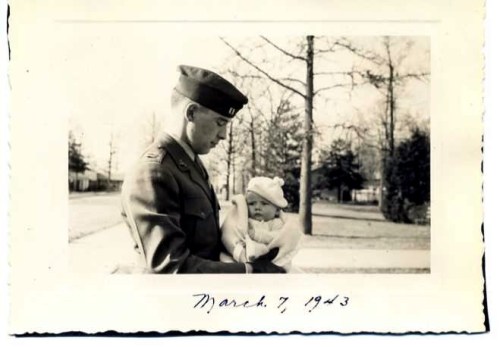
My mother and father married the day after Christmas, 1941, less than three weeks after the bombing of Pearl Harbor.  My father had been commissioned as a second lieutenant with the Marine Corps Fifth Reserve Officers Commission class, and had been asked to stay on at Quantico as an instructor.  U.S. forces had been stretched to the limit across Europe, North Africa and the Pacific.  My oldest brother was born on the day that the Japanese Imperial Army launched its final attempt to regain control of Henderson Field on Guadalcanal.  Around the time my brother turned one, my father shipped out with the 4th Marine Division to take Kwajalein, an atoll in the Marshall Islands, landing on Roi-Namur in February 1944.

I came along 15 years after my older brother.  All of our relationships with my mother and father have been shaped by context.  My oldest brother’s, certainly, by the distraction and separation of the war.  My middle brother was born in 1947, a time when people refocused on family in the peace following the war.  He was also born with medical challenges that required multiple facial surgeries beginning when he was just a few months old.  Next came my sister, who was diagnosed with leukemia when she was one year old, and succumbed three years later, despite the efforts of my hematologist-oncologist uncle Ed.  My mother learned she was pregnant with my youngest brother when Midge’s last remission ended.  Navy physicians advised her to abort the baby, as they feared it would be too traumatic for her to have a baby during a period of such psychological distress.

And I’m “the girl who lived,” born three years after my brother.  My father only recently admitted that I was not planned.

My Dad says that he feels as if he has lived several lives: childhood-through-college, the war years, the period before Midge’s death, the period after, and the period after his forced retirement from the Marine Corps following his massive heart attack.  He has also had several distinct “fatherhoods.”  There is the father of the war, the father before Midge died, and the father after.

Although people will point to my Dad’s bronze medals as a symbol of his accomplishments, I think his greatest success was his evolution into a good father, a better father than the one who raised him.  To put it bluntly, his father was a … well, he wasn’t a nice guy (I just edited what I was going to say, recognizing that grandchildren or great grandchildren may read this).  He had most likely been abused before running away from home on a mean farm in Kentucky, later to bully my grandmother, and bully his sons.  Neither of my Dad’s brothers escaped that legacy, but my Dad did.

Over the years, my Dad evolved, and softened.  Fathers and daughters do have a different kind of relationship than fathers and sons, although my Dad raised me to be able to take are of myself and held me accountable, just as he did my brothers.  In the years since my mother has died, I have become his female confidante even as I have become his caregiver.

But I’ll admit it: I probably saw the softer side of Dad more often than my brothers did.  And today, my birthday, I am grateful for all of the events that converged to give me the time that I have with my Dad, now.  And grateful for this morning’s phone call.

Leave a comment

Filed under Uncategorized

My Dad makes progress word by word

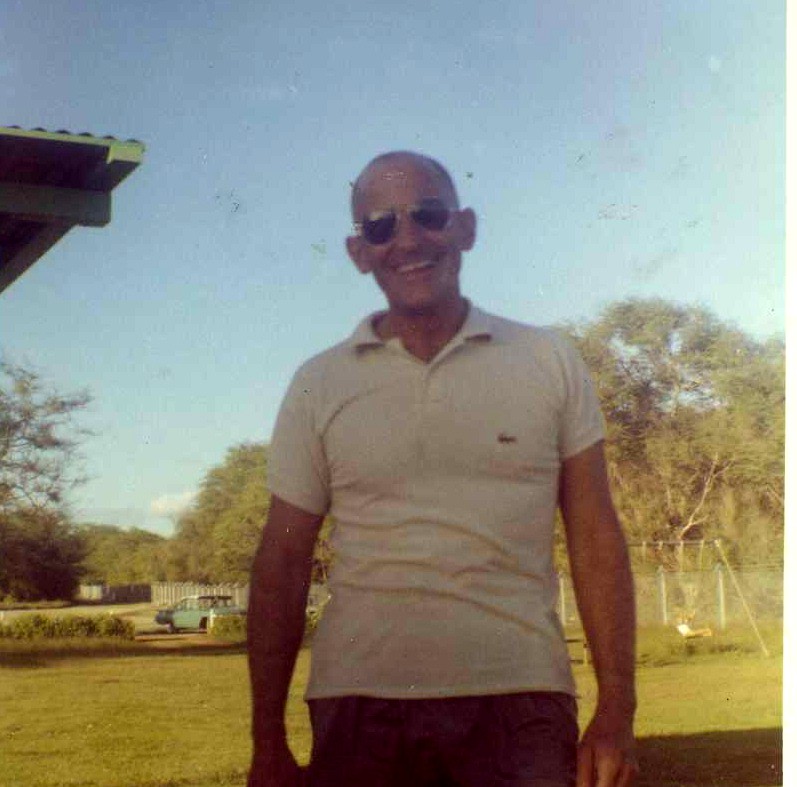
Dad used to think short pants were the ultimate indignity

This morning my Dad has his fifth outpatient visit with a speech therapist since his small stroke three weeks ago.  Lynn asked him how he felt about continuing.  Did he feel that he would benefit from more sessions?  Did he want to continue?

Dad answered her question with his own, “What is the expected outcome?”

She told him that he had improved a lot since she began working with him, but that he wasn’t quite where she thought he might be at this point, and that he might benefit from some additional sessions.

He repeated, “What is the expected outcome?”

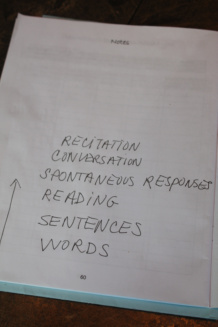
A light bulb seemed to go off for Lynn and she said, “Here, let me show you.”  She wrote on the page of Dad’s workbook:

“We started out practicing saying words slowly and exaggeratedly.  Then we moved on to sentences and reading out loud.  Today we’ve been working on making sure that your responses to questions can be understood.  Next is conversation, and finally comes recitation.”

In showing Dad the ladder he’s climbing, she helped him to feel that he can improve, and, maybe, re-establish some control over a difficult situation.

I appreciated the dignity with which she treated him.  She seemed to recognize that, to my Dad, quality of life has a great deal to do with being able to summon up and recite passages from his beloved poems and plays.

But I also realized that she was giving him was a way of measuring progress, of validating for himself that he was improving.  It’s like having a personal trainer comment that you can now perform an exercise (or number of repetitions) that would have defeated you when you first began.

What she was giving Dad wasn’t hope, exactly, nor was she just cajoling him to be optimistic.  With her clinical skills, she was giving him a path for improving, and he could see that he had already come part of the way.

More importantly, she was helping to keep my Dad’s world from shrinking even further.  He can no longer drive, and he has difficulty following and retaining ideas the way one must to tackle full-length books.  He can’t hear in situations with more than a few people present, even though he’s a very social person.

But he’s still him, and he wants to be part of the conversation.  He wants to be able to share a story, or make a witty remark, or discuss the state of world affairs, or express appreciation.  All of these depend on being understandable.

I’m grateful that Lynn of Sutter VNA is helping him to retain his fundamental “Henry-ness.”


Leave a comment

Filed under Uncategorized

Riding the waves of my Dad’s memories

You never know what’s going to trigger a memory.  For me this afternoon, it was strawberry ice cream.  Not just any ice cream, but my Grandmother’s strawberry ice cream.  I made a batch for our Norwegian cousins last week and finished it off today.  It took me right back to sharing Independence Day with the Lukens clan in Seattle, when we hand-cranked a behemoth ice cream freezer for the better part of a day.  (Of course, it’s a lot easier to make it with a little electric appliance I have now.)

It’s very frustrating for my Dad – any of us, really – not to be able to access memory on demand.  With my Dad, it’s usually not that the memory is gone, it’s just not within reach when he wants it.

Instead, his memories seem to float up out of the depths like flotsam, submerge again, only to return again the next day.  It’s as if a recirculating pump brings them back time and time again, until the pattern shifts and it’s a new set of memories that begins their rotation.

For the past month or so, Dad has been remembering me riding on his shoulders in the waves at Barber’s Point on Oahu.  Dad was stationed at CINCPac in Honolulu, and I was five.  I loved the water but I couldn’t swim, and Barber’s Point had a notorious riptide.  The moment he remembers may have been the day before, even the day of, his massive heart attack.  Back in the early 60s, no one knew if you would recover from a big cardiac event.  At some point, it dawned on him that he could just as easily have had that heart attack while jouncing me in the waves.  Perhaps that’s why that particular day is so firmly etched in his mind.

Sometimes I think his memories are things he’s trying to work through.  He often asks me, “Do we have any business left?”  It’s his way of asking if his affairs are in order, recognizing that he doesn’t have forever.

Not long after my mother died in 1999, he perserverated on the memory of my sister’s death from leukemia.  He remembered her calling out to him, “Daddy, help me,” and his deep feeling of helplessness.  During another period, it was the bloody beach on Iwo Jima.  In recent months, many memories were of his father, with whom he did not have a warm relationship.  He wonders why his father didn’t take him fishing or have the interest in him that my father had in his sons.

Listening to some of his memories breaks my heart.  Others give me comfort, because I know that they bring him comfort.  Like today, when he remembered my brother older Dean at about age five, hands on hips, waiting for him in the driveway when he came home from work.  Dean was such a little man, even at that age.  Dad smiled.  And so did I.

3 Comments

Filed under Uncategorized