Category Archives: Uncategorized

The Puzzle of the Angel

Every year when I decorate for the holidays, I stop to ponder a ceramic angel that I made in fourth grade. This year was no exception. Lots of my ornaments have memories associated with them: the yarn angel that my mother bought to represent my sister, Midge, who died before I was born; the Japanese silk thread ball that reminded me of our brief sojourn in Hawaii; the little German ornaments that my mother collected. The meaning of each is unambiguous. Only the little blonde ceramic angel has confounded me.

When I was nine or ten, my mother decided to take up a new hobby. We had recently moved to a suburb of Everett, Washington. Compared to our neighborhood in Seattle, a few miles from the University of Washington and an easy drive to the Opera House and downtown, suburban Eastmont didn’t have a lot to offer. For me, there was the attraction of “the gully” (an undeveloped gulch), a hilltop school ground that was perfect for kite flying, and quiet roads where I could safely ride my Stingray bike.

My Mom decided to try making ceramics, and she let me go with her. On a rural road, a small cottage with faded paint had been converted into a studio. Inside, in what might have been the living room, were shelves of casting molds. On the right side of the room was a counter where patrons poured tan or white clay slip into molds, forming a thin layer before being poured, leaving behind damp greenware. In the center were tables where crafters prepared their creations for firing, and once their pieces were hardened by the kiln, painted on details or covered them with an viscous blue liquid that would magically transform into a glistening clear polish. Animals and gnomes were frequent subjects, as were useful household items such as ashtrays. One of my first projects was a large ashtray with raised astrological symbols finished with a mottled brown and black glaze, which my mother proudly displayed.

If we were really lucky, Mom and I would arrive at the ceramics studio on a day when a new mold had just been placed on the shelves. New molds were sparkling white, but more importantly, unworn from constant use. The greenware from these molds, when ejected without mishap, had sharp, clean edges and smooth, unmarred curves.

Starting a new piece always made me hold my breath. At each step, I anticipated the problems that had spoiled my efforts so many times before. Would I drain the excess slip too soon, leaving the piece too fragile to maintain its shape? Would I fumble as I freed the greenware and dent it? Would I nick it when I scraped away the nearly-invisible seam where the two halves of the mold joined, or paint a line too thick, or glaze it unevenly?

In late summer, people had started in on Christmas decorations. I had my eye on a kneeling angel mold. Her feathered wings extended above her head, her long dress puddled gracefully around her legs, and her thick, wavy hair flowed down her back. Her hands were clasped in prayer below her smooth, serene face. I cast two, planning to make one a brunette, like me, and the other, a delicate blonde. The brunette was a disappointment. The dark brown underglaze contrasted too sharply with her porcelain skin. Rather than the brown mane I imagined, her hair looked like what it was: brown paint.

But the blonde was the angel of my dreams. I painted her dress blue, put a touch of color on her lips and carefully added fine blonde eyebrows to match her hair. When she emerged from the kiln, the yellow glaze had hints of darker hue, perhaps a residual from the brown paint I had used on her sister. She was pale, delicate and beautiful.

I placed the two angels on the bookcase on my room. Every time I looked at the blonde angel, I felt proud. Then school started up, and I forgot about her.

About that time, I had become friends with a girl across the street. Occasionally, we played at my house, but most of the time, we played dolls in her bedroom. Each day, however, we would have to interrupt while Dawn completed her chores. My primary chores were making my bed, cleaning my cat’s litter box and setting the table. Dawn was responsible for dusting, cleaning the glass coffee table with a foaming spray, and vacuuming. I never saw much of Dawn’s mother. When she was around, she didn’t greet me warmly as my mother welcomed my friends. I had the feeling I was underfoot.

One day, I noticed that the blonde angel was gone. I hadn’t thought about her in a while and I didn’t know how long she’d been missing. I looked all over my room, then around the living room and even the recreation room downstairs. The brown-haired angel was in her place but not her twin.

About two weeks later, Dawn and I were playing in her room. On her little dressing table was the blonde angel. I blurted out, “That’s my angel!” Dawn said that it wasn’t, that she had purchased it for her mother for Christmas. Our discussion turned into an argument, with me insisting that it had to be my angel. See how the paint on her eyebrows has a touch of brown? I painted that! Dawn held her ground. Finally, I played my trump card.

“My initials are carved in the bottom! I always carve my initials on the bottom of my pieces!”

Dawn turned the angel over. “It’s not yours,” she said. “See? It has felt on the bottom!”

An uneven green felt square was indeed on the bottom. Around it, frosted white nail polish glistened. It seemed obvious to me that Dawn had covered up my initials by using her mother’s nail polish to afix it to the base.

I knew it was mine, but she looked me squarely in the eyes and lied about it.

I wrote her a note. I told her that if it was so important to her to give the angel to her mother, she could have it. I was giving it to her. I didn’t want to lose her friendship over it.

After a few days, Dawn rang the doorbell. In her hand was the angel. She told me that she loved it so much she wanted to have it. So she had stolen and lied.

I’ve thought about Dawn every time I’ve put the angel on display. It’s always seemed like an important story to me but one without an ending. What did it mean?

Yesterday morning, my church pastor, Rev. Mary Hudak, told a story about her first grade classmate, Tina, who had stolen her pencil. When Mary told the teacher on Tina, Mary’s favorite teacher, Miss Haney, told Mary she knew. But Mary, she said, had two pencils, and Tina didn’t have any. Tina didn’t have lots of things that other children had. Miss Haney knew that Mary would not make fun of Tina for not having what the other kids had.

“I learned something about myself that day,” Rev. Mary said. She learned that her teacher knew Mary’s heart was big enough to sacrifice for her classmate. She learned something about herself.

My story had a different moral, but an important one.

It was about mothers. I couldn’t understand how Dawn wanted her mother’s love and approval so much that she would steal something her friend had made and loved.

My mother loved me enough to display what must have been the world’s ugliest ashtray. I didn’t have to do anything to prove my love for her. I was secure in her love, and she in mine.

I went to church expecting to hear a parable from Bible times. I came away understanding my own.
Leave a comment

Filed under Uncategorized

The Storyteller

Ozma of Oz

The wind blew hard and joggled the water of the ocean, sending ripples across its surface. Then the wind pushed the edges of the ripples until they became waves, and shoved the waves around until they became billows. The billows rolled dreadfully high: higher even than the tops of houses. Some of them, indeed, rolled as high as the tops of tall trees, and seemed like mountains; and the gulfs between the great billows were like deep valleys.”

Can you picture a storm-tossed ship, far out on the waters, rolling up and down and tipping side to side? Do you begin to feel a little anxious, imagining yourself in that tiny vessel as it submits to the mercy of the sea? Or are you distracted as you read this by the papers on your desk or the pinging of a smart phone at your side?

When I was first exposed to these lines from L. Frank Baum’s Ozma of Oz, I had no such distractions. I was snuggled in my twin bed, clutching my bedspread in the circular pool of light that flowed from my bedside lamp. I grew fearful as the storm worsened and the light was extinguished from the blackening sky.

To me, the story wasn’t something comprised of words on a flat page. I didn’t even read them. They were read to me by a master storyteller, my father. His voice traveled outward, rising with the tempest and bouncing off the ceiling, and then softening with reassurance when our narrator reminded us that our heroine, Dorothy, was an experienced traveler who had after all made far more difficult trips, arriving in Oz by way of cyclone.

Though his primary career was the United States Marine Corps, my Dad had the sensibilities of a thespian. He learned to tell stories from his father who, despite being demanding and detached, could spin a tale of the Old West that put you in the Pastime Saloon as Uncle Jake Cottrell faced down the Montana Kid.

Dad told a story with his whole body. He leaned forward and paused to see if he had the attention of his audience. His body coiled and his shoulders squared as he prepared to slowly unwind the story. He painted the setting, be it a hot Yakima day crouched in the sage brush at the edge of a canyon, a starry Seattle night when he held my mother in his arms, or a too-quiet lonely dirt road on a war-torn Pacific island with nothing more than a sidearm to protect him. He could startle his audience by booming out a phrase capable of reaching the length of a parade ground, or beguile it with low, mellifluous tones as he recited Antony’s description of Cleopatra on her barge.

I loved stories, but I especially loved hearing stories.

Today’s Daily Good article, reprinted from Aeon Magazine, reminded me how much my father’s stories have shaped me.

The story describes the response to  “pin drop” oral storytelling readings created by writer and journalist Elizabeth Day, reporting that Day “believes that reading aloud is more intimate than theatre because all the scenery and props have been stripped away, leaving only the listeners’ imaginations: the theatre of the mind.”

Just as Dad’s voice comforted me when I worried about Dorothy on the turbulent sea, I hear his voice in my head as I write the next chapter in my own story. Dad has been gone for a year, and I know I discharged my duties as caregiver with honor. This summer I will embark on a new venture in writing, and I confess to feeling a bit scared.

Maybe that’s what this quote shared by Daily Good means:

“Stories can conquer fear, you know. They can make the heart bigger.” – Ben Okri

Leave a comment

Filed under Uncategorized

Something Happened

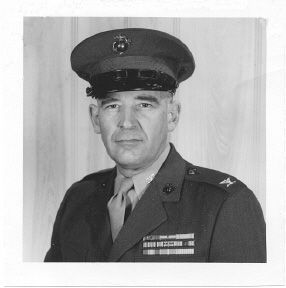
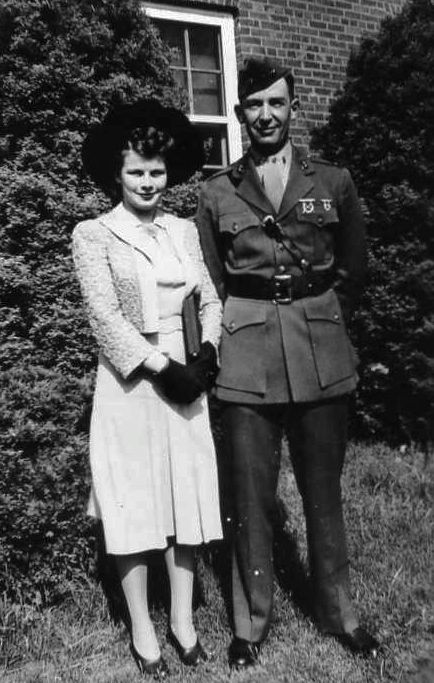
Official Portrait, Promotion to Colonel, 1959

Official Portrait, Promotion to Colonel, 1959

Most of my life, my mind has raced. While I was physically present, in my head I often was thinking about something else, half-attending, listening for what I had to sock away in short term memory while filtering many of the other signals and information that flew past my head. Way back, in first grade, my teacher reported, “I found that Betsy reads well in a second grade book, but has almost no comprehension of what she has read, so we gave this up for now.” To which my mother wrote back, “We’re reading aloud to Betsy more frequently so this may help the comprehension too. She’s had much less reading aloud than our other children. Her Dad is reading Oz books now.” (Thank heavens. Reading the L. Frank Baum series is one of the most important memories of my childhood.)

About seven years into my career, when I first began to achieve some success, a leadership styles assessment found that I was seen by others as analytical, decisive and self confident. That was the positive side of the coin. It also found that I was seen as detached, determined and independent. I was a woman on a mission, more focused on what I had to get done than building relationships.

Fast forward 17 years. Before I left corporate life, another battery of personality and leadership assessments found something quite different. According to the 16PF Fifth Edition Personal Career Development Profile (yes, that’s a thing), my personality was found to be most aligned with people who are most interested in “helping” professions, particularly counseling. “Are you interested in counseling,” the consultant asked.

“God, no,” I thought. I wouldn’t have the patience for it. But I wondered, how does someone change from “detached” to “receptive” and “attentive to others”?

Experience. Age. Or both.

I find myself doing what I often do — thinking about my Dad. Looking back on his aging process, I accelerate it in my mind until it resembles time-lapse photography, those film sequences that capture a plant as it transforms from a seed that germinates, pushes a green sprout toward the surface, shoots up toward the sky and blooms.

Memory is like that. I look back on the father of my childhood, adolescence, adulthood and now middle-age and I piece the images together until they become a narrative arc.

It was hard to get Dad’s attention when I was young. He looked distracted in most of our old photos, uncomfortable, often unsmiling. It wasn’t that he hated having his picture taken. In college snapshots, he looked relaxed and confident, maybe even a bit full of himself. In my childhood, he barely tolerated the ritual of the family photo. His mind was somewhere else.

Fast forward 70 years. Dad sat at my kitchen table savoring his coffee and the morning newspaper. When we conversed, I had his full attention.

His mind worked vastly differently in his nineties than it did in his twenties. When asked a question, he would pause for some time. In a social situation, well-meaning people might try to rescue him by filling the void with chatter.

But if you waited and watched, you could almost see his thought process. He would consider the inquiry, mentally find the correct file cabinet, and eventually the right memory. Sometimes, the answer would escape him for a while and he would say, “I’ll come get you at 2 a.m. when it comes to me.” When he stopped worrying about retrieving the sought-after tidbit, it often emerged as if by its own volition.

What would once have taken seconds took minutes, maybe even hours.

In today’s “New Old Age” column in the New York Times, Benedict Carey writes, “(T)he larger the library you have in your head, the longer it usually takes to find a particular word….” Accumulated knowledge, vocabulary and expertise, Mr. Carey reports, represent “crystallized” intelligence, which some scientists suggest actually grows over time, while “fluid” intelligence (short-term memory activities like remembering a phone number) shrinks.

I find this heartening. Every “woman of a certain age” I know complains of the annoying tip-of-the-tongue syndrome and short-term memory failures that seem to move in about the time we are finally rid of the equally annoying biological systems that plagued us from age 12 on.

This summer, I will start a Masters in Fine Arts program in creative nonfiction. Part of me is mildly terrified to engage with a group of students whose median age is likely to be under 30. No doubt their fluid minds will quickly digest the volumes of reading that come with the territory. While I try to remember them.

Dad is again my guide and mentor. His love of people — and literature — only grew as he aged. I don’t think it was just the easing of daily demands that enabled his internal life to flourish. Something happened to his patience. Something happened to his ability to savor, appreciate and feel gratitude. Something happened to his depth of understanding.

I’m praying for something like that to happen to me.

[Author’s note: One of my friends messaged this photo to me. Thanks, Kristin Warren Vandersluis!]

IMG950426

3 Comments

Filed under Uncategorized

Knitting a Friendship

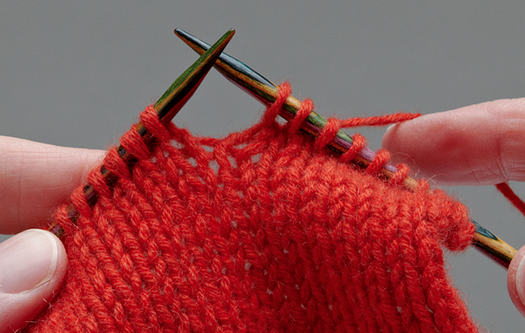
knitting screen shot

How do you write about a period when nothing much happened?

Although my years with Dad included many health crises, most of the time things were quiet. Our days were predictable, from the first click that indicated the release of the brakes on Dad’s walker as he rose, to a breakfast of oatmeal with raisins, our daily walk, a convivial glass of wine during the cocktail hour, and finally chocolate cake following dinner.

When I look back upon my seven years as a caregiver, what I remember most are our conversations. I talked and he listened. I asked questions and waited while he patiently searched his memory banks before responding. Hardly the stuff of reality television.

Earlier today, I got around to reading an email that my friend, Ellen, recently forwarded from Daily Good. I’ve never been a big fan of the “Chicken Soup for…” genre and I made the mistake of thinking this was more inspiration from a can.

It turned out to be a lovely little story in which the author remembers his grandfather’s eye surgery. He was 12 and tasked by the family with translating for the grandfather and spending time with him as he recovered. During the hours they passed by playing chess, the grandfather told stories. When other patients asked if they could “borrow” the boy, he asked his grandfather for permission. He recalled, “He told me that the opportunity to listen to others was a mutual blessing, both for the narrator as well as the listener.”

Today I spent time with a friend who is recovering from a series of life-threatening strokes. I’ve been thinking about how much I enjoy my time with her. Even though her short term memory is impaired, her wisdom is intact. She asks the thoughtful questions she always has, listens with great attention, and offers her rare brand of insight. I read the Daily Good piece to her, including this observation from the writer, Jalees Rehman, now a cardiologist:

All humans want to be narrators, but many have difficulties finding listeners. Illness is often a time of vulnerability and loneliness. Narrating stories during this time of vulnerability is a way to connect to fellow human beings, which helps overcome the loneliness. The listeners can be family members, friends or even strangers.

My friend loved it. What she said was even more profound:

You listen to me, and I listen to you. That must be because we’re knitting. I must need some things you have and you must need some things I have. We are making something new. We need understanding. It’s the hardest things for humans to understand what’s happening. When I have a friend like you and (her husband), you make meaning.

That’s what we’re doing. Knitting a friendship from the yarn of our former selves. Just by being together.

Leave a comment

Filed under Uncategorized

Remembering One Year Ago

Dad on January 8, 2012

Dad on January 8, 2012

I awakened just before 5 this morning feeling anxious. As I flipped from one side to the other, my thoughts churned. Though I have plenty of things I could worry about and long lists of things I should get done, I can usually put those thoughts aside and go back to sleep. Not this morning. Why was I feeling unsettled?

Then I remembered one year ago. One year ago, I slept while my father’s nighttime caregiver administered hospice comfort medications at the maximum dosage.

I felt like I had hopped on a freight train that was speeding, careening, barely holding to the rails along a treacherous mountain route that cast dark shadows on our route. I held on, trying to avert disaster.

A week earlier, Dad had been on a plateau, as hospice put it. He was still getting to the table for meals, and we were still making forays for fresh air outside, albeit by wheelchair. I had begun to accept that he would not rally, as I had hoped when came on service with hospice December 20. The nurses had explained that he would likely decline in increments, alternating with periods of stability.

I was Dad’s life ring and he clung to me for security, never wanting  me to leave his side. When Todd and I went out to see a movie as a short break, Dad remained at the dinner table with the caregiver, not wanting to retire until I returned. There he stayed, exhausted, counting the minutes until I would return at 9 p.m. I was counting, too. After one brother cancelled his planned trip, I crossed off the days on my calendar until brother Dean would arrive that Wednesday.

Dad’s confusion increased. I sat next to him all day and surrounded him with pictures. At dinner that Monday night, he picked up the picture of my brothers on the kitchen table and said, “They were siblings, weren’t they?”

I broke out in hives. I wondered if it was a reaction to the antibiotic I was taking to resolve a lingering cough, or a physical manifestation of my own anxiety. First my palms itched, then the soles of my feet, then my scalp. As I sat talking to the hospice Chaplain, I furiously scratched my head, twitching from the attempt to stop.

After Dean arrived, Dad’s decline only accelerated. The afternoon of Dean’s arrival, I asked our new afternoon caregiver to make chicken cacciatore. The process turned out to be long and arduous, but the results were delicious. Dad ate heartily, displaying his best appetite in a month. The mood, for that eyelash of time, was celebratory.

But that night, the medications we had pre-dispensed for the hospice nurse weren’t adequate to control Dad’s shortness of breath and agitation. From 11 p.m. on, Dad awakened every half hour. The caregiver summoned Dean during the night to prepare more. At 6:45 a.m. Thursday, Dad attempted to get out of bed by himself, after three weeks of being unable to support his own weight. The caregiver intervened before he fell. Dad was exhausted by the effort.

On Friday, Dean supervised the final move of Dad’s belongings to my house. The afternoon was quiet, with Dad sleeping most of the time. His breathing began to sound increasingly liquid, although the hospice nurse had told us not to be concerned. Just the same, we arranged for a house call the next morning, while I would be out facilitating a strategic planning retreat and Dean would supervise Dad’s care.

When I left that morning, I told Dean to call me with whatever the nurse said. An hour and a half into the retreat, he called with the news to come home. Now. I bluntly announced, “I have to leave. My Dad is dying.” I called my son at school and asked him if he wanted to come home even though Papa might be gone by the time he arrived. He did. My brothers Scott and Bruce booked flights for hours later. As I sat calling family in the living room, I overheard my daughter comforting Dad by reading passages from his favorite poetry. I wrote about preparing. Dad was on his way.

That Friday night turned out to be Dad’s last.

Dean told the story of that evening at Dad’s memorial:

The night before his passing, he was too weak to come to the table for dinner, even in his wheel chair – so Betsy and I brought our dinner into his room. We set up a card table in front of his recliner, squeezed in next to him, and had a quiet time together. In retrospect, he was clearly starting to fade, although Betsy and I did not realize at the time how close he was to the end.  He was very sleepy during dinner, and seemed to be in a waking dream state: still connected to the physical world around him, but clearly seeing and responding to other things as well.  As we sat together, he looked at me with half-closed eyes and asked, “Dean, will you drive?” This caught me a bit off-guard, but I responded that of course I would. I wish now that I had had the wits to ask him where he wanted to go, but I did not. Afterwards, my first thought was that in his mind he thought we were sitting in our camper on one of our hunting trips, and that he wanted me to drive because he was too tired to carry on. What I’ve now come to believe is something else…. Our hospice nurse told Betsy and me that such restlessness is fairly common, and offered the belief that perhaps those close to death know they have somewhere they need to go, and are so determined to get there they will get up out of bed and walk right out the front door if you aren’t watching over them. Today when I look back on my father’s words, I think he knew it was time for him to leave, and that he wanted me to drive him there. I think he was asking me to take him home.”

Dad is home now. I miss him. But I am glad he is free.

Leave a comment

Filed under Uncategorized

A Holiday Letter Straight Out of the 90s

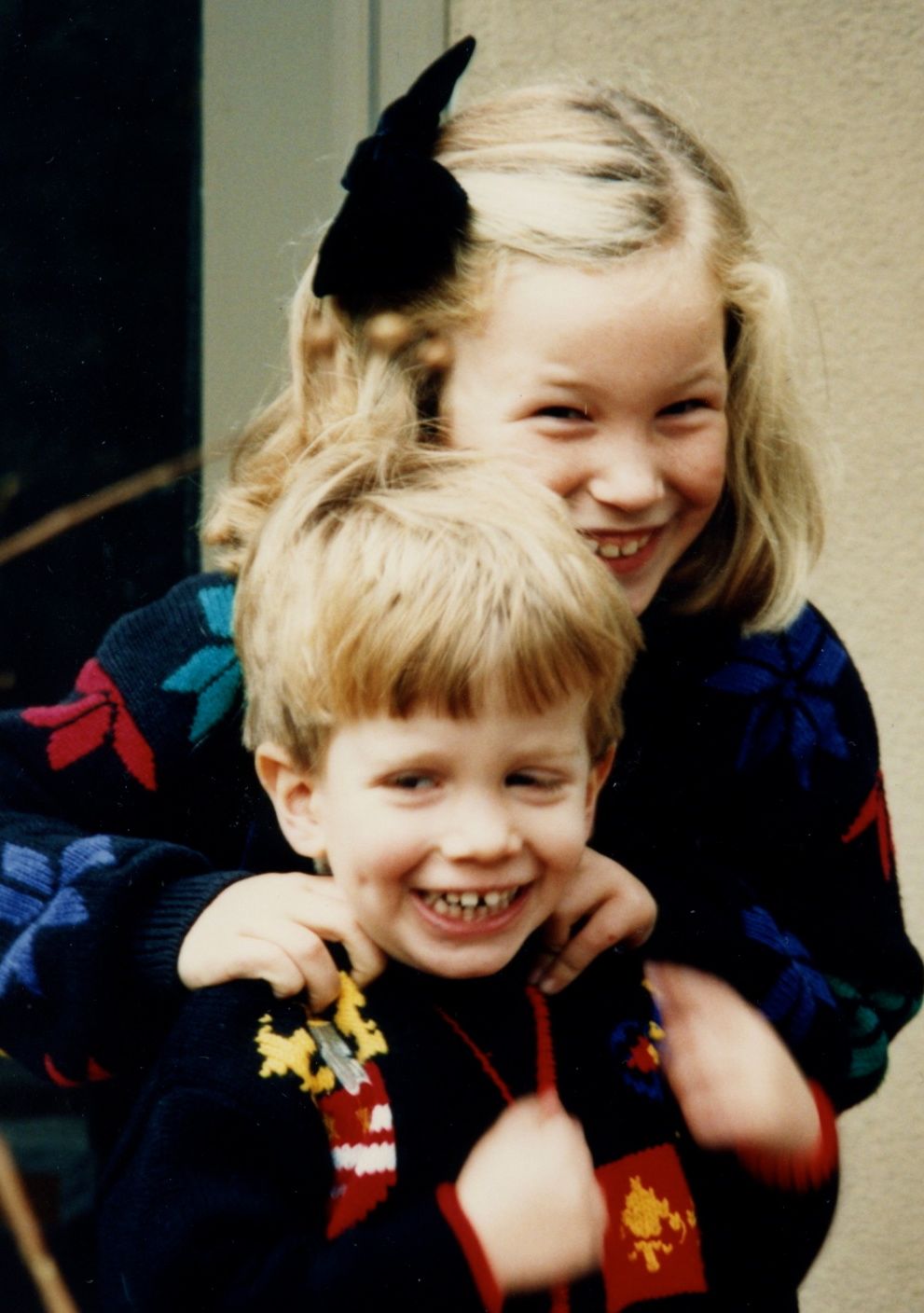
1993 maddie and thom stone

I’m dusting off my old holiday letters and pulling them together as a collection. Here’s a throwback — my holiday letter from twenty years ago (slightly excerpted). 

The Saga of the Stones commences with “Deep Thoughts” triggered by the occasion of the seeding soccer tournaments. For those of you not familiar with this annual event, it’s the interminably long day at which soccer teams of all ages play one another to determine their opponents for the year. The day seems “interminable” due to the notable (and rather cruel) lack of unlocked bathrooms at the soccer field, and the constant delays while waiting for the “Iron Pixies” (that’s Maddie’s team, taking on a tougher demeanor this year with the addition of the ‘iron’ to the team name) to play the “Ponderous Pandas” and the like.

As I wait, it occurs to me that nothing as prepared me for many of the experiences of parenthood. I read the American College of OB/GYN’s pregnancy and parenting handbook. I did field research by talking to other parents with kids. I read What to Expect When You’re Expecting (which is to today’s parents what Chairman Mao’s Little Red Book was to the Communist Chinese).

What I need is What to Expect After You’re Expectant: the 90s Guide to Activities, Sports and School Fundraising. This book would reveal the mysteries of “Daisy” scouts, which is pre-Brownies, which is pre-Girl Scouts. (I suppose “Seedlings” are the next logical step in Girl Scout preparatory organizations.) It would warn a parent of the hazards of over-zealous troop leaders who send out detailed instructions for the in-the-backyard-campouts including (my favorite): “Be sure to WD-40 your daughter’s sleeping bag zipper.” Same leader develops a menu that includes solar cooking of solar jam (roughly the consistency of melted red plastic) and solar cooking of corn in a black Merlino wool sock (available for purchase at the shee-shee men’s store for $16 or you can do like I did, pull one from the drawer and hope the washing machine sterilizes). Or over-zealous Brownie mothers who call with the helpful suggestion that free-range chicken eggs are more flavorful than regular chicken eggs, and can be purchased at Trader Joe’s. Don’t jump to the conclusion that these people are rich. They’re not. They’re just trying to create a REALLY meaningful learning experience. Maddie’s enjoying it. It’s me who’s unprepared.

The same book would warn parents that teachers are NOT KIDDING when they announce a jog-a-thon to kindergartners and provide information on how to compete for valuable prizes. Last year I was certain they MUST know kindergartners don’t have powerful rolodexes (yet), and that it’s the parents who do most of it… at least until the kids perfect their direct mail strategy in first or second grade. Wrong. Maddie was half-crazed the second day of last year’s contest after one child won MAJOR PRIZES (requiring more than 20 sponsorships). This year Maddie was ready. Perhaps you received her inaugural direct mail solicitation.

I am definitely not prepared. (And the thing is, about the time I figure out the bends and twists of parenting a school-age child, and get Tommy into that phase, I’ll be switching from books like What to Expect… to The Fountain of Age and emblazoning bumper stickers on my car like, “Women don’t have hot flashes. They have power surges.”)

Meanwhile, Tommy is proving that there ARE some things that can’t be explained by environment and socialization alone. Tommy has been able to hurl balls accurately since he could grasp. (About half of Maddie’s tosses still go straight up and land somewhere in the vicinity.) Anything remotely round or cylindrical must be a ball. A personal favorite of his is hurling all of my tampons off of our two story staircase one-by-one. (I won’t send this letter to my Mom; she is still appalled that they have feminine hygiene ads on TV.) Tommy looks almost uncomfortably like Todd’s brother Michael – strawberry blond hair, big dimples and smile, mischievous personality. In our household, we eat over a dozen bananas per week (also two dozen apples and about three gallons of milk). Uncle Mike hates bananas. And Tommy won’t touch them. Given Mike’s high school antics, I’ve decided genetics can be scary. I hope they finish the human genome project before Tom hits his teens. Maybe something can be done.

Maddie has learned to read, knows the days and weeks and months of the year, can add and subtract, and aspires to be a “horseback rider and ballerina.” A major highlight of the year was a fishing-intro trip to the headwaters of the Metolius River in Oregon… Tommy is running (all the time), very social, and beginning to talk… We acquired fish, Thomassina the cat has stopped peeing on the downstairs bed, and Winnie the sheepdog is really starting to act her age.

THINGS WE’RE CELEBRATING: Expecting the arrival of Todd’s cousin Jane/husband Doug’s baby soon… Thrilled for the arrival of little cousin Lena Thomassen in Norway, Rachel Carleson, Kendall Skreden, Hannah O’Hearn, Sarah Swanson, Alexander Steele, Devon Hoppe, Kevin O’Connor, Jeffrey Beltran, Shea Mohan, August Catalano Jr., and Charlie Weatherbee. It’s been a BIG year for babies. Happy for the new job prospects of Tamalon Littlefield, Joe Rehfeld, Pete Dess, David Mintz and no doubt tons of others… Wishing well my niece Sandy, who’s back in school in Virginia, as well as brother-in-law Ken who’s surviving his last year of a graduate degree at University of California, Berkeley… Hope all is well with you.

1 Comment

Filed under Uncategorized

The Beach

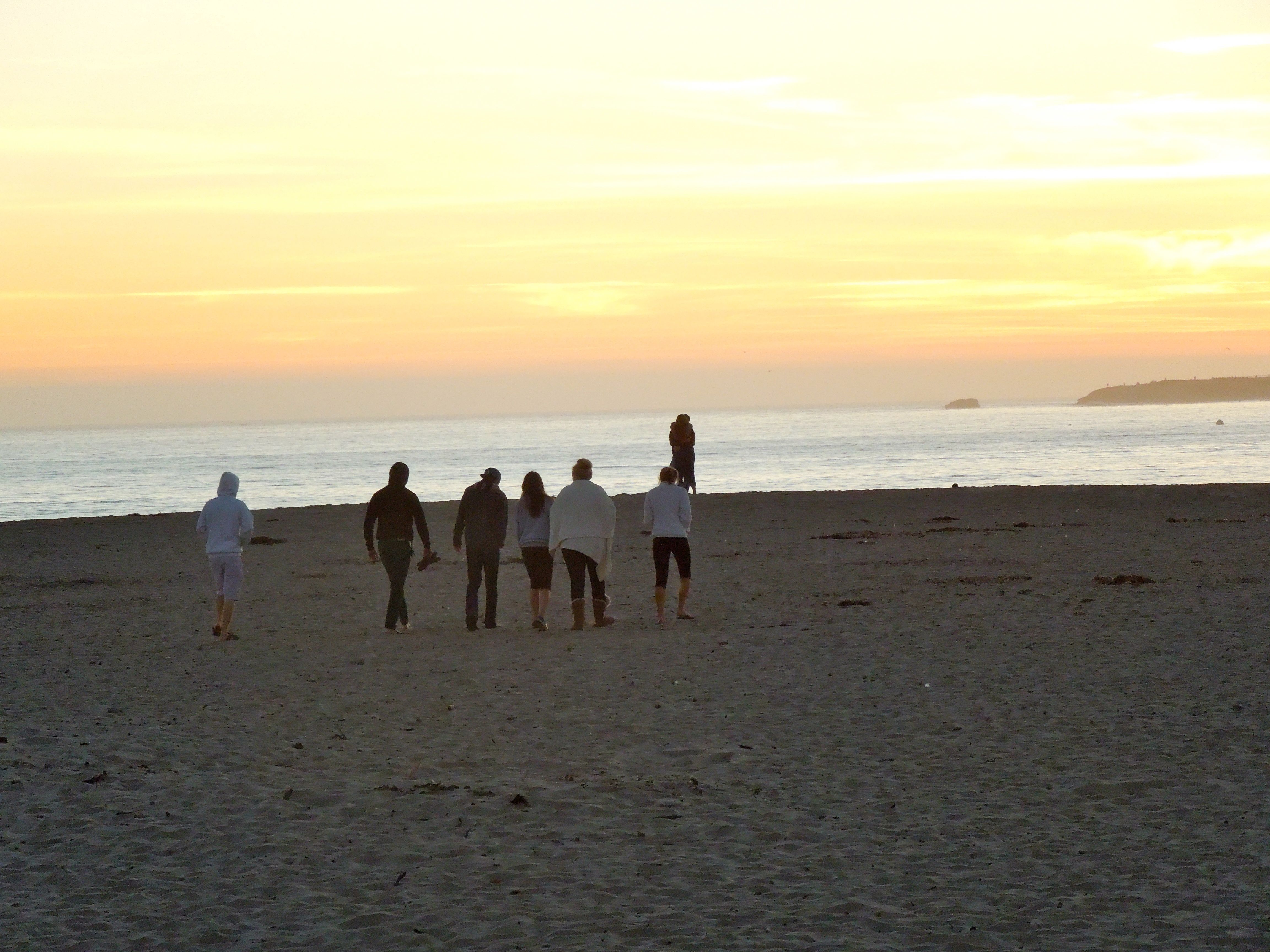
Santa Cruz

The ocean doesn’t factor much in my memories. If anything, it was a trickster. When I was a child in Hawaii, it would lull me with its disarmingly benign surface, warm and inviting, only to upend me with a sudden swell that turned my world upside down. I emerged gasping and chastened, salt water filling my throat and churning in my stomach. When we crossed the ocean, I looked out from our ocean liner in fear, aware that our vessel was no more than flotsam in the unending sea that stretched from one vista to the other.

This is different.

We spent New Year’s eve and morning with two families we have known since we were young invincibles. Before kids. Back then we sat in tight huddles (the women), punched each other’s shoulders (the men), sat on laps (the couples), drank too much and stayed up late. The talk was salty, silly and sometimes serious. If we talked of the past, it was about our childhoods, our relationships with our siblings, mothers and fathers. If we talked of the future, it drifted toward where we would travel, the possibility of jobs and whether our children would like one another. Through years of three-day weekends spent together, one belly after another swelled with pregnancy. We carried the future in front of us.

Three girls and three boys we had between us. For a time, when the kids were small enough to curl up in sleeping bags on the floor, we crammed into a house together. A house on the beach. We hiked through the cut in the dunes down to the blustery shore where the kids would run up and down, chased by the waves, laughing. I see us adults clustered on the shore, bathed in orange light, watching contentedly. At night, the children dropped into exhausted sleep to adult chatter punctuated with regular bursts of laughter.

Pulled by the demands of jobs and families, we reformed in occasional twos and fours — girls’ weekends, and less often, guys’ weekends. Dinner with two families. Our gatherings became more infrequent.

We planned to gather on December 22 for a long-anticipated reunion, all twelve of us, at the instigation of our young adult children. But instead of twelve, we were eleven. Debbie — Debbie the Loyal, Debbie the Connector, Debbie the Loving — Debbie was suddenly and irrevocably gone forever. A hole had been punched in our universe.

We gathered again on New Year’s Eve in Santa Cruz. Eleven, not twelve. As we walked on the beach, listened to our kids riffing on guitar, poured the wine, gathered over dinner, played a raunchy game, and finally watched 2013 turn into 2014, I kept thinking, “Debbie would have loved this.”

And this: “Where two or three are gathered in my name.” Jesus understood the power of community as a way to bring Him present.

When we gather, I do not feel a void where Debbie should be. I feel her presence. But I ache that she is just beyond my reach, beyond the thin veil that separates her world from ours, that I cannot tell her how much I love her and miss her.

It is our last full day at the beach. My children, now grown, are sleeping downstairs. The ocean laps nearby, seagulls cry and sea lions bark. Of all of us, Debbie loved the beach. I think of this as where Debbie lives now, watching the surfers stream like otters toward the horizon where the swells are biggest, grinning at the children who delight in their wet sand creations, turning to me with love. She is smiling at all of us.

I look for the words that fail me, and find this:

Something there is,
(With my lips soothing thee, adding I whisper,
I give thee the first suggestion, the problem and indirection,)
Something there is more immortal even than the stars,
(Many the burials, many the days and nights, passing away,)
Something that shall endure longer even than lustrous Jupiter
Longer than sun or any revolving satellite,
Or the radiant sisters the Pleiades.
 
From “On the Beach at Night” by Walt Whitman

2 Comments

Filed under Uncategorized

Love Three Times Over

When my husband asked me to marry him thirty-two years ago, I’d have said yes right away, if I hadn’t missed the proposal.

That Christmas afternoon, I was downstairs, watching TV in my bathrobe, happy for a day off work. The gifting was over, I’d helped Mom get the turkey in the oven, and I was well and properly sated from our big holiday breakfast.

“Bets!” Mom yelled from the top of the stairs, “You should get dressed!”

“Why?” I asked her.

“Your brothers are coming!”

My brothers were not a good reason to vacate my cozy spot by the fire. I could have cared less if my brothers thought I had fallen to ruin.

A little while later, I heard a commotion by the front door, a very quiet commotion. Now a “quiet commotion” may seem like an oxymoron but it’s the only way I can describe it. The doorbell rang, my mother walked rapidly from the kitchen across the entry hall slate floor, and there was a quick squeak of greeting followed immediately by silence. Usually you’d hear greetings exchanged and conversation. The soundproofing between floors wasn’t great and my mother was by no means quiet.

The door at the top of the stairs opened and someone proceeded down the steps, the third from the bottom squeaking as always (left hand side, a dead give away if you were trying to sneak in or out). I leaned to the side of the recliner so I could see who was arriving.

My boyfriend, Todd, was smiling at me from the foot of the stairs. My heart performed a little pirouette and I jumped out of the chair and into his arms. He was supposed to be to be at his folks’ house in Sacramento.

We’d been dating for thirteen months, the last four long distance, while I tried to get a foothold in my chosen career by taking the second opportunity to come my way, an advertising agency in Los Angeles. The first I’d been offered after sending out seventy-five resumes: a plum job in the marketing department of a regional food manufacturer. In New Orleans. Todd had comforted me on the beach in Tahoe while I cried, weighing my decision. Taking that job would most likely lead to the end of “us.” It was just too far — too expensive — to sustain a long-distance relationship.

Commuting to see each other between Los Angeles and Sacramento had proven hard enough. We reserved cheap midnight seats from LAX to Oakland on Trans World Airlines. Back in the day, you could snag cheap seats without paying for them in advance. But even at fifty dollars or so a trip, we could only afford to see each other every three weeks or so.

Just seeing Todd thrilled me. Seeing him for Christmas was even better.

After dinner was over and we’d spent hours talking, it was finally time for bed. Mom directed Todd to sleep in my brother Dean’s former room below the kitchen. My room was on the far side of the recreation room. After long, luxurious kisses goodnight, I followed the house rules and retired to my own bedroom. On my pillow was a final gift, along with an envelope.

I opened the small square package to find a picture of the two of us taken a few weeks prior. We sat smiling beneath Todd’s mother’s flower pots on her front porch. The envelope turned out to contain airline tickets for two to Hawaii.

I ran back to his room and jumped on the bed, thanking him with kisses. We were going to Hawaii!

“Well?” Todd asked.

“Well, what?”

“Well, will you?”

“Will I what?”

“Did you read the back of the picture?”

The blank look on my face was his answer. “Go read the back! And look at the tickets!”

I returned to my room and flipped over the picture. There, on the back, was a proposal. For marriage. And the tickets were made out for Mr. and Mrs. Todd Stone.

My heart thundered. I was thrilled and terrified. This was not my plan. I was a product of the late 70s, when women were told they could have it all. I was fully subscribed to the idea that I would pursue my career full tilt and not have children until I was 35. First I would live my life. Marrying Todd would mean leaving my job and moving to Sacramento. I couldn’t see being a long-distance newlywed.

If I said “not yet” to Todd, I knew he would understand but the moment would be lost, deflated.

I returned to his room, where he waited impatiently. I said yes. We stayed up for hours, taking it in, talking (and not talking). We were engaged. Just like that. The planner’s plan foiled, a new life born.

But that’s not the end of the story. The next scene is what I thought of when I first awakened this morning.

That December 26 was my parents’ fortieth anniversary. Just before dinner that evening, Todd and I asked my mother and father to join us in the dining room. They stopped their preparations for a small cocktail gathering of friends — Mom was finishing some “pupus” and Dad was setting up the bar, fishing liquor bottles out of the small hutch that served as his liquor cabinet.

They broke into smiles when they saw my grandmother’s gold rimmed slipper champagne glasses. “We wanted to toast your anniversary,” Todd began. He popped the cork and filled our glasses. Tiny bubbles danced upward.

All four of us lifted our glasses in unison. Todd interrupted, “And I wanted to ask for your daughter’s hand in marriage.”

That had been part of our discussion in the early morning hours. Should he “ask for my hand” or announce our engagement? We followed tradition.

Forty years before, Mom and Dad had found a minister to marry them the day after Christmas, while Dad was given twelve hours leave for that purpose. It was nineteen days after Pearl Harbor. More attacks on American soil were expected. A submarine could sail right up the Potomoc and attack the nation’s capital. Granting leave for purposes of getting married was not part of the drill in Quantico.

Getting married wasn’t part of Dad’s plan, either.

After Pearl Harbor, Mom had cabled Dad that she was taking the next train east, to be married. Knowing the mortality rate of Marine Corps second lieutenants in war, he didn’t want her to be widowed and therefore had avoided settling on marriage, but it didn’t surprise him that she had ignored his objections and declared victory.

Today is a triple anniversary. Today would have been Mom and Dad’s sixty-second anniversary. Today marks the thirty-second anniversary of my engagement. And today is the first December 26 when neither Mom nor Dad are here to mark the date.

None of those anniversaries are forgotten.

Leave a comment

Filed under Uncategorized

The Year-Agos

Figgy Pudding 2012

I started writing this post yesterday, and then I received an email from my brother Bruce about how he was brought up short when he reviewed his holiday card database and realized he would not be sending a card to Dad this year.

Little static-electricity jolts triggered by seemingly meaningless moments constantly zap you the first year after losing someone. Last year, addressing holiday cards was a necessary but unremarkable task. This year, it’s a reminder.

A year ago Friday night, December 6, I dined with two girlfriends friends in Seattle and strolled the Figgy Pudding outdoor caroling event snugly bundled up in matching winter white hats, mufflers and gloves. I felt full of holiday spirit, braced by the cold air, a little buzzed from the cocktails we shared over dinner. I never suspected that Dad’s decline had already begun.

My brother Scott, who was caring for Dad at my house, called the next morning to say that Dad was unable to urinate and in extreme pain. What should he do? At the doctor’s urging, he took Dad to urgent care where they removed over one liter of urine.

When I returned to Sacramento that afternoon, Dad was significantly weaker. He’d had a recent bout of extreme shortness of breath and then pulled a muscle. With the bladder problem, there was no question of him returning back to his assisted living community. By Tuesday, he was in extreme pain again, unable to urinate. He was sent home from the ER with a catheter that we hoped would come out after a week.

I was frantic. The catheter gave him a sensation that felt like urinary urgency, so he tried to rise every 15 minutes or so. If he was not watched at night, he would attempt to get up for the bathroom and fall. 

Ten days later, he stopped being able to walk.

My world had transformed from light to dark. From an evening lit by sparkling decorations, cheeks blushing pink from the cold, lilting carols soaring in harmony, I sat by my father’s bedside, worrying.

Instead of making me sad, that turning point reminds me that a year ago, Dad was still here. A year ago, I had every reason to expect he would recover from this latest health setback. A year ago, I knew Dad would feel better when the winter lifted and spring bloomed again.

Today I leave Seattle, headed for home again. The house is already decorated. Dad’s room will be orderly and quiet. When I walk in the house, I will remember that it was the beginning of Dad’s final decline. The hard part is over. He is worth remembering, worth loving and worth every moment spent comforting him.

Leave a comment

Filed under Uncategorized

Trying to See

Bookmark by Tommy StoneAs I finished my last blog post, my daughter was quietly singing Billie Holiday’s hit, “I’ll be seeing you.” She sang the last line as I put the coda on my post.

After my father’s death, my mentor Jim suggested that I focus less on DO-ing and more on BE-ing. Other friends have passed along their systems for appreciating the blessings in our everyday lives including the 21-Day Gratitude Challenge. But I feel like I have to take a step even further back, back to seeing.

My third grade teacher observed that I could read quickly, but didn’t retain what I read. I was too impatient. My bedside table at home looks like a mini-library because I tend to start one book only to become distracted by another. I flit between categories: travel literature, memoir, nonfiction about death and dying, novels and what I like to call “Cheetos” literature for its complete lack of nutritional value and dependence on artificial coloring. Such escapist reading leaves nothing behind except the tell-tale orange ring around one’s lips.

I have to write a critical essay about a book that changed my life. That’s a tall order, one I don’t think I can fulfill. But the first book that came to mind was one I never finished. At the time, I found it beautiful but tedious. The book was Annie Dillard’s Pilgrim at Tinker Creek.

Since we moved from Davis to Sacramento, I have maintained a discipline about how many books I can keep. I have room for about 150 books, and it’s survival of the fittest. If I add a book that I want to keep, I force myself get rid of others. Otherwise the whole house will start looking like a giant version of my bedside table. I know I am at risk of book hoarding.

Why did Dillard’s book come first to mind when I didn’t even like it?

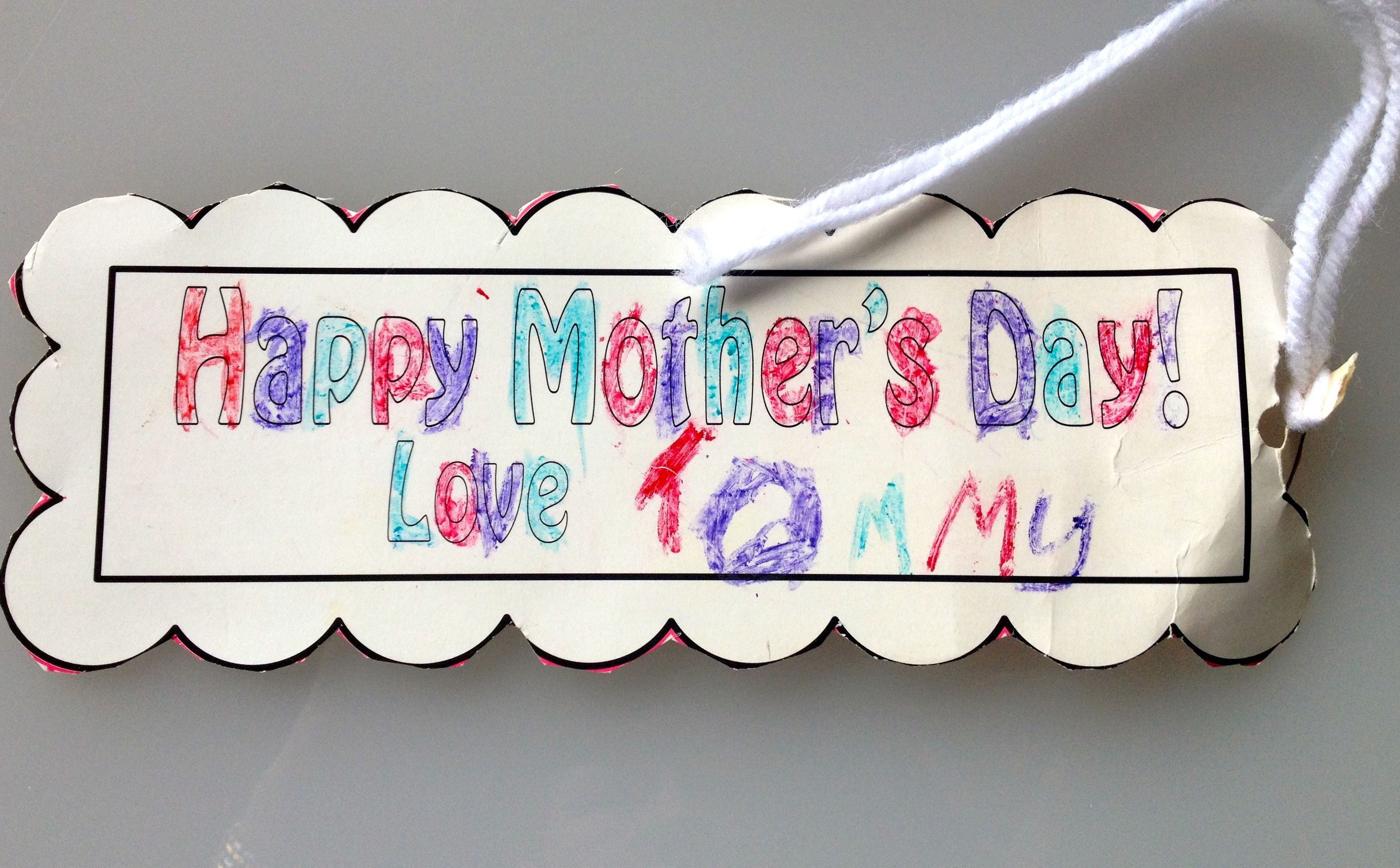
A handmade bookmark with a scalloped edge and yarn tie extended out of the book. The outlined letters were colored in with crayon, reading, “Happy Mother’s Day! Love Tommy.” On the reverse, Tommy had colored a tulip red and a vase robin’s egg blue.

It marked page 33, where I read this:

“Seeing is of course very much a matter of verbalization. Unless I call my attention to what passes before my eyes, I simply won’t see it. It is, as Ruskin says, ‘not merely unnoticed, but in the full, clear sense of the word, unseen.’ My eyes alone can’t solve analogy tests using figures, the ones which show, with increasing elaborations, a big square, then a small square, then a small square in a big square, then a big triangle, and expect me to find a small triangle in a big triangle. I have to say the words, describe what I’m seeing…. I have to maintain in my head a running description of the present. It’s not that I’m observant; it’s just that I talk too much. Otherwise, especially in a strange place, I’ll never know what’s happening. Like a blind man at the ball game, I need a radio.

When I see this way I analyze and pry…. But there is another kind of seeing that involves a letting go. When I see this way I sway transfixed and emptied. The difference between the two ways of seeing is the difference between walking with and without a camera. When I walk with a camera I walk from shot to shot, reading the light on a calibrated meter. When I walk without my camera, my own shutter opens, and the moment’s light prints on my own silver gut. When I see this second way, I am an unscrupulous observer.”

When did Tommy make that bookmark for me, I wondered? He might have been five, six or seven — young, anyway. If he was seven, Maddie was 12. And my mother was dying.

I worked for an international public relations firm where I led the firm’s West Coast health care practice. I was at a meeting of the practice in New York City when I got the call that my mother was in the hospital with lungs full of fluid. They confirmed advanced lung cancer, and expected that she had only weeks to live.

My boss told me to take all the time I needed. With the help of hospice, Mom stabilized when we were finally able to get her home. We watched her fade before our eyes for three and a half months.

When I returned to work, my functional boss had to deliver the ultimatum that came down from on-high. Get business up, fast. Mom, he acknowledged, had taken too long to die for the taste of our overseers.

Somewhere during that period, I was trying to read Dillard.

My impatience has caused me to miss a lot, but I find that the images are still there, and I am slowly making my way backward, making sense of my experiences. I am reconnecting with people who have been important to me, but with whom I had lost touch. I am visiting places and imagining them through the eyes of my father, as I did when I visited Marine Barracks last spring and summer. I am retracing my own steps and remembering how I felt when I walked the same path a year ago.

I am trying to see.

I’ll find you in the morning sun/ And when the night is new/ I’ll be looking at the moon/ But I’ll be seeing you.

Leave a comment

Filed under Uncategorized