Tag Archives: Henry Campbell

I’m Dreaming of… Strange Things

Dreamscape in Cappadocia by Betsy Stone

I have not been dreaming of a white Christmas.

My friend, Collette Johnson Schulke, pays close attention to dreams in her own journey as a caregiver. I don’t think you need a psychiatrist to interpret several of my recent dreams:

  • I boarded Amtrak to San Francisco, and knew that my husband was already aboard. But the train was already so packed that there were no seats so I couldn’t sit or even be in the same train car as he was…
  • I was in a city downtown and I had to get from one high-rise to another high-rise. The only way to do it was to walk a tightrope….
  • I was a journalist writing a story about mining operations deep underground. I went down 24 floors and entered a hatch (like that on a ship) and saw people in suits intended to protect them. To my left, a team was doing a safety drill in which they had to jump off a ledge in a weighted wheelchair, drop the 10-12 feet to the stream bed of an ice cold underground spring, and roll across before emerging up the far sie — a test of their ability to survive without oxygen in extremely cold conditions.

Hmmm… let me see… facing extreme conditions… feeling like I am walking a tight rope… and feeling sad that there was no room for me or proximity to my husband. Gosh, what could these dreams mean?

Hospice came aboard yesterday. No such dreams last night. I feel much better about Dad getting what he needs, and me, too.

Leave a comment

Filed under Uncategorized

Dear Hospice, Thank You

Dawn in Sacramento

My father was admitted into Sutter Hospice today. All at once, I was sad and relieved. As my brother, Dean, said:

Glad to hear this. Don’t exactly feel like celebrating but definitely relieved to know we will be able to manage his symptoms better.

Exactly. I wish this wasn’t something we wanted or needed for Dad, but I know hospice will provide him with the best possible care.

Several people have asked, “What does hospice give you that you couldn’t get without it?”

Frequent nursing visits in the home so that you don’t have to drag your loved one to the doctor when symptoms develop. Medications (more types, and stronger) that work better for symptom control when you can’t fix the underlying problem with surgery or  procedure and physicians aren’t worried about long-term consequences. Equipment that helps to prevent more pain and problems, rather than address them once they’ve developed. 24/7 access to telephone advice from a nurse who is really knowledgeable about serious illnesses. Some volunteer support for respite. Professionals who visit with the person who is ill and his/her primary caregiver(s) to provide moral and spiritual support. In short, a whole gang of people who actually talk to each other so that you don’t have to chase down the support you need.

I’m not ready to think about “the end,” but I know it’s not in the distant, unimaginable future. I know hospice is a comprehensive form of care that will help to make my Dad’s present more worth living.

3 Comments

Filed under Uncategorized

Dear Hospice – A Plea

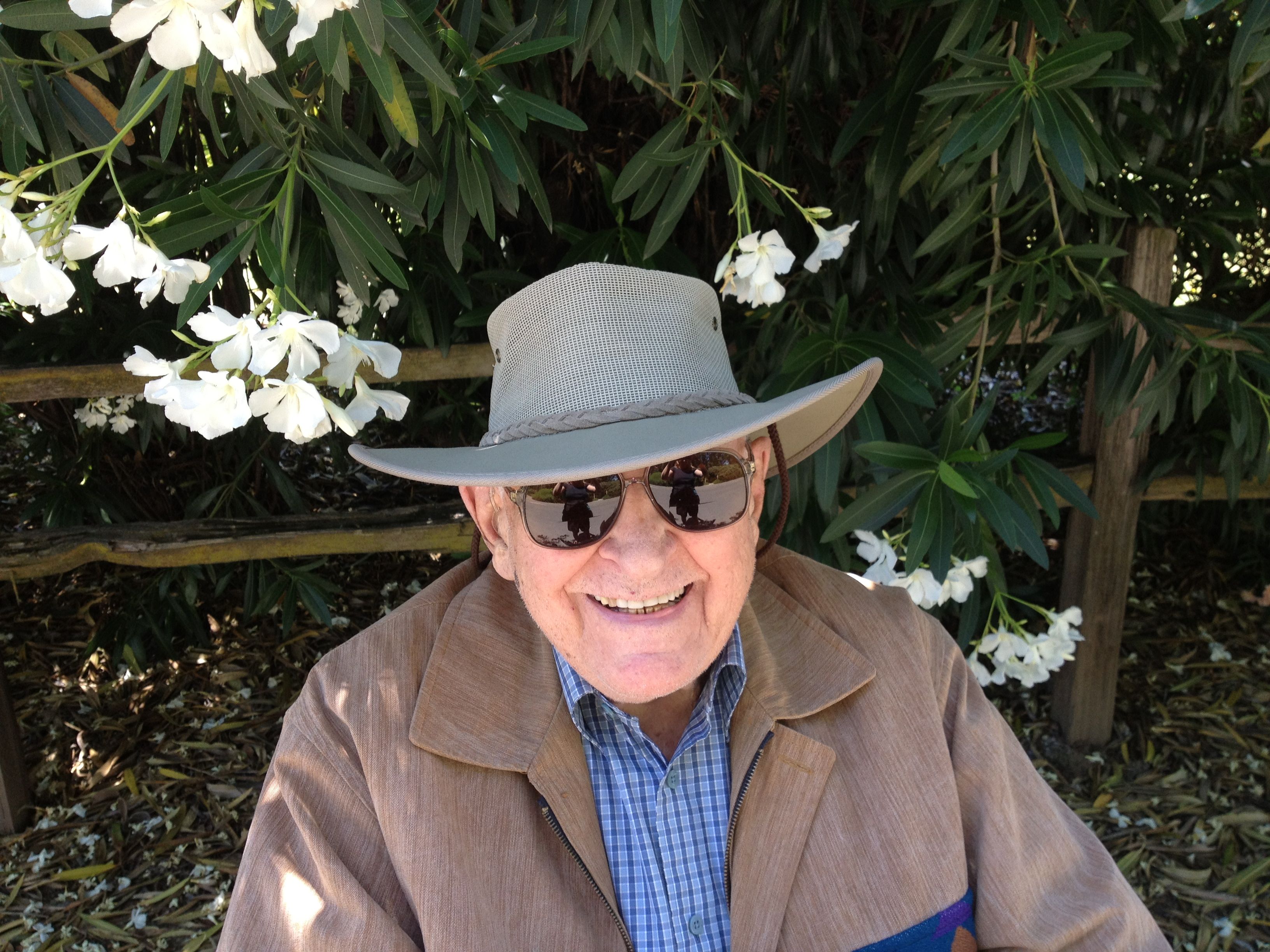
At the table with Henry Campbell

Dad’s still got a smile on his face in this picture, but if you know him, you can tell it’s a little more forced. I’m writing you – dear hospice angel – to say that I hope you will admit Dad into your program this week. When I’ve raised the possibility, every clinical person I’ve talked to this week has gone on at some length about how hospice isn’t what people think: it’s not “giving up”; it’s not stopping care. Then they explain that hospice is better care.

The thing is, my brothers and I know that. My mother was in hospice care for late stage lung cancer from mid-February until May 10, 1999. We know what you can do. We know why people donate to hospices: you may not be life-saving, but you are quality of life-saving.

I want to be able to step back from trying to figure out how to make Dad comfortable and just be his daughter. I know you will be a hell of a partner in this. This is what my dear friend Jim Jennings wrote me about the task ahead of me now:

All you have to do is just be with him — the Hospice team will keep him comfortable.  Keep this image in mind:  you can hold his hand and mother/daughter love him all the way up to the bridge over the river of life, but then he has to let go of your hand, and you of his, so that he can walk over that bridge on his own with his back turned to you and this world you share, into the world you will share together in eternity.  Tis the way for all of us.

He may, like others sometimes do, dwell on the bridge for a while, seemingly here and seemingly not here.  Some folks take their time.  If he gets to this point, just keep telling him you love him and it is OK to go — that you and your brothers will be OK — very important each of you tell him at some point it is OK for him to be on his way. Stay focused on each day and the little things.  You know, you have to help birth him into the larger life. Turn it all over to Love Divine.

Life is really hard for Dad right now, and it’s getting more painful. He struggles for breath most of the time, which is making it harder to eat and drink. His heartbeat is irregular despite being controlled with medication; it’s working awfully hard. He can still walk with his walker to the kitchen table in the morning, but by the end of lunch, he isn’t strong enough to do so. He hasn’t been strong enough to stand and step over the four inch threshold of the shower for two weeks. His beard is growing in mostly white because he’s too tired to shave: something a Marine Corp Col. Ret. hates to skip. By afternoon, transferring to the wheelchair or the John is a bear. He’s eating less chocolate cake. If you know Dad, that’s the biggest indicator of all.

I talked to Dad yesterday about whether he wanted to seek admission into hospice. His comment? “Makes perfect sense.” He has been saying since summer that he feels he is finished here. He asked, “Do we have any unfinished business?” No, and neither does he. He told me this week that he has lived a good life and “done some things right.” He’s always grateful and surprised that I am here for him, 100%.

But that’s his legacy. He loves me unconditionally, and always has. I love him back the same way.

Dear hospice,

Please help me love my Dad, now, the way that I want, by supporting my brothers and me in caring for him.

8 Comments

Filed under Uncategorized

The Circle Closes

Silent movies used to use a particular edit to denote finality: a circle that grew smaller and smaller until everything went to black. When Looney Tunes lampooned the technique, Porky Pig suddenly squeezed through the shrinking circle, to stutter “That’s all folks,” before popping back into Toon Town, the window closing behind him.

I’ve often thought of the end of life in those terms. The past few weeks,the circle has been closing.

With an underlying diagnosis of congestive heart failure, and the instinctive discipline of my Dad, it’s been hard to predict how the final years of his life might go. My Mom’s terminal lung cancer had a pretty known trajectory; although she was given weeks to live, she lived nearly four months, but either way – we knew it wouldn’t be long, and it wasn’t long.

Every day now gets a little tougher. Dad is growing weaker. He sleeps more, and sometimes is not strong enough to stand and walk. He is very short of breath even at rest, and eating and drinking is becoming more difficult. His heart rate is lower and becoming irregular, and his blood pressure is up. He is working hard just to breathe and talk.

So I wonder, perhaps for the first time: are we now in the final period? I won’t call it the home stretch because there’s nothing homey or relieving about it. I have been with two people when they died, and it was hard work for them, leaving this world, even with great comfort care.

A week ago, my brothers were worrying about Dad’s dignity as he left the ER with a catheter. One of them said it was “one more blow.”

Funny, as Dad has needed more personal care this week, dignity hasn’t felt like a big issue. Words from Tuesdays with Morrie came floating in to my head, so much so that I dug the book out this morning:

“Mitch, it’s funny,” he said. “I’m an independent person, so my inclination was to fight all of this — being helped from the car, having someone else dress me. I felt a little ashamed, because our culture tells us we should be ashamed if we can’t wipe our own behind. But then I figured, Forget what the culture says…. I am not going to be ashamed. What’s the big deal?

“And you know what? The strangest thing.”…

“I began to enjoy my dependency. Now I enjoy when they turn me over on my side and rub cream on my behind so I don’t get sores. Or when they wipe my brow, or they massage my legs. I revel in it. I close my eyes and soak it up. And it seems very familiar to me.

It’s like going back to being a child again. Someone to bathe you. Someone to lift you. Someone to wipe you. We all know how to be a child. It’s inside all of us. For me, it’s just remembering how to enjoy it.”

Hundreds of times, my Dad has said to me, “Everyone needs a mother.” Everyone does.

I am hoping that I can do what mothers do in these final stages: make the boo boos feel better, and chase the nightmares away.

4 Comments

Filed under Uncategorized

Love and Buckwheat Pancakes

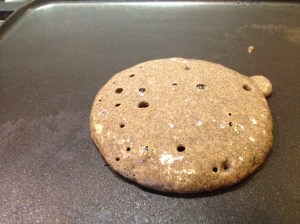
Buckwheat pancake on the griddle

My brothers and I all have our ways of demonstrating love for Dad. And right now Dad can use all the TLC he can get.

My brother, Dean, whipped up a batch of one of Dad’s favorite confections this morning: buckwheat pancakes.

My kitchen smells like stale beer the morning after a fraternity party. These grainy pancakes, tasting of yeast and looking like dirt, are an obsession that escapes me. “It’s an acquired taste,” Dean says. I guess.

I may dislike the smell and hate the taste, but I love these little rituals that my brothers bring with them when he visit. Dad eats it up. Literally.

1 Comment

Filed under Uncategorized

Summoning Angels

Perhaps the worst losses are the ones that we don’t expect: the children who die before their parents, the young mothers or fathers whose lives laid ahead of them, the mothers we expected to be in our lives for so much longer.

With these premature deaths, we wail with no less intensity than the mourners of ancient Rome, albeit through all the ways that we communicate now. Whether poured out in text messages, or emails, on Facebook or by telephone, it is awful to behold, and worse to feel.

With the loss of my “other mother” in October, I find myself compelled to unpack some Christmas decorations that I haven’t displayed in years: my mother’s angels. Back in the 50s and 60s, my mother collected small angel figurines that she displayed on a bed of “angel hair” (spun fiberglass) that glowed from the string of tiny white lights beneath. Each was lovely, but one in particular stood out: a small girl angel, clad in pink, rosy cheeked, curly haired, head bowed, hands clasped in prayer.

Angels weren’t just a symbol of Christ’s birth to my mother; she had her own little angel in heaven. Before I was born, my sister, Midge, died of leukemia at the age of four. I don’t remember seeing obvious signs of grief in my mother or father during my childhood. But much later, after my mother died in 1999, Dad poured out his heart to me. He repeatedly slapped his palm against his forehead as he described her calling out to him from her oxygen tent in the hospital, “Daddy, help me.” “I couldn’t do anything,” he said, “I went out of the room and pounded on the wall. I couldn’t do anything.”

In the past few weeks, I have borne witness to and experienced that stabbing kind of pain that comes with unexpected loss: the continuing fallout from the death of a young mother to alcoholism, the sudden loss of a joyous and loving young father, and my “other mother,” Miss Ann.

My other mother’s family gathered to make her favorite foods and set the table just as she would have, harvest colored candles arrayed on her heavy brass serving tray. My friend who lost her childhood buddy to addiction wrote a eulogy filled with beautiful stories of her wit and strength. My friend who lost her brother, the young father, raises beers to him to re-enact the fun times when they met at the Whole Foods Bier Garten. These moments were nothing like scenes from a TV drama in which survivors look beautiful while they delicately weep in their time of grief; they were – and are – red-eyed, snot-riddled affairs where people try to do something, anything, to make a terrible reality less terrible.

In reliving traditions – even privately – we summon the people we have lost, the people we feel we should not have lost. Are we hoping that their ghosts will be with us as we go through our rituals? Do we imagine that they will be near as angels, hovering over our lives? I think my mother imagined Midge as an angel, captured in the likeness of the little pink-clad figurine.

Caroline Kennedy, who knows a few things about grief, devoted a chapter to death and grief in her lovely collection of poetry, She Walks in Beauty (Hyperion, 2011). Among the poems was this excerpt from “To W.P.,” by George Santayana:

With you a part of me hath passed away;

For in the peopled forest of my mind

A tree made leafless by this wintry wind

Shall never don again its green array.

Chapel and fireside, country road and bay,

Have something of their friendliness resigned;

Another, if I would, I could not find,

And I am grown much older in a day.

But yet I treasure in my memory

Your gift of charity, and young heart’s ease,

And the dear honor of your amity;

For these once mine, my life is rich with these.

And I scarce know which part may greater be —

What I keep of you, or you rob from me.

Those who lose someone too soon know what it means to grow older in a day, and to feel robbed by the loss of someone who died before we were ready. As I pull out my mother’s angels, one by one, I call her: “Mom – whether you are angel or ghost – be with me.”

1 Comment

Filed under Faith journey, Uncategorized

Saying goodbye

While my “other mother” was lying in her hospital bed at St. Joseph’s Medical Center 10 days ago, in between periods of stark awareness, my mind kept rewinding and fast forwarding. I rewound to a night thirteen years ago when my mother was in a different bed in St. Joseph’s, fading in and out of lucidity following procedures that first discovered her late stage lung cancer and then sought to repair a hole in her lung so that she could go home with hospice. But I was also fast forwarding, imagining the day that I will hold my father’s hand while he struggles to leave this earth. I think that’s how it is for many people: when we lose someone we love, we also think about the others we have lost, and those who we cherish and are losing.

I almost published this journal entry from February 16, 1999 just before I headed up to Washington state. When I returned Monday night, it was the first thing I saw on my desk:

Last night, I spent the night with Mom at St. Joseph’s Medical Center. Two-and-a-half weeks into her stay, following her diagnosis of lung cancer, she was for the first time completely lucid.

At about 9:45 p.m., Mom was looking at the ceiling. I asked her if she was thinking or looking at something. She replied that she was thinking.

Over the next hour, in quiet and measured tones, she said goodbye to me. She began by saying, ‘You’ve been a wonderful daughter.’ After a few minutes, she added, ‘You’re a very competent woman.’

I realized that she was beginning to say goodbye. I wanted to tell her how much she meant to me but the words seemed so inadequate. I told her she was a wonderful mother — strong, loving and nurturing. I remember once, when I was quite old, that she had responded to my sadness by pulling me on to her lap in my Nana’s rocking chair.

I hugged her and apologized for crying. She said, ‘Why not?’ Then she said, ‘You are a beautiful daughter; now get some Kleenex and blow your nose.’

After a few minutes she said, ‘We’ve had a wonderful life together. Sons are special but there is something very important about a daughter.’  She tried to express her thoughts about what makes daughters different and struggled a bit with the right words. She said, ‘Daughters are more emotional.’ It seem to me that what she meant was that daughters are close to one’s heart in a different way.

I said to her that my brothers had been wonderful throughout her stay. I told her they had comforted her and been loving and compassionate. I told her that we had not left her in the entire 2 1/2 weeks. This seemed to surprise her. I added, ‘We didn’t think you would want to be left alone.’ She said, ‘You were right,’ and smiled softly.

She said that her grandmother was in her late 90s when she died and that she couldn’t remember how old her mother was when she died. Implicit in her remark was her consideration of the age she would be when she died.

‘It’s one of the hardest things you ever do to say goodbye to people you love,’ she said, ‘but it’s important.’

I asked her if she was worried. She said, ‘Not exactly.’ I said we loved her and would be with her every step of the way and that God was with her.

She asked, ‘How is your Dad handling all of this,’ glancing at her hospital bed and surroundings. I said that he was sad because she is so precious but that he was okay and taking care of himself. I said I would take good care of Dad.

She said, ‘I’m going to outlive your Dad,’ and then she added, ‘at least I think so.’ Then she reflected for a while.

I commented on her strength and said that we were raising another strong woman in Maddie. She agreed and added, ‘And Tommy is wonderful, too.’ I reminded her what she had said emphatically to Maddie that morning: ‘You know what? I like you.’

Finally I asked if there was anything I could do to make this easier. She said, ‘Well, one thing you can do is continue to be the marvelous woman that you are — competent, with a high level of activity, a very high level of activity. The world needs you.’

She drifted off to sleep. Not long after this was written, she did make it home with hospice. She passed away the day after Mother’s Day, on May 10, 1999. I miss her.

2 Comments

Filed under Uncategorized

What makes caregiving so hard?

I thought I knew what hard is. Hard was being nine months pregnant, diagnosed with pregnancy induced hypertension (ankles bloated to the exploding point), and getting ready to present the first full-scale consumer awareness study to the hospital system execs for whom I worked. Hard was working full-time, while trying to be a good mother of  a one-year-old and  studying for my M.B.A. during nap time and at night. Hard was working a full day with two hours of commute time on either end.

Being responsible for someone who needs your help and care, it seems to me, isn’t exactly training for the Olympics. But it can feel that way sometimes.

My Dad doesn’t need assistance with the basics. He dresses himself, puts his hearing aids in, eats independently, and has the toileting thing pretty much under control. My caregiving gig is a lot easier than many.

I think what’s hardest for me is the emotional burden – dodging obstacles, holding others up who worry from afar, and coping with the no-end-in-sightedness. I am constantly anticipating problems and talking steps to circumvent them, for example, clearing my Dad’s path of trip hazards and pre-emptively clearing dishes so that my he will not take it upon himself to do so, toodling from the breakfast table to the counter with dishes in both hands (and thus without either cane or walker). When a medication stops working and needs to be adjusted,  I run the gauntlet of conversations with doctors and care staff, trying to get accurate information about the situation (clarifying, clarifying, confirming) and calling and finally badgering someone into changing medical orders.

Dad is unstable enough that my brothers now worry from afar. I understand their vigilance, having felt just the same way when home in California during my mother’s four month hospice period in 1999. When I report setbacks, which have been more frequent during the last month, I get messages from my brothers asking if this is a crisis and whether they should book flights. I know their messages are code for, “Do you think he could die?” I try to reassure them. Understanding that you are going to lose someone is to begin grieving. I know they hurt. [Brothers who read this: this is not a complaint. I really appreciate your increased vigilance.]

We’re not there yet. Several times of late I’ve been asked what I will do when “this period is over” (code for “when Dad is dead”). I don’t know. I can’t plan. If I get my head in the future it will be even harder to manage the day-to-day. So I am actively avoiding long term planning.

Right now my whole world is the next two weeks, in which I hope we will stabilize Dad’s underlying congestive heart failure condition so that his weight swings and shortness of breath resolve, at least until the next unsettled period.

This shouldn’t be that hard. But some days it is. Fortunately, today is not one of them. So far.

3 Comments

Filed under Uncategorized

Family communication: seeing eye-to-eye through our diversity

Nephews, brother, sister-in-law, niece and Dad – out on a walk

Writer’s note: If you find this blog post of interest, you might want to check out a discussion on the NY Times New Old Age blog in which readers comment about communications techniques they have found helpful – a response to the article, “How Do You Keep Track of It All?”

My brothers and I look so little alike – and are so little alike – that it’s a matter of family jest. The brother who is closest to me in birth order and I once had to show our driver’s licenses to prove we were related to a woman who knew us both yet was unaware that we were related. My eldest two brothers are 15 and 10 years older than I am. The family unit they grew up in – which included a younger sister who died of leukemia in the 1950s – was a different one than the one my younger brother and I knew. It would be easy for us to have different ideas about “what to do” about our parents as they aged.

Instead, we seem to be in lock step.

Going back 15 years, when my mother’s dementia grew worse, and later, as she struggled with late stage lung cancer, my brothers and I evolved a system for communicating with one another. That system reduces stress for my Dad and makes it easier to ensure that he is getting the care he wants – and avoiding the care he doesn’t want. It also provides me with emotional support, and now it seems to be helping my brothers and I to imagine how we will be a family after my father’s eventual death.

That “system” started when my brother who is nearest in age called to suggest that we rescue Dad for a few weeks (by taking Mom on vacation) during the period when my mother had become increasingly agitated. Dad’s angina was increasing as her anger and confusion grew. Later, when my mother was eventually hospitalized and near death, our sporadic phone calls were replaced with much closer coordination by phone and email. We took turns staying with her in the hospital and took notes during our “shift”, briefing the next family member who arrived to sit by her bedside. On at least one occasion, our notes enabled us to correct what would have been a grievous medical error since her chart became so large that it was split in two – and some important information about her medication was not transferred to the active chart. When my mother came home with hospice, we tried to keep one another informed of her status as we rotated for three-to-five day stays at my folks’ house to oversee her care and my father’s recovery from his third bypass surgery.

In the past six years that Dad has lived partly with me and partly in an assisted living apartment, I’ve sent periodic “Dad Reports” to my three brothers with details about his spirits and physical health. Instead of quietly nursing resentment when I felt they weren’t doing enough to reach out to Dad via mail or email, I point blank asked them to step up their outreach to him. Our efforts were greatly enhanced by a “Presto” machine that automatically prints out emails sent to my Dad’s email address, thanks to a gift from my eldest brother.

As I have become more concerned about my Dad’s failing health, I have shared recent blog posts with my brothers, including my long rant after reading Joe Klein’s cover feature for Time magazine, “How to Die.” And it was that most recent outreach that uncorked a cascade of emails from my brothers that truly surprised and moved me. Not only were they aligned around preserving my Dad’s comfort and dignity, but they vocalized a commitment to our family unit.

My first reply came from “brother #2”:

I guess I’ll start by saying that for the past year I have been expecting a phone call from my Betsy or the staff letting me know that Dad had passed – I know that phone call is inevitable, and I know that every time I go up to provide respite for Betsy, I might be the one making that call to the rest of you. Selfishly, I don’t want that duty but if I have to be the one to make the call, I will respect Dad’s wishes. I know that he has lost everything he loved or took pleasure from in life, and has become a dependent. He can’t hear us, and I know it galls him.

Is there value in a rush to the ER? Well, the medical profession can certainly prolong a life that has become burdensome and often painful, but they cannot turn back the clock and give life in abundance. And ultimately, all the tests in the world probably won’t offer much that will give him a more abundant life.

I am conflicted by these thoughts – I like the family we have become and the strength that we siblings have found through Mom’s hospice. In many ways, I think that Dad has been the glue that bonded us all together, and I am fearful of losing more than just Dad when he passes away. But that’s not a reason to withold from Dad the end he wants.”

Then brother #1 weighed in:

(Brother #2) has done a good job of capturing my thoughts and feelings on this subject. And like him, one of my worries is that Dad’s passing will dissolve the glue that has kept the four of us close as siblings. I have the longest experience of the four of us with the reality of Dad’s mortality, going back to when Mom and I drove Dad to the Navy infirmary at Pearl Harbor when he had his first heart attack. I recall well how worried Mom was that Dad wouldn’t come out of the hospital alive, but yet he did, and he has hung on tenaciously for nearly 45 more years. As much as it distresses me, his race is almost run, and he has fully earned the right to let go when he thinks the time has arrived. Like (brother #2), I wouldn’t want him to die in distress, but neither do I think it’s fair to him to prolong his life if he wishes otherwise. 

It obvious that the time is drawing closer to when we will lose Dad, and as prepared as I have been for years for him to die, I still dread the reality. We have all been so incredibly lucky to have had Mom and Dad as our parents, and with Mom gone it will be even more wrenching to lose Dad as well. So, I think we should continue to dialogue about our courses of action and be available for one another. As the oldest sibling, I feel a good deal of responsibility for the three of you, even given the fact that you are all strong adults and don’t need me to look out for you. But old feelings and habits are hard to break…”

And lastly, brother #3:
“I have been acutely aware of Dad’s heart condition these many years, and recall thinking when we were off hunting by ourselves that something could happen anytime.As Dad approaches 96, he has clearly run a great race; he recognizes his time is coming and is at peace with that. I have always believed his end would come with a final MI/cardiac arrest; but who knows. Should we find ourselves in a situation where hospice is appropriate – perhaps the heart failure finally becomes unmanageable – then hospice would  be a good choice, and without further intervention other than palliative. On the other hand, if a condition presents that can be reversed or managed to maintain quality of life then I agree the right thing would be to obtain the care.
I agree with (brother #1’s) observation that Mom and Dad helped us to form a strong family. It’s unimaginable to me that we would somehow fall apart after Dad is gone. I enjoy being with each of you and will always love all of you.”
Not only did I find my brother’s emails restorative, but it gave me hope that we will find a way to enjoy one another into the future, despite our differences. Without this effort to communicate with one another, I am certain that the future would have seen us drifting apart, separated not only by physical, but emotional distance.

Leave a comment

Filed under Uncategorized

Is there value in prolonging life after 80? 90?

The title of this post is provocative, but so is this use of the politicized phrase “death panel” by Joe Klein in his June 11 Time feature article, “How to Die”: “My parents died serenely, with dignity. When you are a death panel — when the time and manner of their passing is at least partly in your hands — that is the very best you can hope for.”

Mr. Klein’s story — which encompassed his parents’ relationship, their struggles with very old age, his Dad’s tendency to act “as if old age were a reversible condition,” and finally his experience with Geisinger’s candid communications style and evidence-based approach to medical care — was truly moving. I recognized in his account the emotional tug-of-war that goes with being the caregiver who has the day-to-day responsibility of interpreting a parent’s end-of-life wishes.

The Time feature (click to see a video with the author here) and another article in the New York Times’ “New Old Age” blog has pushed to the front of my mind this question: will I send my Dad to the E.R. again?

Klein describes how his 91-year-old mother’s trips to the emergency room were becoming more frequent. When he was traveling out of state, he got a call that she was in the hospital, had pneumonia and wasn’t eating. He was told that she would die unless they put in a feeding tube. Although he knew she specifically didn’t want a feeding tube, he authorized it so that she might have the chance to recover. He later came to believe that he made a mistake in that decision and that “there are better ways to handle the end-game.”

The New York Times blog article, “At the End, a Rush to the E.R.,” by Paula Span, comments on a study just published in Health Affairs and calls the E.R. “a conveyer belt to hospitalization.” The analysis of the medical records of 4,158 people over 65 who died over a 14 year period revealed that 75% had visited an emergency room in their final six months and 68% of those died in the hospital.

To go to the hospital or not is almost certainly a decision I will face in the near future

In January, my 95-year-old Dad had a seizure-like episode while we were out walking.  I didn’t panic, but my heart was racing and I had to decide what to do almost instantly. (I blogged about my internal crisis last month.) Fearing that he was having a stroke, I immediately called 9-1-1 and first responders arrived minutes later. Dad quickly stabilized, so much so that the paramedic asked me if I wanted him to go to the hospital in the ambulance — or not. I know that t-PA, the drug used to break up clots associated with strokes (thus preventing many of a stroke’s worst effects), has to be administered within three hours of the event, so I opted for the ambulance run to the hospital.

After a long day of waiting on an uncomfortable ER “bed”, they weren’t able to figure out what caused Dad’s symptoms. He was admitted for observation and spent two nights. They did a bunch of tests (blood, X-ray, CT, MRI, ultrasound, echocardiogram, and even a nuclear medicine stress test) and concluded that he did not have a stroke, and that his heart is actually in very good shape except for the old damage from his original heart attack.

Although he had no procedures, the tests and just being in the hospital were very uncomfortable for him. Holding still during an MRI was excruciating. He was exhausted after his discharge.

But now we have information we didn’t before. He doesn’t have major blockages in his heart or his carotid arteries. His congestive heart failure — a condition he’s had for at least 10 years — will continue to be treated with medication.

So under what circumstances would I send my Dad to the hospital in an ambulance again?

My big concern is that Dad not be in acute pain or discomfort. If he falls and hurts himself, I won’t be strong enough to help him, and he could be in a lot of pain. So I would authorize the ambulance run, but I’d lobby like hell to get him out as soon as possible. If he has significant chest pain, I will also call 9-1-1. I stopped by an estate sale earlier today and talked with the son-in-law of a neighbor who passed away in December; his Dad went to the hospital after not being able to defecate for several weeks. I’d send Dad to the hospital under the same circumstances. If he was very ill and I thought he could recover with IV antibiotics — Dad’s still got the biceps of a 40 year old — I’d probably authorize a short hospital stay. But I will say “no” to anything but the most benign diagnostic tests; we’re done with long diagnostic procedures. And I’d say no to ventilation, feeding tubes and the like. But any time I say “yes” to the hospital, I know I’m taking a risk that he could decline and die there. He doesn’t want that, and neither do I.

My dilemma – like many caregivers’ — is the unpredictability of the period ahead

Although I love “The New Old Age” blog, another recent post pissed me off. “Among the Very Ill, Confusion about Life’s End” describes how annoying geriatricians find it that older Americans are unwilling to plan for the end of life. Seems that a study of people who met hospice criteria (expected to die within six months, although many live longer) most often answered “I don’t know” to a question about what they expected the course of their final illness to be (answer choices: suddenly, within a day or two of a health crisis, after a prolonged illness or “I don’t know”).

The article noted, “Each individual had a terminal disease with a somewhat predictable trajectory, though precise prognoses are always difficult.”

That’s what pissed me off… because with a few exceptions (mostly cancer), death isn’t very predictable. I’ve seen the data at hospice conferences. And in my experience doctors really don’t like to be asked to estimate how long someone might have.

Dad ought to have been eligible for hospice care, oh, about seven years ago. The cardiovascular surgeon who performed Dad’s third open heart bypass surgery in 1999 expected Dad would have five good years before his heart finally gave out. I’d have Dad in a hospice program in a skinny minute if someone could tell me that he is likely to only have six months to live. My mother was given an estimate of 4-6 weeks after being diagnosed with terminal lung cancer in January of 1999. I fought with the hospitalist to bring her home to die, despite his telling me, “It’d be kinder for all parties concerned if she just winked out here in the hospital.” She died on May 10, at sunset, with my Dad holding her hand, thanks to great hospice care that kept her mostly comfortable to the very end.

Putting a value on the end of life

Mr. Klein noted that his mother had a heart valve operation when she was 80 for a heart murmur that was getting worse. He went on to explain how much it cost.

My father would have died without that last open heart surgery in 1999, when he was 82. I’m sure it cost a lot, too. But in the 13 years since then, some very important things have happened.

He has spent many hours with me reviewing his life and some of the things that have caused him the greatest pain – especially his father’s lack of interest and involvement, and the death of my sister due to leukemia at age four. He’s also had a chance to tell lots of stories about things he’s proud of, moments he relishes. I know him in a way that wouldn’t have been possible while my Mother was still alive. He has given so much love and acceptance to my three brothers and me in these intervening years.

Though I am all for improving care coordination and undoing the perverse incentives of Medicare fee-for-service, I hope we never discount the value of having the time and health to come to terms with the approach of death.

My Dad feels ready to go, and I am ready to say goodbye when the time is right. And in the meantime I will do everything in my power to keep him happy and comfortable, which (unfortunately) may mean at least one more run to the hospital before he can be enrolled in a hospice program.

2 Comments

Filed under Uncategorized