Tag Archives: loss

I’m not done

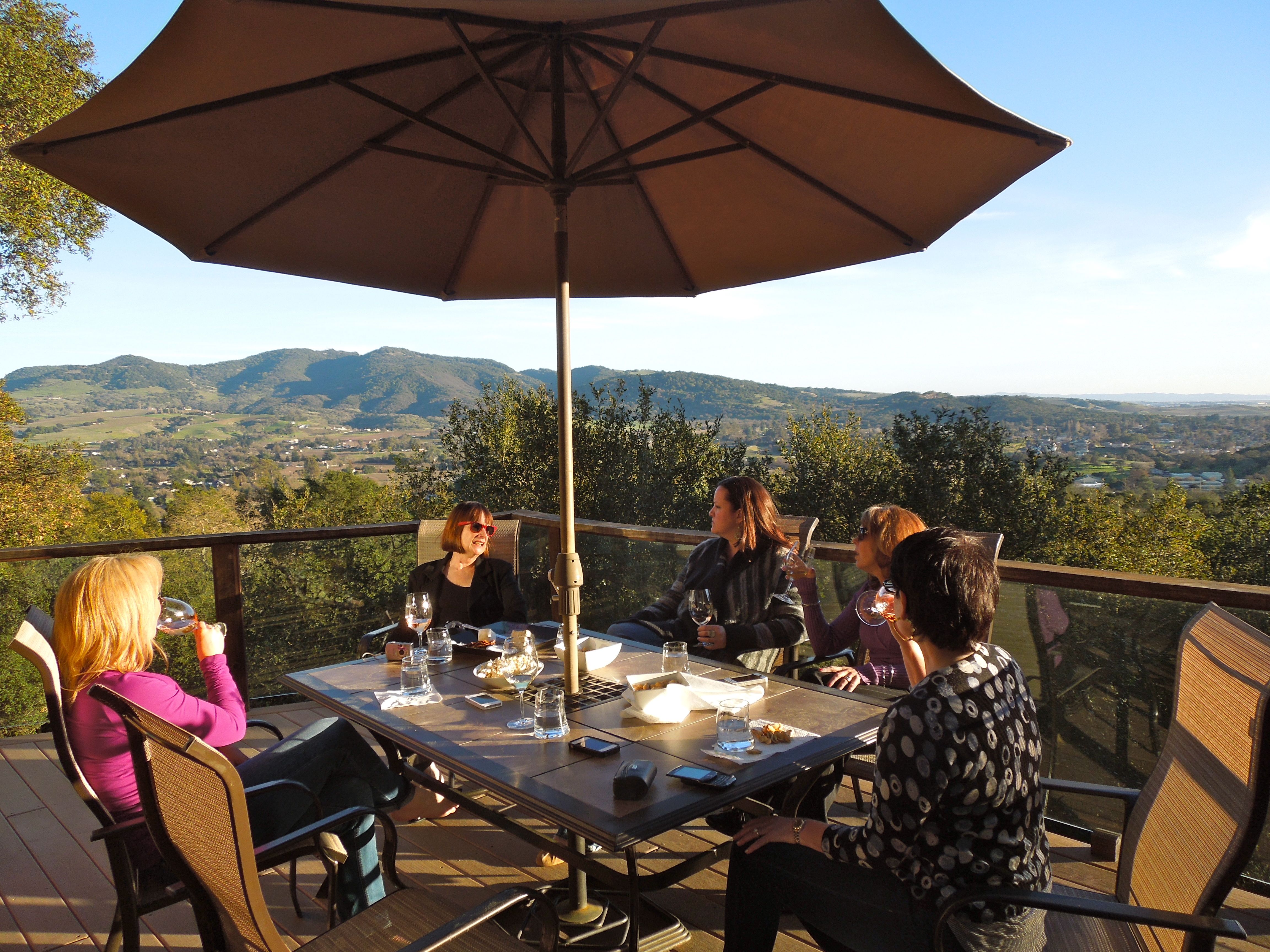
Celebrating a friend's 50-year milestone birthday

Celebrating a friend’s 50-year milestone birthday

My father had several pet peeves when it came to American usage. When asked, “Were you in the military?” he would answer, “No.” He was a Marine, which to him was not at all the same thing. He also did not like being asked, “Are you done?” when someone wanted to know if his plate was ready to be cleared. “No,” he would reply, “but I am finished eating.”

I’m not done either. I have been overwhelmed by the number of people who have reached out to me since Dad’s death on Jan. 12. Many have thanked me for sharing my journey on The Henry Chronicles. But I am still very much coming to terms with Dad’s death and this new void in my life, and by extension, not done writing about this experience.

After Dad’s death, I pushed the “play” button on my life. I accepted every invitation and added a few junkets of my own. Since January 19, I’ve been to Seattle/Tacoma twice, Santa Fe, Minneapolis, Napa, Palm Desert, and Marin. I’ve been part of my niece’s Bat Mitzvah, a 5-day birthday celebration for a 50-year-old, and a 3-day birthday celebration for a 70-year-old. I’ve been gone a full month out of the past two months.

Without planning to do so, I ran away from home. And grief.

Grief isn’t a terrible thing to me. The more that someone is worth loving, the more they are worth missing.

I am still running in to people who do not know that Dad passed away. When they express their sympathy, I find myself saying, “He was 96,” as if to say that because it was expected, I’m not sad about it.

As much as I have enjoyed the visiting and celebrations I’ve been part of, it’s time to stay home. It’s time to remember and reflect.

2 Comments

Filed under Uncategorized

My brother Bruce remembers, “My Dad was cool!”

brucedad

At my mother’s memorial in 1999, we were all too raw to share personal remarks, but at Dad’s memorial, it seemed right to share our memories and reflections. Together, we painted a more complete picture of Dad for those who joined us in honoring him, and for each other. Bruce is my middle brother, 10 years older than I am. Here are his remarks:

“I wrote this recollection in 2008, shortly after Dad had a pretty significant stroke and I thought we were going to lose him. I wanted to capture some of my favorite times with him (and some were yet to come). Most of my best memories of Dad took place outdoors, frequently involving hunting or fishing. I dimly recall fishing Deep Creek Lake with Dad and Scott before my sister Madeline died, and I also remember fishing through the foot-thick ice on Lake Ontario. My first “best memory” took place during the summer I turned 13. It may actually have occurred the day I turned 13, but I’m not sure of that. It was the summer before everything changed, forever.

I had been involved in the Sportsmen’s’ Club (not sure that’s the name) as an after school activity at Kensington Junior High that year, and I wanted to go fishing with Dad in the worst way. I also wanted to go to summer camp at Monte Vita Ranch, near Berkley Springs, WV. I had been invited back as a CIT, and all of my best friends were going. I knew it was a financial stretch for our family, at least in comparison with those of my friends in Kensington’s Rock Creek Hills. When I actually got to go to Monte Vita, I was surprised and thrilled, and really didn’t expect much else, birthday-wise. I did mention to Dad that I wanted to go with him to fish for smallmouth bass in the upper Potomac River sometime.

On the second weekend at camp, Dad showed up (my birthday or parents day?). I remember showing him around the camp, especially the pond where I fished for bluegills after supper, and also the rifle range where I had just earned my Sharpshooter and Expert Rifle certifications. That night, Dad gathered me and several of my friends up and took us all down to the Potomac River, just upstream from Harpers Ferry. He had a rod for each of us boys, and he set up the rods for my friends. Then, he roped us all together and, ever the optimist, handed each of us a burlap sack to hold our fish. Then we waded out. It was terrifying, but incredibly exciting at the same time. It was dark; my glasses were completely fogged up from the humid summer air. The cool rush of the water tugged powerfully at my legs, and the rocks were slippery beneath my PF Keds. I have no recollection of actually catching anything, but I know absolutely that I was an instant hero with all my buddies. MY Dad was COOL!

I know now that Dad had fished the area many times for smallmouth bass. I know from personal experience later in life that it is possible to know a river well enough to wade safely even at night. I know now that he would never have done it if he felt we were seriously at risk. But I didn’t know it then, only that I trusted him completely. He never failed the trust we placed in him; he never failed the trust anyone put in him.

My second “best memory” with Dad probably took place in 1978 or 1979. It was not long after his first bypass operation, and he had a new lease on life. I came home in November on leave (perhaps for Thanksgiving?), and we took off Friday night together for a weekend of chukar hunting in the Bridgeport, WA area. We stayed at the “Y” Motel, a running joke: Y NOT! The next morning, we parked the truck and began walking uphill along a long intermittent stream channel. We had been walking perhaps 30 minutes when the current dog started getting birdy. As we crested the rise, it opened up into a sunlit shallow bowl. Dad was slightly downhill and to my left with the dog, working along the edge of the rimrock, and I walked slowly into the depression. About ten yards in, the birds began to flush. I hit one, then another, and the birds kept flushing and flushing, in the hundreds. I heard several shots from Dad, and saw more birds fall from the sky. We recovered 4 birds (one of mine was lost), and spent the rest of the day picking up scattered birds from that same initial flock. We probably walked ten miles up and down the mountainside. It was a great hunt, and we returned to the Y tired and content. After that, I never again saw a flock of chukars that large in one spot.

My Dad also loved the romantic poets, and often recited long passages from memory. He often quoted from the poem I am going to share with you. It embodies, I think, how he sought to live his life, and largely succeeded.

A Psalm of Life, by Henry Wadsworth Longfellow

Tell me not in mournful numbers,

Life is but an empty dream!

For the soul is dead that slumbers,

And things are not what they seem.

Life is real! Life is earnest!

And the grave is not its goal;

Dust thou are, to dust thou returnest,

Was not spoken of the soul.

Not enjoyment, and not sorrow,

Is our destined end or way;

But to act, that each tomorrow

Find us farther than today.

Art is long, and Time is fleeting,

And our hearts, though stout and brave,

Still, like muffled drums, are beating

Funeral marches to the grave.

In the world’s broad field of battle,

In the bivouac of Life,

Be not like dumb, driven cattle!

Be a hero in the strife!

Trust no Future, howe’er pleasant!

Let the dead Past bury its dead!

Act, – act in the living Present!

Heart within, and God o’erhead!

Lives of great men all remind us

We can make our lives sublime,

And, departing, leave behind us

Footprints on the sand of time;

Footprints, that perhaps another,

Sailing o’er life’s solemn main,

A forlorn and shipwrecked brother,

Seeing, shall take heart again.

Let us then be up and doing,

With a heart for any fate;

Still achieving, still pursuing,

Learn to labor and to wait.

1 Comment

Filed under Uncategorized

My brother Dean took Dad home

deandad2011

Of my three brothers, Dean is closest in age to me, just three years older. As he explained in his remarks at yesterday’s memorial, he and I knew the kinder, gentler version of Dad. Dad used to say that he and Mom raised Scott and Bruce, but he let us raise ourselves. I’m not sure that’s quite true, but he did perhaps trust the process more than he did when he was first a father. Here are Dean’s remarks:

“I would like to thank you all for coming today to help us remember and celebrate the life of my father, Henry Snively Campbell. I know he would be and, I like to think, is very pleased to see all of your familiar and beloved faces. I imagine his broad smile, and the warm greeting he would extend to all of you. On his behalf, I welcome you.

Today each of my siblings and I are sharing a few fragments of our memories of and love for our father. In some respects, my sister and I experienced a different father figure than did our two older brothers, so different in age were Betsy and I than they were.  Scott and Bruce knew the fiery, hard-charging, career-oriented Marine officer, a decorated WWII veteran who aspired to the Commandant’s mansion in Washington D.C., whereas Betsy and I were raised by a less rigid and more compassionate father. I believe that two events led him to re-balance his life outlook: the loss of his 4 year old daughter Midgie to leukemia in 1953; and his heart attack in 1962 that led to his premature retirement from the Marine Corps. I think these events made him re-consider what was most important to him in life; and it’s clear he decided it was his family.

My first memory of my father dates to the latter part of his Marine Corps service, during his post as Executive Officer at the Marine Barracks in Washington DC. I was about 4 or 5 years old at the time. Each Friday during the summer, an Evening Parade is held on the grounds within the barracks; the Exec is the parade commander, the conductor, if you will. In my memory of those parades, I see a marine platoon in spotless dress uniform, flawlessly conducting their silent drill with M-1 rifles, fixed bayonets gleaming in the twilight. The President’s Own Marine Band plays John Phillip Sousa. My father stands at the center, calling for the precise maneuvers in his full-throated, commanding voice.  You can imagine the impression that made on a 5 year old boy. He seemed about ten feet tall to me back then.

As I grew older, I naturally came to know him differently and more realistically, but the legacy of his Marine career was still much in evidence. He carried himself with an unmistakable grace and military bearing. He dressed smartly, and he spoke with authority, confidence, and courtesy. He modeled, more than he taught, the values and behaviors expected of a Marine, an officer, and a gentleman: respect; integrity; honor; courage; and commitment. I realize now more than I did during my childhood and adolescence that I tried to emulate him.  It was in this way that he taught me how I might become a man, poor student though I was.

Some of my most enduring adult memories of my father are of the times we spent together in his native eastern Washington, hunting chukar partridge in the hills high above the Columbia River near Bridgeport. The images are clear to me, as though they happened yesterday. This is my memory: on crisp fall mornings while it is still dark, we drive under bright stars from the river to the top of plateau, and out across the wheat stubble fields to our destination. We strike out before sunrise into the arid grass- and sage-covered land adjoining the cultivated fields. At the very edge of the Columbia gorge, we walk in the mist of early morning fog as it is driven off by the light breeze coming from the plateau. We move in silence, the only sounds coming from the snuffling dog working in front of us, and the crunching of the frosted grasses beneath our boots. The pungent smell of sage hangs in the cool morning air.  As the sun rises behind us in the eastern sky, we pause to stand at the precipice, looking out over the majestic expanse of the Columbia River gorge that spreads before us.  The hills across the river, many miles away, turn from dark to purple to tan as the sun climbs from the horizon. It’s an awe-inspiring sight that makes one feel humble and quite insignificant. I will always carry the memory of these mornings we spent together; and for me, he will live on within them.

I was truly fortunate to have been with my father in his final hours. The night before his passing, he was too weak to come to the table for dinner, even in his wheel chair – so Betsy and I brought our dinner into his room. We set up a card table in front of his recliner, squeezed in next to him, and had a quiet time together. In retrospect, he was clearly starting to fade, although Betsy and I did not realize at the time how close he was to the end.  He was very sleepy during dinner, and seemed to be in a waking dream state: still connected to the physical world around him, but clearly seeing and responding to other things as well.  As we sat together, he looked at me with half-closed eyes and asked, “Dean, will you drive?”. This caught me a bit off-guard, but I responded that of course I would. I wish now that I had had the wits to ask him where he wanted to go, but I did not. Afterwards, my first thought was that in his mind he thought we were sitting in our camper on one of our hunting trips, and that he wanted me to drive because he was too tired to carry on. What I’ve now come to believe is something else. In the few days preceding his passing, he was often restless and wakeful during the night, trying to get out of bed, even though he had become too weak and short of breath to walk on his own. Our hospice nurse told Betsy and me that such restlessness is fairly common, and offered the belief that perhaps those close to death know they have somewhere they need to go, and are so determined to get there they will get up out of bed and walk right out the front door if you aren’t watching over them. Today when I look back on my father’s words, I think he knew it was time for him to leave, and that he wanted me to drive him there. I think he was asking me to take him home.”

1 Comment

Filed under Uncategorized

A memorial just as it was meant to be

My last bouquet of roses from Dad

My last bouquet of roses from Dad

I don’t know why I dreaded Dad’s memorial today, but I did. But it was perfect even in its imperfections. As I told my son tonight, Thom, everything was exactly as it was meant to be. Down to me inadvertently saying that Dad had a “big ass” smile on his face just hours before he died.

Together, my brothers and I painted quite a composite picture of Dad. Following are my remarks and in upcoming days, I’ll post theirs:

“There are many ways to look at my father’s long life. You can look at it through the lens of history. He remembered having one of the first phones in Yakima with its three-digit phone number.. You can look at it through the lens of medicine. He was a walking miracle who lived 50 years after his first heart attack. You can look at his life through the lens of professional accomplishment, a tough, smart Marine who was twice decorated with a bronze star with V for valor and who was unafraid to challenge his superior officer even when threatened with court martial.

But I think of my father’s life as a love story. He was a middle child in a difficult family. He loved his mother deeply but feared his father, who he referred to as “The Great I Am.” Dubbed “the smart one” by his family, he was accelerated in school by two years, which he said was a disaster for any young man with an interest in young women. He said he didn’t stand a chance.

My Dad was a romantic. Meant to be the family lawyer, he was in love with words. He began to devour and memorize large swaths of poetry, with favorites including Shakespeare and 19th century poets.

Then he met my mother, and the next chapter in his love story began. As my Dad told the story, it was spring of 1939 at the UW, Dad’s senior year. After drying himself out from a binge in the taproom of a local brewery where his fraternity brother worked, he seated himself in Dr. Padelford’s class on Robert and Elizabeth Barrett Browning whereupon he saw “this vision enter the room, dressed to the nines.” As my grandfather said when he met my mother, “Son, a pretty face will fade away, but a good pair of legs will last forever.”

If ever an immovable object met an irresistible force, it was my father meeting my mother. My mother, upon learning that Dad was pinned to a girl in Yakima, handed him $5 for train fare and told him not to come back until he had the pin. In 1941, after Dad had been commissioned as a second lieutenant and was stationed in Quantico, Mom sent him a cryptic telegram saying that she accepted his proposal and was heading east with her mother to get married. He swore that he had no recollection of any such proposal.

Fast forward to 1999. Though I knew of Dad’s love of poetry and Mom, I don’t think I truly understood how driven he was by love until after Mom died and his life-long confidante was gone.

At the end of Mom’s 3 ½ month illness with late stage lung cancer, at sunset on May 10, 1999, I called my father in to their bedroom after I noticed that Mom’s color had changed; while I called hospice, he held her hand, told her that he loved her and that he would be with her again. Then her heart stopped.

As we sat together in the days that followed, recollections began to spill out from him.

First he recalled Mom. As I wrote later, “In the days after my mother died, my father recalled some of their intimate moments like movie images, how she looked with the glow of moonlight on her body.” It would have been a beautiful moment were I not trying to poke my mental eye out.

Then Dad began to talk about the war, something he had rarely done before. 

But the most difficult memory he shared with me was that of the final illness of my sister, Midge, in 1953. Dad sat on the couch and described her in her oxygen tent in the hospital, reaching out her arms toward him, and saying, “Daddy, help me.” He said that he went out in the hall and pounded on the wall with his fists. “I could do nothing,” he said. As he told me the story, he repeatedly slapped his forehead, not gently, but hard, crying. I finally took his hand and told him to stop hitting himself.

In 2006, I invited Dad to move to California, figuring that he was, as I put it, “past his expiration date.” The cardiovascular surgeon who operated on him in 1999 here in Tacoma had projected that the surgery would give him lasting relief for only about five years. Then he expected that Dad’s heart disease would likely end his life.

The ensuing seven years after Dad moved down were transformative, for Dad and for me. I listened as he worked through the most important experiences in his life. His love of Mom. The War. The Loss of Midge. His difficult relationship with his father. His love of his mother. Like all of us, he had regrets or things he never understood.

He softened. When I once commented that he seemed to have become more gentle and less judgmental as he aged, he said, “Who am I to judge?”

Perhaps my father’s biggest challenge was his final one – the grueling march of his final years.

His physical abilities were seared away by time. He lost his hearing. His balance faltered. His chest pain increased. His breathing became strained. It was brutal to watch.

What remained was Henry, distilled and pure. He loved red roses, which represented his love of Mom, and for several years after Mom died, he sent them to his favorite women: Ann Palmer, his daughters in law, his niece Louise and great-niece Mary, and me. He still loved chocolate and enjoyed his last bowl of ice cream with chocolate sauce the evening before he died.

He still cared about the future of the nation, and voted in his 19th presidential election last year. He still loved and worried about his adult children, grandchildren, and great grandchildren. I asked him once, “Do you ever stop worrying?” and he said, “No, never.”

I said this was a love story, and it is. On the day my father died, he was agitated. His time was near, though we did not guess how near. At about 11 a.m., Maddie comforted him by reading poetry from the little book I created of his favorite poetry, “Henry’s Passages.” She read Longfellow, and Shelley, and, of course, Shakespearian sonnets.

Around 3 p.m., after being unresponsive most of the day, Dad suddenly smiled. And shortly before 6 p.m., his eyebrows lifted, as if he was seeing someone who delighted him. And his lips began moving as if he were speaking to that person. Dean and I felt that he was seeing Mom.

Dad’s breathing suddenly changed at about 6 p.m., Dean held Dad’s hand, and I started reading Shakespeare’s Sonnet 130, which was the last sonnet Dad recited from memory, several days before. Then his breathing slowed, and finally stopped.

Henry Snively Campbell – loving friend, son, brother, uncle, husband, grandfather, great grandfather, father-in-law and father — died in a state of love, which is to say, a state of grace.”

Leave a comment

Filed under Uncategorized

A time to every purpose under heaven

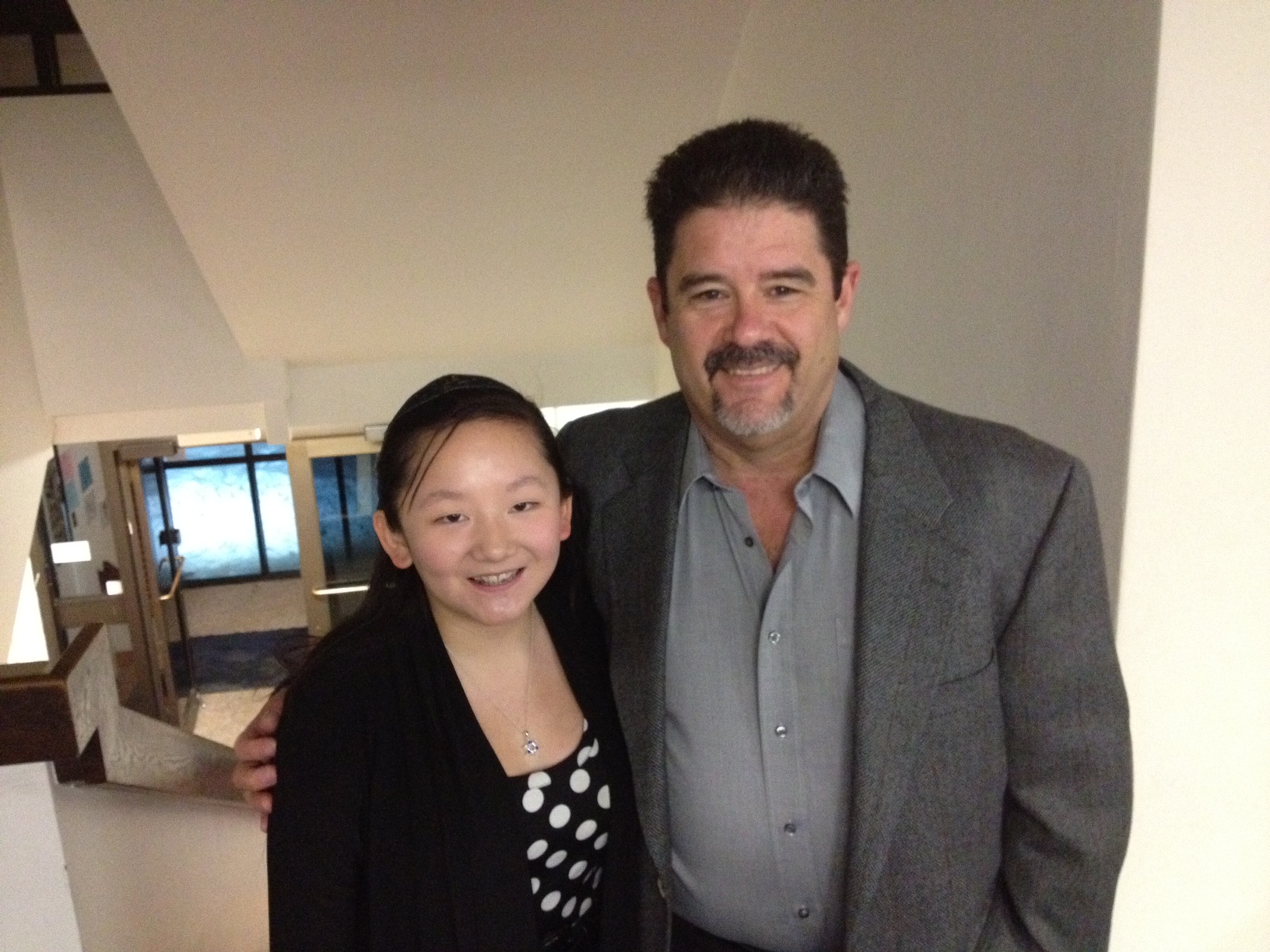
My brother and niece

When my father talked about the death of my sister, Midge, he often went on to describe the birth of my brother, Dean, not so many months later. “It was as if the sun came up,” he said.

After a loss, how it heartens us to see a fresh generation behind us, revitalizing our faith in life and our hope for the future.

Last weekend, I ventured to Minneapolis (brrrr…) to see my niece Eileen become a bat mitzvah.

From the moment my brother, Dean, and his wife, Gwendy, met Eileen — in a Holiday-Inn sized hotel room packed with 10 adoptive parents, six children less than a year old, and eight caregivers, she stood out from the crowd. She was the only one who didn’t cry as she regarded the two people who would take her home, love her and raise her. When Dean and Gwendy brought her back to Seattle in November 2000, it was just a year or so after Mom died. At the time, I wasn’t quite ready for Mom’s name to be attached to anyone else. But Eileen is the perfect inheritor of her name.

My brother Dean made these remarks to her as she took on her role as an adult in the Jewish faith:

When I see these characteristics growing within you, I am reminded of another person I deeply loved: my mother and your namesake, Eileen Driscoll Campbell. I see your determination and focus; your love of God, family, friends and life; your fun-loving spirit and lively sense of humor; and your ability to see and embrace the goodness within others, and I realize these are the same qualities I loved within my mother. I wish that she had been able to know you, because I know she would have loved you as I do.”

Jewish people know a few things about love and longing, and that includes their traditions for remembering those who have died. I loved this bit from the mourner’s kiddush section of Shir Tikvah’s prayer service:

Grief is a great teacher, when it sends back to serve and bless the living… (E)ven when they are gone, the departed are with us, moving us to live as, in their highest moments, they themselves wished to live. We remember them now; they live in our hearts; they are an abiding blessing.” — p. 294, Mishkan T’Filah 2007

Grief is a great teacher, and I am its student.

Leave a comment

Filed under Faith journey, Uncategorized

Planning My Father’s Memorial

sympathy cards

Every day for weeks, I have written a different set of remarks to share at my Dad’s memorial service on February 16. All in my head.

Do I talk about how he softened as he aged, what a remarkable role model he is for all of us as we approach the prospect of living into our 90s? Or focus on how he broke the mold of his family’s dysfunctional example and grew into a wonderful father? Should I summon dear memories from early childhood, like happy times wedged in the front seat between Mom and Dad, driving around Kensington, MD, looking at the strings of colorful bulbs strung on houses at Christmas, singing, “Here we go looby-loo…?” Could I use a symbol that had resonance for Dad as a rhetorical device — perhaps a river, or a rose? Do I tell how he was still my Daddy, and share how I cried one last time, cradled against his powerful chest, after he died?

I sat down this morning and wrote, just wrote. Didn’t outline, didn’t plan, didn’t try.

Planning Dad’s memorial has been like listening to several radio stations at once. My brothers are broadcasting on their channels, sharing their experiences and their ideas, and I swear I am transmitting on several stations of my own. I’m so busy listening to my thoughts and feelings that I can barely hear theirs.

And it isn’t limited to my brothers. Often, my husband has said something to me in recent days and I’ve had to say, “Start over. I wasn’t listening and I didn’t hear a word.”

Slowly, however, the noise is abating. I am feeling less agitated by the emotional bombardment. I am starting to hear some notes that penetrate the muck, a phrase or two.

It wasn’t like this when we planned my mother’s services in 1999. I wondered to my brothers: is it because we’re doing this more electronically than we did 14 years ago? Or because Mom pretty much scripted her funeral and all we had to do was implement it? Or that Dad was the arbiter in planning Mom’s service and this one is on us?

I am feeling more hopeful that we will come to a place like that described by Alexander Levy in The Orphaned Adult:

Gradually, with unconscious cooperation, survivors weave a commemorative tapestry from these bits and pieces of shared nostalgia…. Story by story, smile by smile, and tear by tear, these memories intertwine, creating a fabric in which an image of the departed is preserved, within which survivors are enveloped, and by which they are forever bound.

Leave a comment

Filed under Uncategorized

Let Us Cross Over the River

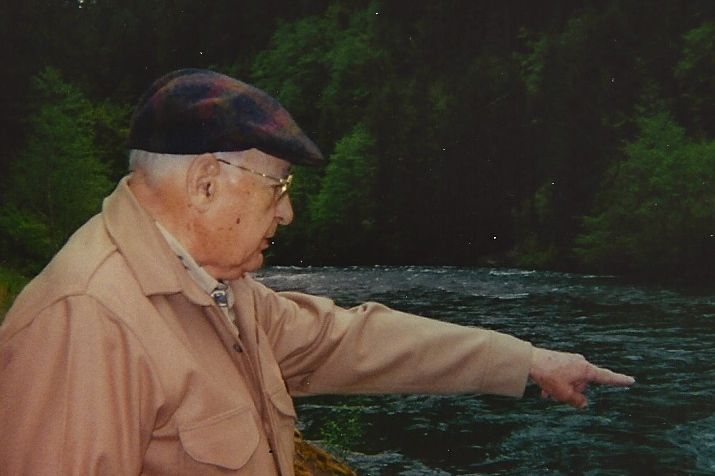
Dad pointing out fish on the North Umpqua in 1999, shortly after Mom's death

Dad pointing out fish on the North Umpqua in 1999, shortly after Mom’s death

With Mom’s death and now Dad’s, I’ve noticed that it takes time to expurgate the image of them near death – diminished and battling. In Mom’s case, I awakened after three days with a brilliantly clear “dream” of her at the kitchen table in her favorite pink quilted bathrobe. Blessedly, that became the image I carried with me as I mourned her death and celebrated her life.

With Dad, what keeps coming to me are images of water, which I shared in earlier blog posts. I thought the dream about safety drills under freezing water, dozens of stories below ground in a mine, and another about paddling a crew boat across a cold, choppy channel, represented how I was trying to rescue Dad.

Then I had the dream about entering my living room to find a group of seven caregivers. The six clad in white told me they were there to “lift Dad up.” When I asked the caregiver clad in a black swim cap what he was doing there, he said he was for “after.” I knew that he was there to swim Dad across the river, as in the River Styx.

Rereading my emails to my brothers, I came across some from summer before last. All that summer, Dad and I “shade hopped” from one side of the street to the other, walking down Mariemont Avenue, ending across from a large oak tree. Most days, before we crossed, Dad would recite Stonewall Jackson’s final deathbed statement, as transcribed by his physician, Dr. Hunter McGuire. McGuire wrote:

Presently a smile of ineffable sweetness spread itself over his pale face, and he said quietly, and with an expression, as if of relief, ‘Let us cross over the river, and rest under the shade of the trees.”

If there is life after death – and I believe there is – surely Dad is resting in the shade by a beautiful river.

Leave a comment

Filed under Uncategorized

Blessed by God

Prayer boat by Lynn Fawcett Whiting

When I spoke to my cousin, Lynn Fawcett Whiting, on the evening that Dad died, she told me she had just sent the following email to me about sending up a prayer on his behalf. Dad died sometime in the hours after she performed this lovely ritual:

When we were children, maybe you did this too.. we sometimes made bark candle boats with our mother to put on the lake at sunset to send our prayers to God.  This afternoon led by that little girl I found a piece of bark and carved a hole in it for a candle, and lined it with wax and muslin. Henry and I wrote our prayers on washi paper with gold leaf and folded them in Japanese love knots and placed them in the bark boat. We then made our way to the National Wildlife Sanctuary on the Snake River where countless thousands of birds are wintering over… Wild swans, snow geese, Canadian geese, Mallards, Teal.. ducks of every variety, cormorants, coots, .. not only heard our prayers but joined our plaintive cry and called the landscape to prayer.. as the sound of a thousand wings lifted in the brilliant light of the setting sun and carried our prayers to God.  The message was a simple one.. Everyone who has known or been touched by Henry Campbell has already been blessed by God.

1 Comment

Filed under Faith journey, Uncategorized

Can This Love Last?

Holding on to love

In the wake of Dad’s death, I am deeply reflective.

We hear a lot about how hard caregiving is on caregivers, and I admit to feeling at my wit’s end during the most challenging periods of my Dad’s final illness as I wrote about during this blog post. And yet… I have rarely felt so filled with love as during these last months. Maybe I’m experiencing the same kind of amnesia that once dulled my memory of the pain of childbirth.

I’ve known many kinds of love in my life: romantic love, maternal love, even “sister-wife” love. The kind of love that I experienced when focused on my Dad’s needs approached something on a more spiritual level. I find that I miss the “love bubble” that I lived in with my Dad these past few months.

During the past couple of months, I’ve struggled with matters of faith and was angry about the natural order of things, which can make old age and dying a brutal experience. My beautiful cousin Lynn wrote, “The Love you are feeling is God. Everything even the agony is part of that love. This is your path now… with your father.” And my mentor Jim wrote, “Your Dad does not have to have all the answers to all the questions right now. He needs heart connection because that ultimately answers the unanswerable questions and ensures him peace of heart and peace of mind so he can release. Whether he connects in any way to a traditional notion of God, he sure does to your Mom and he wants to go and be with her.  So for him, there is a there there, and he has his heart set on arriving.  Leaving is generally harder than entering, for each of us.”

There was something, well, holy, about the last 15 or 20 minutes. I previously described how his eyebrows lifted up, the way they would when he saw someone who delighted him, and his lips moved as if he were speaking to them. And a little while before that, his mouth, which until then was slack, suddenly bowed into a giant smile. I said to Dean, “Look – he looks happy.” Dean and I had the distinct feeling he was seeing Mom.

As we plan Dad’s memorial service, my brothers and I are sifting for readings that speak to us. Phrases are popping out to me like these:

“Love never ends.” (1 Corinthians 13: 8)

“… the peace of God, which passes all understanding…” (Phillipians 4: 7)

“It is sown a physical body, it is raised a spiritual body. If there is a physical body, there is also a spiritual body.” (1 Corinthians 15: 44)

“We do not lose heart. Even though our outer nature is wasting away, our inner nature is being renewed day by day. … what can be seen is temporary, but what cannot be seen is eternal.” (2 Corinthians 4:16-18)

“Beloved, we are God’s children now; what we will be has not yet been revealed. What we do know is this: when he is revealed, we will be like him, for we will see him as he is.” (1 John 3: 1-2)

Then I read Dr. Eben Alexander’s Proof of Heaven and found his testimony of his Near Death Experience to be reassuring that consciousness — our soul — lives on after we leave the little bit of this universe that we experience during our mortal lives. 

Talking about the book, my brother, Scott, described to me something that Dad had shared with him when my sister, Midge, was in her last hours, dying of leukemia at age four. Dad told Scott that Midge suddenly sat up and said, “I hear music.” Shortly thereafter, she died.

I know that it feels as if Dad is not gone. And I don’t just mean that his lessons live on in all of us. I still feel his love as a presence. I believe that he – and Mom – somehow exist beyond mortal death.

That love was shared with me in the process of his dying. It changed me during that time that I lived in the small world of his house, where everyone was focused on the mission of easing his way.

What I wonder now is this: as I rejoin the world, how do I keep this feeling of selfless love? Is Jim right when he says: “God is with us, actually inside each of us even when we do not sense it, and remove enough of our own clutter and misgivings and pain to be fully conscious of divine love inside us.”

Leave a comment

Filed under Uncategorized

“Fathering” and mothering

Henry Campbell and Madeline F. Stone

As rich as our language is, sometimes it lacks the just-right word. Often, in my father’s final days, he said as I helped him, “Everyone needs a mother.” When we “mother” someone, we watch over them. But when we use “father” as a verb, it means to procreate or found.

When I say my Dad “fathered” me, I am not trying to clarify my paternity. He was an actively loving Dad. When I was very small, I know he played those little games that help children discover their fingers, toes, mouth and nose: “this little piggie,” “mousie in there,” and my favorite, “Tom Tinker, eye blinker, nose smeller, mouth taster, chin chopper chin chopper chin chopper!” (This last delivered with a final tickle to the chin.) Oh, and he played a mean knee jouncing game called, “Hobbledy hoy.” Though my toddler days are pre-memory, I know he did this because I later saw him automatically repeat those games, with his first grandchild, Sandy, and later with Maddie and Thom.

As he did with my brothers before me, Dad inspired a love of reading. What better feeling than sitting in his lap or snuggled in bed as he read aloud from “A Child’s Garden of Verses, “Friendship Valley,” the L. Frank Baum Oz series, “The Wind in the Willows,” or “Winnie-the-Pooh?” It doesn’t surprise me that the photo Maddie has resurrected and featured on her Facebook page is one of her Papa reading to her.

Unlike his father before him, he believed in sharing with his children the things he was passionate about. Though I never took to fly fishing and hunting for upland game birds the way my brothers did, there was always a spot for me if I wanted to go. I remember one hunting trip in Eastern Washington vividly. Dad cobbled together an outfit for the freezing temperatures: someone’s outgrown Filson trousers, insulated socks, boots, base layers, ski sweater, hunter’s black-and-red checked coat, wool hat and gloves.

We arrived while it was still dark — and very, very cold — at one of the stubbled wheat fields made available through The Family Hunting Club near Othello, WA. I had chosen not to shoot, so I crunched through the frosty field trailing Dad as one of our faithful Springer Spaniels worked ahead of us, seeking pheasants to flush from their hiding places. Eventually I was tired (of course I was, it was early and I was a teenager) and wanted to rest. Since cruising around in a field that is being hunted is not a great idea, Dad planted me in a spot on a ridge and told me to STAY THERE.

Lying in the barren field, making clouds of my breath, tuning in to the quiet music of a rural field, I watched the sky slowly color the thin winter clouds. My brothers don’t think I share the same awe of the outdoors that they do since I didn’t partake in the hunting part. But I do. My love of the outdoors is based on appreciating the poetry of the landscape and the creatures big and small that inhabit it. When we lived in Seattle in early grade school, I could entertain myself for hours lying in the abandoned street that connected 10th and 11th Avenue East, or perched high in a tree in Roanoke Park at the top of the hill. I never feel alone when I am in any place where there are growing things – a field, a forest, a garden. I feel connected. And I think that’s thanks to my Dad, who, to the end, cited bits like this one as he admired the Camphor tree down the street on our daily walks together: “This is the forest primeval. The murmuring pines and the hemlocks, Bearded with moss, and in garments green, indistinct in the twilight, Stand like Druids of eld, with voices sad and prophetic, Stand like harpers hoar, with beards that rest on their bosoms…”

Dad was my first and best advisor and mentor. I was annoyed in high school when he made me take typing (this was before knowing the keyboard was the gateway to computing). He explained that I might need to support myself some day. As a college upper classman, he made me identify careers in which I might be interested, and then set up some informational interviews for me. I felt awkward, even mortified as I had lunch with him and a PR guy from Weyerhaeuser. But he gently nudged me from the nest. After I started my career, it was Dad who I called when I needed to negotiate a salary or faced a delicate situation, or when I wanted to share the good news of a promotion or salary increase.

(Mom was less than thrilled as my career advanced. In her experience, given her marriage during the beginning of WWII, a career was at best an interference or at worst a threat to one’s job as a wife. In the early years of my marriage, she met the news of one promotion with stony silence, and finally blurted out, “What I want to know is: when are you going to become a real woman?” Translation: when are you going to have children? Todd, standing in the kitchen while I talked, saw the expression on my face and wisely left the room before I exploded over the phone back at her.)

Much later, I asked Dad why he was so supportive of my career. He said that he never wanted me to feel trapped, as his mother did. In other words, if Todd proved to be the kind of SOB that his father was, with a mistress on the side for his entire marriage, he wanted me to be able to leave. He was for women’s liberation before there was a name for it, because he loved women AND respected them. That love and respect was evident in his relationship with my mother, even though he said he “fought for his pants every day of my life” with Mom.

Because of the strength of my mother and father, I carried self-respect into my career and family life.

I have written previously of the crisis that I faced in my marriage over ten years ago, which I wrote about in this blog post. I remember sitting with my Dad in the living room of our house in Davis, over a glass of wine. I told Dad I didn’t know what was going to happen.

He didn’t judge. He didn’t offer advice. He didn’t try to intervene. He just said, simply, “I’m always in your court.”

Dad loved and respected Todd deeply. I know he wouldn’t have wanted our marriage to fail. But he told me in no uncertain terms that he had my back. It was the best thing he could possibly have said to me. And somehow it gave me the strength to persevere with Todd and work through the things that were creating a distance between us.

One of the most painful things my Dad would say to me in these last few years was, “I’m not really a Dad anymore.” When he said that, I felt a stabbing pain in my heart because all of the “fathering” that he did over the years remained with me and would never diminish.

In these last weeks, I would help put him to bed with the help of a caregiver, dim the lights (his habit was to leave some light on) and hold his face between my hands and say, “I hope you rest well, dear. And I’ll see you in the morning. I love you.”

Dad cherished me as I rose from the dependency of childhood. It was a labor of love to mother him when he needed it. I owe him so much.

1 Comment

Filed under Uncategorized