The Dam Burst

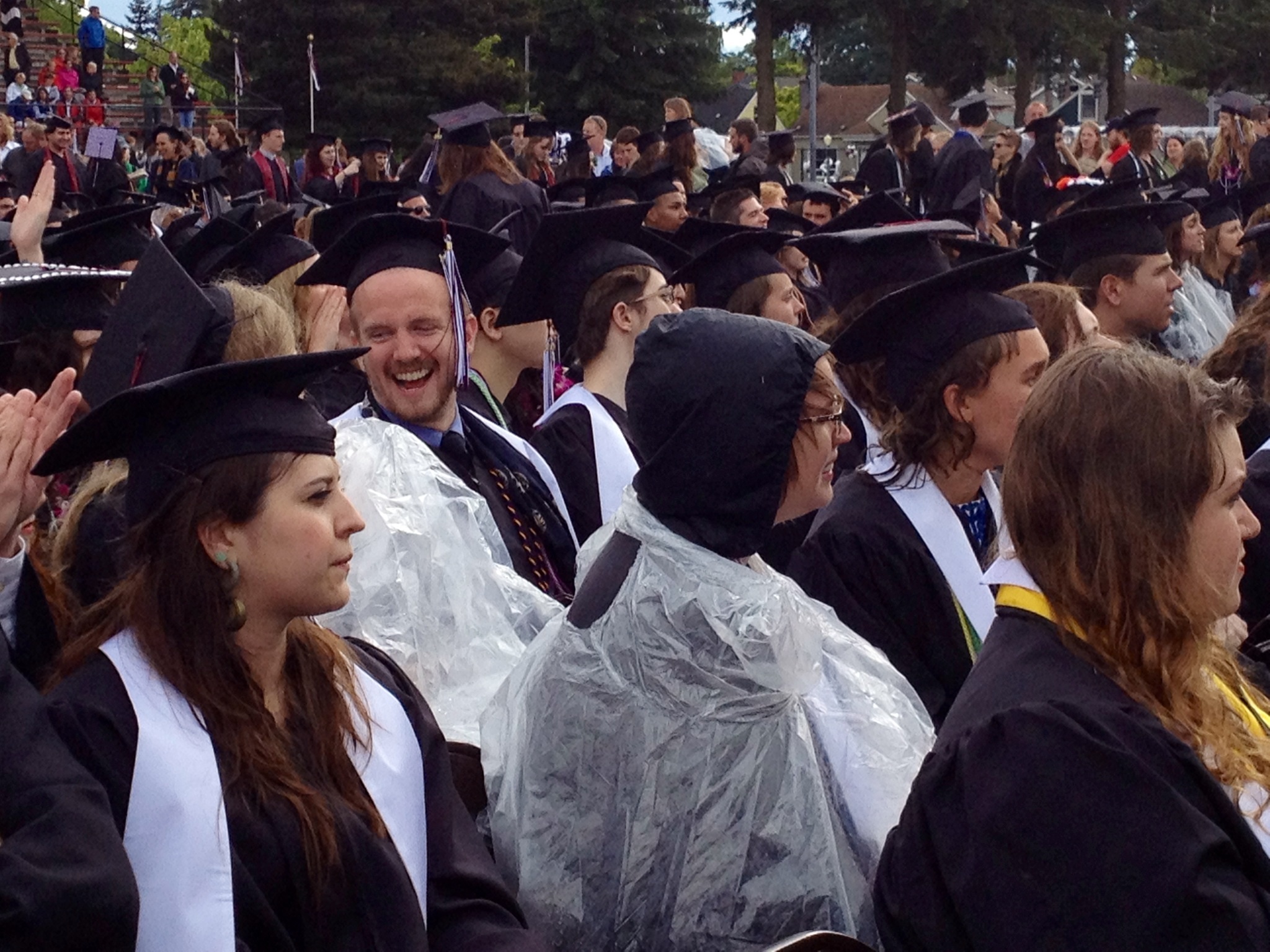
imageI wondered if I would cry — could cry — when my son graduated from college over the weekend. Water turned out to be the theme of the day.

At the interfaith baccalaureate service in the morning, where my son would sing with the Adelphian choir, a series of students shared their reflections one after another. They told personal stories, stories of coming out and trying to find a new way to relate to God and find a community, stories of hope lost and hope regained. They spoke with whatever vocabulary fit their understanding of Divine Mystery.  They sang and prayed for others.

We sat there, parents and family, faculty and staff, students and friends, listening and reflecting. For an hour, we became a community.

The morning light flooded through the chapel windows from the east, bathing my son’s face in gold. To close the service, the Adelphians sang Stephen Paulus’ “The Road Home.”

Oh where is the road that will lead me home?”

The song took me back to that day in October 2012 when my “other mother” teetered between life and death. As her children and grandchildren gathered around her bedside, my best friend and I sang that song. And as we sang, “Miss Ann” slipped to the other side, to the place where her faith guided her, where her husband and mother awaited.

Four months later, a small group sang it at my father’s memorial.

As I listened to the choir, I could almost see my mother and father hovering. Was it a daydream? Was it my heart’s longing that brought me their image? Were they really there? It felt as if they were.

The dam burst, and I cried. My stomach pulsed with withheld sobs as I cried tears of joy for my son’s safe passage, of happiness for the moment of reunion with my parents, of compassion for the tribulations that many of the students had experienced.

Water turned out to be the abiding symbol of the day. Rather than the typical, somewhat overly long commencement ceremony, in which one waited for one name out of more than 600, Yahweh (for it had to be the angry God of old) decided to interrupt things with an outburst of Biblical proportions.

The wind picked up as the class representative gamely soldiered on with her remarks. The skies above us swirled in a circular pattern. If we had been in the Midwest, we would have been heading for storm shelters.

Next came the rain. It did not “droppeth as the gentle rain from heaven.” Each was a swollen bubble that splattered into inch wide rings where it struck heads, blouses and trousers. Within minutes, those initial marks were obscured by rivulets from the flood that pounded the crowd on the field.

Then came hail and lightning. Running through sideways rain that rapidly filled gutters, those who didn’t leave in the initial downpour – the hardy families who were determined to hear that one name called – evacuated to the field house. We sheltered for nearly an hour before university officials made the call to resume the ceremony.

This morning, the words of “The Road Home” returned to me:

After wind, after rain, when the dark is done, as I wake from a dream in the gold of day

Through the air there’s a calling from far away, there’s a voice I can hear that will lead me home.

Rise up, follow me, come away is the call

With love in your heart as the only song

There is no such beauty as where you belong

Rise up, follow me, I will lead you home


Leave a comment

Filed under Uncategorized

My Son Is Graduating. Will I Cry?

Tommy handprint and booties

I don’t know a lot about tears. They tell you that laughing is good for you, that it can add years to your life, even help cure cancer. But what about tears? What does it do to you if you rarely cry?

My earliest memory of crying was soon after my father’s massive heart attack forced him to retire and us to relocate to Seattle. I got in trouble for something. Dad was home, and I heard the slip and snap of his belt as it slid out of his trousers. I fled to my room and wailed.

“Stop sounding like a fire engine!” my mother yelled.

I cried because I didn’t want to be punished. I cried with rage at the injustice of it all. I cried because inside me was a great knot of feelings: grief over the death of my grandmother, shock over the jarring moves from familiar Maryland to foreign Honolulu and then overcast Seattle, fear that my father could die from a second heart attack, and profound loneliness because I was lonely.

Oh how I cried.

Eventually I got the message. I wasn’t supposed to cry.

My parents were of hardy western stock. Mom, only child of a short, scrappy attorney, learned to drive at 11 years of age so she could accompany her father while he hunted on the benches around Boise. Given his blood pressure problems, there was always the possibility she might need to drive for help. Dad grew up in Yakima under a “severe” father – his words — in a household where shit rolled downhill. His father criticized the eldest brother. The eldest took it out on Dad. His was the kind of family home where children were seen and not heard. His mother behaved civilly — as people would expect of the daughter of the town’s “grand old man” — while her husband left each night to sleep with his mistress. An open secret.

When bad things happened, my mother was unshockable. It wasn’t just that she was unflappable. It was as if a switch was flipped and she went into sergeant mode. She dealt with it — whatever it was — without fuss.

She expected the same of me. My brothers, all older, knew the rules without being told. They were the sons of a hunter, sons of a Marine.

Somehow I thought the rules would be different for a girl. I felt different. I wanted to share my enthusiasm, my indignation, my pain. I wanted to be held and comforted.

Rather than provoking sympathy, my expressions of emotion exasperated my mother (she would say outbursts). In early grade school, she would let me lean against her for a while — but only a while — before eventually complaining, “Stop clinging.” Mom was a big believer in shaking things off. Her biggest hero was her grandmother, who lived into her hundreds and was famous for her advice about illness, “Just make up your mind and shake it off by morning.”

Mind over matter.

I don’t mean to whine. (See? I had a pop up message in my head that said, “Quit whining.”) Or to blame my parents for being the stoics that they were. Stoicism has a lot going for it. Stoicism got Mom through the loss of her father while she was still in college, supported her through WWII, and saw both Mom and Dad through the loss of their daughter to leukemia.

This whole topic came up because I’ve been really mushy the last 24 hours. (Mushy? I know. It’s hard not to be pejorative.) I was looking for an old piece of family memorabilia and stumbled across a plaster mold of my son’s handprint and his first pair of real walking shoes. I almost lost it.

You see, he’s graduating from college tomorrow.

When I posted a picture of my find on Facebook, a friend advised, “Be sure to take tissues tomorrow!”

I wondered, will I cry? It’s not that I avoid crying. I simply can’t.

I’m not the family crier. My husband is. When we go to a movie with any kind of emotional moment, my daughter and I look over to him to see if he’s tearing up. He usually is. My husband comes from a whole family of criers. My best friends are criers. My children are criers.

When I was in therapy as a young mother, my homework assignment was to let the feelings in, to sit with sadness, to let myself cry. Crying, for me, took effort. When I finally would cry, it was as if the dam broke. I couldn’t stop.

So I wonder, will I cry?

I can feel my heart threaten to explode out of my chest. My son has overcome some really awful stuff to take that walk across his commencement stage. At times, in the past two years, I have felt as vulnerable as a new mom looking down at that gentle baby who looked in awe at the world around him. Wondering, how did this miracle happen? Will I be able to give him what he needs and keep him safe?

I don’t know if I will cry. I’ve been well trained. But I can tell you my heart is cracked open, hovering outside my body, waiting for tomorrow.

2 Comments

Filed under Uncategorized

Caregiver Love Stories

Rick and Marianne Rayburn (photo: Capital Public Radio)

Rick and Marianne Rayburn (photo: Capital Public Radio)

I just finished listening to the premiere of Capital Public Radio’s multi-media documentary series looking at the lives of family caregivers, aired in its slot, “The View From Here.” If you missed it, it airs again tonight at 8 p.m. (listen live here).

Our local NPR affiliate chose to name the special, “Who cares?”

That provocative title was chosen in recognition of the financial, physical and emotional strains that an estimated 65 million Americans face as family caregivers.

I’ve been a family caregiver, and I know two — right now — who are dealing with the kinds of challenges the special describes. I won’t kid you. This special does not pull its punches when describing the hard, day-in, day-out grind of caregiving for children, parents or spouses who are unable to care for themselves. As caregiver Rick Rayburn put it in his interview for the special, “It’s like Groundhog Day every day…”

The special asks an important question, “Who cares for the caregivers and what are they doing to care for themselves?”

Rick’s story really struck me. In it, I could hear echoes from both of my friends who are caregivers right now. For several years, one has been caring for her husband at home; her husband was diagnosed with Alzheimer’s more than 10 years ago. On Monday, he was admitted into hospice, recognizing his accelerating decline and weight loss. The other is also a spouse-caregiver, but a husband who is caring for his wife after a rare disease caused her to have six strokes in a row last summer, at just 60 years of age. Both are loving and devoted spouses, but man, what they are doing is HARD, and they do it largely alone.

In the radio series we meet Rick Rayburn and his wife, Marianne, who contracted a viral brain infection two years ago, and ended up in coma. But even before the encephalitis, the family had noticed signs of dementia. She is able to walk and talk, but has virtually no short term memory, needs to be guided through daily tasks, and alternates between reality and fantasy.

Rick says, “I’m 100% responsible for her wellbeing.” Sometimes, perhaps after he lays out her clothes for the day, she will say, “I don’t know who you are.” “I can run out and empty the trash cans,” Rick says, but he worries about staying away for more than a short period.

Meanwhile, he is facing health issues of his own — light headedness and dizziness that doctors have not been able to explain. He recognizes that his ability to care for Marianne depends on his ability to keep going. He tries to go to the gym and wishes he could go for a run, but when he does, fatigue and vertigo get in the way. When he cannot, he is self-critical.

This caregiver story shines a light on one of the hardest aspects of caregiving: isolation. Rick has a great family, but their network of friends has slowly melted away. It’s a practical problem — as a caregiver, you just can’t get out much — but it also has to do with avoidance by others, and their discomfort with the changed reality.

Rick explains: “Less frequently, people are asking, ‘How are you doing?’ This sucks when  you lose your wife or your best friend. It’s hard to relate to people… in a way that doesn’t turn them off. …Sometimes you don’t see people you used to see. …I’ve read that caregivers die before their patients, generally speaking. The kids are going, ‘whoa.’… My daughter wants to know how I am doing, both physically and mentally. She’s the one person I talk to about the difficulties I’m having.”

The radio special included a taped conversation between Rick and his daughter, in which he describes an unpleasant incident earlier in the week. Marianne was trying to go out the front door to wherever she thinks is home.

“She gets kind of entrenched,” Rick told his daughter. “I hollered at her. … You feel kind of helpless at moments like that…. It’s one of those things that degenerates…. She gets mad and gets her stuff, and I have to take her stuff away… She doesn’t want to be with me. I have to go grab her on the porch. That’s atypical. The evenings have been really good.”

His daughter says that she is most worried about her Dad. I know what she means. With my two friends, I know their loved ones are as comfortable as they can be, even happy most of the time. They’re doing a great job of providing loving care. I worry most about them. She says, “He’s doing the best he can. I worry that he’s wearing  himself out… And it’s lonely, it’s really lonely.”

Rick talked about the erosion of friends. I’ve heard from family members of head trauma survivors that most of their loved one’s friends can’t adjust to the changed person. “You just wish that good friends of Marianne would drop by every now and then,” Rick told the interviewer. After a brief visit by some friends, Marianne stood on the porch and waved to them. “She said, ‘Thanks for coming, guys.’ It was so heartfelt. I appreciated that they came by. It was something so simple. That moment just struck me so much, how important that was to her…. It is human nature, things begin to fall off. It’s sad to see that happen. What you need to do and I need to do is make those things happen.”

Rick’s mission is “to make every day a good day, despite dementia.” I see my friends trying to do the same thing. “Rick is on his toes all the time, just to keep her in the present,” comments Rick’s daughter, “He is now Marianne’s tether to reality.”

Somehow, when I was a caregiver, I kept going. Even at times that I felt I was crumbling. I see my friends doing the same thing.

How do caregivers keep going? They pray, they accept help, they give themselves pep talks. Rick notes “there are the moments you get really sad. Then you say, ‘let’s get with it. Quit feeling sorry for yourself…. stick with it’. Oddly enough, it does work. It takes you back to ‘this is the deal’ and it’s too bad, but this is the deal.” Another clip of the interview with Rick had this: “With change there’s an upside and a downside… knowing that you will get through it. That’s done a lot to ease the anxiety in this whole deal.”

The other stories are also well worth listening to. Believe me, they will make you count your blessings.

Loretta Jackson cares for both her father, who has dementia, and her sister, who suffered a stroke and is severely disabled. She says she does what she just has to do. She says her doctor tells her, “Quit stopping em, sit back, accept the help.” She admits, “I had to learn how to accept help from others.”

The Lees are parents of Justin, a 16-year-old boy who was born with a brain abnormality that resulted in cerebral palsy. He is nonverbal, has seizures, can’t use his limbs, and is gastric tube fed. He can give a long eye blink to indicate “yes.” Justin’s disabilities are so severe that he would need institutional care if not at home. His parents are deeply committed to making his life as good as it can be, and keeping him at home.

Toward the end of this morning’s piece, Rick tells the interviewer, “Your love doesn’t change,” noting that he and Marianne have been married for 42 years. “Changed as she is she’s still a wonderful person, and thank God she’s still with me.”

Full length stories can be found on Capital Public Radio’s website, which also lists resources to help caregivers (and those who love them).

Author’s note: I typed quotes as fast as my little fingers could go. My apologies if I didn’t capture every quote perfectly. Hat tip to my Dad, who made me take typing in case I ever needed to support myself. Grin.

 

Leave a comment

Filed under Uncategorized

My Oldest Bestie Visits


How I looked when I met Ellen

How I looked when I met Ellen

We’re grown ups now, and yet we’re not. My oldest best friend flew down to California yesterday and we quickly fell into the bubble that is our friendship. And shed about 40 years.

Ellen said, “I was braver with you. There are lots of things I never would have done if I hadn’t had you in my life.”

Funny. I remember it the other way around. I wasn’t a popular teen with lots of friends. I was friendly with lots of people but that’s different than the kind of friend you tell everything, and who probably knew it before you said it anyway. We were Tina Fey and Amy Poehler except for the funny part. (We were funny to ourselves, but no one else seemed to get what we were cracking up about.)

We did some truly embarrassing things, shored up by friendship. When Ellen ran for class secretary (something I wasn’t brave enough to do, though I disguised it as disinterest), our skit consisted of singing “Hey Big Spender,” altered to promote spending a vote on Ellen. When Ellen’s vocal talent made her a shoe-in for a big role in “No, No, Nanette,” I had to audition, too. Turns out I am pretty wooden on stage, but I could swish my hips well enough to punctuate my one line as a 20s floozy, “I’m Betty. Betty from Boston.”

Over it all, our fathers watched in mild amusement. With our mothers, we had that mother-daughter thing. We know they loved us deeply, but they were annoyed with us most of the time. Ellen’s mother once grounded her for a month for failing to unload the dishwasher. (The injustice! I’m still mad on her behalf.)

Ellen’s Dad, Terry, was the first of our parents to go. He was my “other father,” and losing him to cancer was a terrible blow. Two months later, my Mom was diagnosed with lung cancer. They died seven months apart. Last year, Ellen’s Mom and my father died within three months of each other.

Now we are orphans. People say that you’re never completely an adult until both of your parents have died. Only your parents knew who you were from the very beginning. And their quirks, talents, mannerisms, and appearance are baked into you.

We’re grown ups, and yet we’re not. Because when I am with my bestie, my sister wife, I shed my maturity. I am back to being the unsophisticated, not-truly-confident girl that used to lie next to my friend on my gigantic antique four poster bed, talking the night away. With Ellen, I can just be me, and I know she’ll love me unconditionally, as I love her.


Leave a comment

Filed under Uncategorized

My Private War on Smoking

Mom in her college years

Mom in her college years

[Author’s note: Just after I published this, Harvard Business Review published an online article that explored why major tobacco brands are looking at e-cigarettes (“vaping”) as an opportunity. It included this quote about the potential tradeoff between risks and benefits, “…how many nicotine addicts is it worth the risk of creating to have one tobacco smoker quit?”]

[This just posted as NY Times Breaking News: the FDA will propose sweeping new rules for e-cigarettes on April 24.]

My college-aged son smokes cigarettes. So do most of his friends. Not all the time, but socially. And it’s killing me.

In 1964, the Surgeon General released its definitive report about the health effects of smoking.

The discussion wasn’t new. The cigarette companies had regularly trotted out doctors who would testify before Congress that smoking itself was benign; one of those doctors, a prominent cancer surgeon from Los Angeles, spoke in opposition to restrictions. He died a few years later, of lung cancer. So did his wife. I know because their daughter was a colleague of mine. A fellow smoker, she died of lung cancer at age 46.

I was six when the Surgeon General’s report made it official: smoking kills. Based on a review of more than 7,000 scientific articles, the report was expected to be a bombshell, so much so that the report was released on a Sunday to avoid upsetting the stock market.

At home, my private war began. At that age, I’m sure my initial attacks on my mother’s smoking habit were verbal.

By fourth grade, I had advanced to a write-in campaign:

Dearest mother,

This letter may be based on your life or death. Mother if you don’t stop I’ll kill myself. If you die my spirit and soul will die. If you have to die I don’t want you to die in agony.

Dean saw a film with a guy in sheer agony, he had lung cancer.

Love truly,

Betsy

P.S. I love you

Then I turned to marketing, creating this “ad” with a red felt pen:

Smoking may cause…

Discoloration of your face

Cancer

Destroy your lips

Destroy your fingers

Burn your taste buds

+ burn cili’s off.

NO SMOKING!

Not at 2507 Helena Lane

Or any place ELSE FOR Mrs. H.S. Campbell

My efforts failed.

After my Mom was diagnosed with advanced lung cancer in 1999, she weaved in and out of lucidity. On an afternoon of relative clarity, she asked me, “Do I have lung cancer?”

Yes, I answered. She was quiet. Then she said, “I wish I had stopped.” Much later she told me, “Tell others not to start smoking.”

She tried to stop, she really did. In her college years, smoking was just something she did socially. Everyone did. Decades later, smoking was still in vogue. In the photos of Mom and Dad at formal Marine Corps’ events, everyone smoked. Somewhere along the line, her social habit became an addiction.

And that’s what I’m afraid of. Again. When I see my son or his friends smoke, it all comes back to me: the look on my mother’s face as she struggled for breath. Her growing pallor as oxygen was depleted in her bloodstream.

I begged my Mom to stop but she liked the way smoking felt. Or maybe by then the addiction was too well established. Maybe she couldn’t stop.

Twenty-somethings aren’t great at imagining a time when toxic habits collect.

Unfortunately, I am. I’ve already seen it.


4 Comments

Filed under Uncategorized

My Mother’s Easter

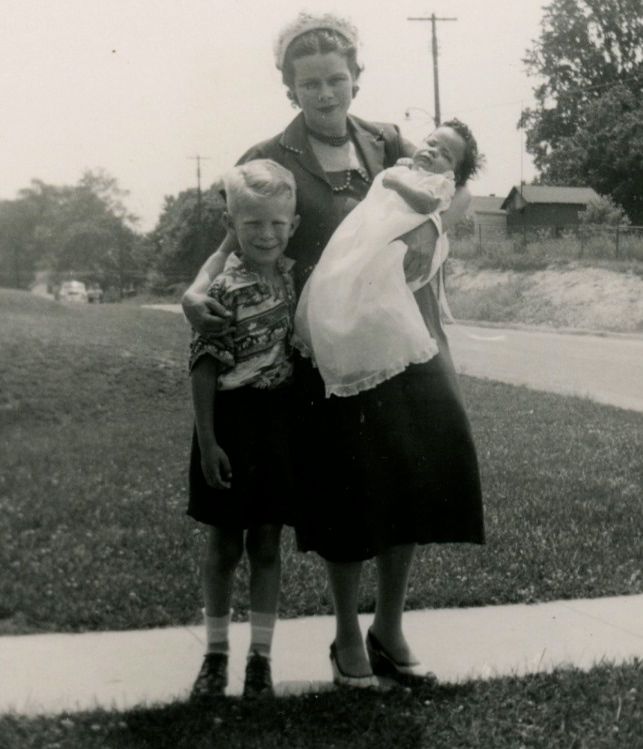
Dean's christening, with Bruce

Dean’s christening, with Bruce

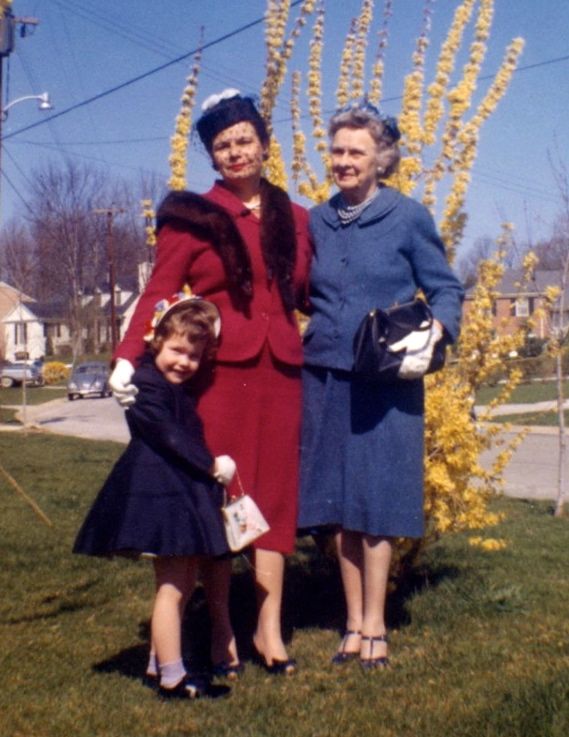
My Mom loved Easter, and not just for the stylish hats, spectator shoes and forsythia blossoms that made their spring appearance. It was truly a time of resurrection, when God made good on his promise to save the world.

In 1954, Easter fell on April 18 – almost as late in the season as this year’s. Six months earlier, Mom and Dad had lost their baby, their little girl Midge, to leukemia. Diagnosed at one year old, it had been brutal to watch Midge’s final remission end after more than two years of experimental treatments. Midge was not yet four.

When Easter arrived the following spring, Mom was big with child, and alone. The Marine Corps had delayed Dad’s solo posting to Japan as long as possible, but he was overseas as Mom faced the imminent birth of their fourth child.

It could have been a terrible time. In fact, one of the Naval medical professionals had advised Mom to abort the pregnancy, saying it would be too much for her psychologically given Midge’s terminal illness. I’d like to have seen the look Mom gave that doctor or heard her response. Never one to hold back, I am certain she gave him — and it was almost certainly a him — what for.

I imagine Mom looking out the window at the yellow forsythia, watching the earth renew itself, her hand resting on her large belly. After three pregnancies, I’m sure she knew her time was near.

Two days later, on April 20, she welcomed my brother Dean into the world. Dad said later, “It was as if the sun came out.”

Happy birthday, Dean. I know Mom is thinking of you today, and so am I.

Mom, Nana and I with Easter hats, by the forsythia, in 1961

Mom, Nana and me: with Easter hats, by the forsythia, in 1961


Leave a comment

Filed under Uncategorized

How Dad Survived

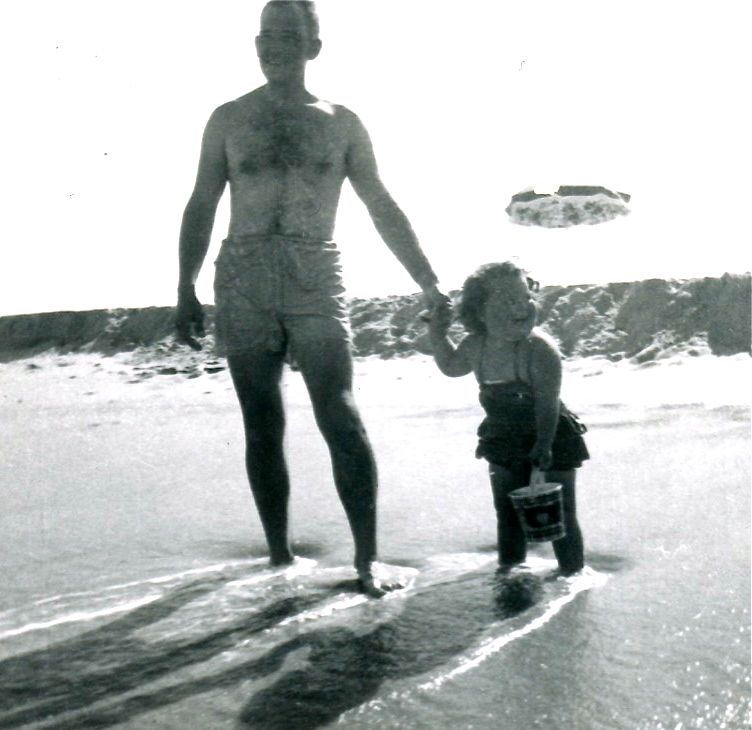
Dad holding Midge's hand 1953

Dad holding Midge’s hand 1953

I have often wondered how my father survived a dysfunctional family, the horrors of the war, the loss of his nearly four-year-old daughter to leukemia, the sudden end of his career for medical reasons, and finally the loss of his wife after 58 years of marriage. Any one of those experiences would have damaged most people.

But Dad wasn’t most people. Perhaps my vision is clouded as his youngest, his only surviving daughter and, for seven years, his caregiver. Maybe the magnetic attraction I feel to ponder his bigger-than-life story is a father-daughter thing. Whatever it is, I’ll take it. Dad has been gone for 14 months and I still learn from him every day.

I was there when Mom died, at the moment her heart finally gave out at the end of a three-and-a-half month struggle with late stage lung cancer. He was steadfast at her bedside, holding and stroking her hand, looking in to her eyes and telling her he loved her and would see her again. She died connected to him.

In the hours and days after that loss, Dad felt that severance as an open wound. He did not know how he would survive it. We all knew the survival statistics for men who suffer the loss of a life-long mate.

As he reflected out loud about their life together, he asked, “How can I live without her?” Over time, within weeks, that rhetorical question subtly changed. It became, “How can I live without her?” And then, “How will I live without her?”

In his questions are clues to Dad’s survival strategy.

With the first question, he assessed brutal reality. Can I survive this? Do I want to? Can I imagine life without Eileen?

Slowly, the “how” came into his inner dialogue. Dad the planner began to emerge. He began to focus on what lay ahead even if it was as simple as assembling the groceries for the four meals he said he knew how to make. He was a realist, and not an escapist. He began to imagine making it, in a world without Mom, day by day. His image of himself was eminently practical: a guy who would rise around seven, make coffee, feed the dog, read the paper, prepare some oatmeal, do some chores, go for a walk, have lunch, take a nap, read a book, make dinner and retire at ten after a few TV shows. Thrown in there somewhere was the endless maintenance of his collection of hunting guns, and perhaps a few calls to line up skeet shooting or fishing junkets with one of his sons or his friend, Bob.

After the massive heart attack that forced his retirement from the Marine Corps, I imagine that Dad’s view of his future self changed radically. He was in his mid-40s, a guy being watched for higher command, a Colonel with all the right prior postings. That guiding occupational dream drove him.

After finding himself out on the curb, his motivation changed. Everything, everything in him aimed at the seemingly insurmountable task of recreating a professional career that could support his wife and four children, none of whom had yet completed college.

“Be clear about your objective” was more than a military tenet. To Dad, it was a commandment. After keeping a roof over our heads and food on the table, his number one goal to secure our education.

Pursuing his objective left little time for leisure. What time he had went to connecting with the outdoors, a source of succor throughout his life. Wading the banks of a promising trout stream or crunching through the stubble of a shorn, frozen wheat field in search of pheasants was his idea of a vacation. Whenever possible, he would share that transporting experience with his children.

Although his dream had been sacrificed, Dad never expressed bitterness. Mom wasn’t above assuming a little high dudgeon about what would have happened if Dad had been able to continue his career, but her comments were never a complaint or rebuke. Dad could easily have looked at his abrupt departure from the Marines as a failure, but I never sensed such a deflation in his self-esteem. A door closed, another had to open. Had to, to educate his children. His sense of self worth was tied up in taking care of us, not stroking his own ego.

A recent Scientific American Mind article described the work of psychologist Shalom H. Schwartz of the Hebrew University of Jerusalem, which sought to identify universal values that might guide one’s life. Constructing them as a compass:

At the north is a universalistic orientation, which includes tolerance… and self-directed thought. To the east are hedonism… and personal achievement in the eyes of others…..Moving southeast, one can find dominance…. To the south is a believe in the importance of security and safety…., and to the west are humility and caring….  

A related study by Ravenna M. Helson, Ph.D., of UC Berkeley divided women into four groups over the course of their lives: seekers, conservers, achievers and “depleteds.” “Conservers valued tradition, family, security and hard work (the south of the compass). The achievers wanted both personal growth and the ability to excel at what they did (covering an area along Schwartz’s compass from the north to the east),” Scientific American Mind reported.

Those who identified as “conservers” were the most content.

Dad knew who he was, even as he worked through jarring crises. He knew what he wanted, even as his goals changed. He did not waste time longing for things outside of his practical reach. And he knew what he wanted to leave behind.

He never talked about his legacy, but if he had, it would have been for the four of us to have satisfying lives with children or people we love, acting with integrity and ready make a difference – however small – in the lives of those around us. Nothing grandiose. Nothing impractical. Just an immutable sense of self in service to others.

2 Comments

Filed under Uncategorized

Not Dead Yet

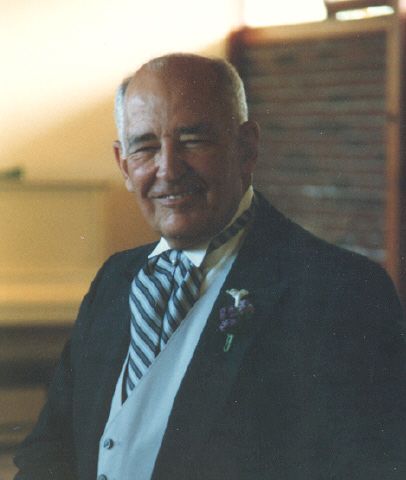
Father of the bride

Father of the bride

In a play presented by Davis-based Barnyard Theater two years ago, Psyche, the Greek goddess of the soul, continually asks the troubled protagonist, “Are you not dead yet?”

I’m at a stage in life where I’m supposed to be settled. My marriage is stable, I’m successful professionally, my kids are mostly launched, and I helped both parents at the end of their lives. The time ahead of me is likely shorter than the time behind me. Time to sit back and relax, right?

If Dad’s longevity is any indication, I could have forty or more years left. And I am not willing to spend it as excess population.

Yesterday I accepted an offer into admission at Bennington’s Master’s in Fine Arts program, where I will spend the next two years working hard to become a better writer. I hope to do justice to the story I have to tell about my relationship with my father, from the tense days of my childhood and adolescence through the reflective last years of our life together.

Once upon a time, I waited to pursue and complete a Master’s Degree in Business Administration until I knew how it would help me in achieving my professional goals. Going back to school this time is different. As a degree, an MFA is probably useless for somebody like me. I don’t need it to do anything.

But I’m impatient. I’m looking for jumper cables, a cattle prod, a kick in the butt. (I’m sure the inept use of metaphor will be kicked right out of me.) I recently read a comment by a woman who said of her MFA that it was a useless degree but it taught her how to really read.

I could come out of this a better writer. I could come out of it a better reader. Maybe I’ll meet people who will make a difference in my life, or I will make a difference in theirs. Perhaps the program will serve as an incubator for ideas about how to use writing to help people who walk the caregiver’s road.

The words to describe the journey I will begin on June 19 are conditional: could, maybe, perhaps. I don’t really know what will happen. But I’m doing this anyway.

Yesterday, the day that I made a decision about which graduate program to enroll in, I came across “Learning to Walk,” by David Whyte. Here’s part of it:

So learning to walk
in morning light
like this again,
we’ll take that first step
toward mortality,
giving our selves away
today by walking
out of the garden,
through the woods,
along the river,
toward the mountain,
its simple,
that’s what we’ll do,
practicing as we go,
and
we’ll be glimpsed, 
traveling westward, 
no longer familiar,
a following wave,
greeted, as we were at our birth,
as probable 
and slightly dangerous strangers,
some wild risk 
about to break again
on the world.

Once upon a time, my father gave me away. Just before I removed my hand from his steady arm, he gazed at me and patted my hand. Then he let go. Now I am giving myself away, moving forward without a clear destination. Here I go.

2 Comments

Filed under Uncategorized

Girlfriend Magic

Emerald Isle North Carolina

Long, long ago, at the first hint of connection with someone interesting – someone of the opposite sex – I got a shivery, fluttery, electric feeling. Magical!

I still know that feeling. I felt it last spring when I reunited with an old friend.

At first it was awkward. We did the obligatory greeting thing: she told me I looked great, I said I loved her hair (gone silvery salt-and-pepper since the last time I’d seen her), she liked my perky metallic tennis shoes. I could tell she was a little worried about how I might view the changes she had undergone since I last saw her a decade before. I was, too. Even we confident women are a bit self-conscious about our aging appearances.

As we walked to her car, we glanced furtively in each other’s direction. Or maybe we were mentally pinching ourselves to say this is real, we are really together again.

I had made the trip east for an errand related to my parents’ burial arrangements, but I decided to stop first to see her. Happily, my visit coincided with the premiere of a documentary she produced after five long, hard years of work. I felt like I was watching Cinderella at the ball as she was appreciated by literati, family and friends. That was supposed to be the end of it, a quick weekend in town before I traveled north to Washington, D.C.

She knew that my trip to DC would be a pilgrimage. It wasn’t just an errand to secure a date for my father’s honor burial at Arlington. I was preparing the way for my mother and father’s final passage. It was the last thing that I would be able to do for them.

She insisted on coming with me. We stopped for two nights at Emerald Isle on the Crystal Coast of North Carolina, a place that factors large in her own history. Long talks, more than a little wine ensued. Then she drove me north through rural roads all the way to Washington.

Though we entered the Virginia side on a nondescript highway, I felt like I had passed through the gates of a mythical realm. I remember almost nothing from the years my family lived in the area, when my father served as Executive Officer at Marine Corps Barracks. But I knew of those years, the importance that they held in my mother’s memory and the long impact they had on my father.

Everything I saw, heard and felt over the next few days was amplified, like Dorothy finding herself in the technicolor world of Oz. I traced my father’s footsteps, imagined him leading the Evening Parade, even saw my Mom among the flowers at Washington National Cathedral.

It would have been hard to make the journey alone. But my friend knew that. She knew that before I did.

Back and forth. In conversation, we girlfriends have an unwritten code. We instinctively listen to our friends, who in turn draw us out, before we turn the conversation back to them. Back and forth.

But there is another pendulum in our lives. We bond, are pulled apart by the demands of our lives, and only later have the space in our lives to reconnect. Anna Quindlen writes brilliantly about the importance of girlfriends:

…(if) you push her on how she really makes it through her day, or more important, her months and years, how she stays steady when things get rocky, who she calls when the doctor says ‘I’d like to run a few more tests’ or when her son moves in with the girl she’s never much liked or trusted, she won’t mention any of those things. She will mention her girlfriends. The older we get, the more we understand that the women who know and love us — and love us despite what they know about us — are the joists that hold up the house of our existence. Everything depends on them….

When I think back, I realize that in my own life there was a girlfriend interregnum, a time during which I lost the knack for, the connection to, but never the need for close female friends…. Perhaps only when we’ve made our peace with our own selves can we really be the kind of friends who listen, advise, but don’t judge, or not too harshly. My friends now are more cheerleader than critic. They are as essential to my life as my work or my home, a kind of freely chosen family, connected by ties of affinity instead of ties of blood….

As we grow older the mythology has it that female friendships falter because we compete, for everything from the alpha job to the alpha male, but I didn’t find that to be true. What I did find was that a frantic existence left too little time for friendship as it ought to be configured, deep and consistent. For decades I was focused on my work, my kids, my routine….

…(I)n the end we wind up with the friends who really stick. Being female, we pride ourselves on doing for them, on listening to them complain or cry, on showing up with a cake or a casserole and taking charge when disaster strikes. But the measure of our real friends, our closest friends, is that we let them do the same for us. We’ve been taking charge for decades; to let go, to take help instead of charge, is the break point of friendship.” (from Lots of Candles, Plenty of Cake)

I wrote this post in response to a request from my friend’s sister to send along a note in honor of her 60th birthday. Reuniting with my friend of 30 years ago has been one of the greatest gifts I’ve ever received. So happy birthday, dear Sharon, I wish us many happy returns.

Leave a comment

Filed under Uncategorized

Love in Thought, Word and Deed

Screen Shot 2014-03-02 at 8.28.58 AM

When I was growing up, my father rarely said “I love you,” and almost never hugged me in a display of affection. But I knew he loved me.

What he did was engage.

When my second grade teacher said I had a problem with reading comprehension, it was my father who read aloud to me from the Oz books and then listened while I read aloud. My father took me out to the shooting range and taught me how to fire a rifle and later a shotgun. He shared his enthusiasm for poetry.

What I remember most, however, was the simple act of sitting around the dinner table, talking. There we discussed current events and world affairs, poverty and discrimination. Dad drew upon his library of stories — tales of the Old West, meeting Mom, fishing and hunting successes. Often, books were brought out for reference: tomes of Shakespeare, an Atlas, the dictionary. If you didn’t know where something was, or what a word meant, you had to look it up.

I was the youngest. I could easily have been overlooked or out-argued. But when I spoke up, Dad listened attentively. Dad might challenge my thinking, but he never dismissed it. (My brothers were a little less circumspect.) I always felt that Dad was interested in what I had to say.

It wasn’t all polite conversation. There was a certain amount of “monkey feeding time.” Dad had a strange expression that derived from his adoption of the Management By Objectives technique. When facing a challenge (like our family budget, which was a frequent source of concern), one methodically stated the situation, considered alternatives, developed solutions and assigned accountabilities and timeframes, preferably on a flip chart pad. Then came monkey-feeding time, also know as follow-up.

Dinner was follow-up time. My parents never asked me what homework I had or checked to see if I’d done it. But Dad did ask the result. I was never criticized for the grade I achieved. If I was doing poorly in math – as was often the case – he offered resources. (My best resource, I learned surreptitiously, was my boyfriend, Jerry Hooker, who could be persuaded to do my trig homework for me.)

I wanted Dad to tell me he loved my writing, but I knew he didn’t. As a fledgling writer, I was given to flights of multi-syllabic adjectives and wandering sentences, the more complex and flowery, the better. I’d be waiting for a compliment and Dad would say something like, “Very nice.” His tone of voice, however, said, “Adequate.” If I pushed for feedback, he would say, “It’s a bit purple for my taste.”

Mom laid it all out there, for better or worse. With Mom in menopause and me hormonal about half the time, our household was the scene of lot of estrogen-fueled interaction. When we started in, my brothers would exit. At the end of our fights, her jaw muscles flexing and her eyes shooting lasers, my mother would say, “You know I love you, Betz, but I don’t always like you.”

I’m not sure what I wanted more: to achieve my father’s approval or to avoid his disapproval. Just as he didn’t dole out compliments, he rarely said anything harshly critical. Anger did not take physical form.

All of us, however, feared my father’s disapproval and anger. I don’t know what to call it but Dad’s command presence. Even when leaning on the arm of the chair, he exuded a state of readiness. Even relaxed, you had the sense that he could snap to attention and his focus would be on you. In stillness, his eyes would shift your way.

I talked to my brother Bruce on the phone yesterday and I asked him, “How is it that we knew when Dad disapproved without him saying or doing anything?” It was the look, we agreed. Dad just looked at you.

“The eye of Sauron,” I said.

Yesterday, I read that only 56% of black fathers say they hug or show physical affection for their sons every day, and only 45% of the same group tell their sons they love them.

I thought to myself, Dad generally didn’t hug us or tell us he loved us either. How is it that we were confident in his love?

He showed us.

His model for fatherhood was everything that his father wasn’t.

As he told me once, his Dad wanted to be a loving father, but couldn’t bring himself to be. Dad often wondered aloud, “Why wouldn’t my father want to spend time with me?” He couldn’t understand it.

Dad treated us like we mattered, introducing us to the things he loved most: the challenges of the mind, the beauty of nature, the thrill of outdoor pursuits.

He may not have been a hugger. He rarely said, “I love you.” But he loved us in thought, word and deed.

2 Comments

Filed under Uncategorized