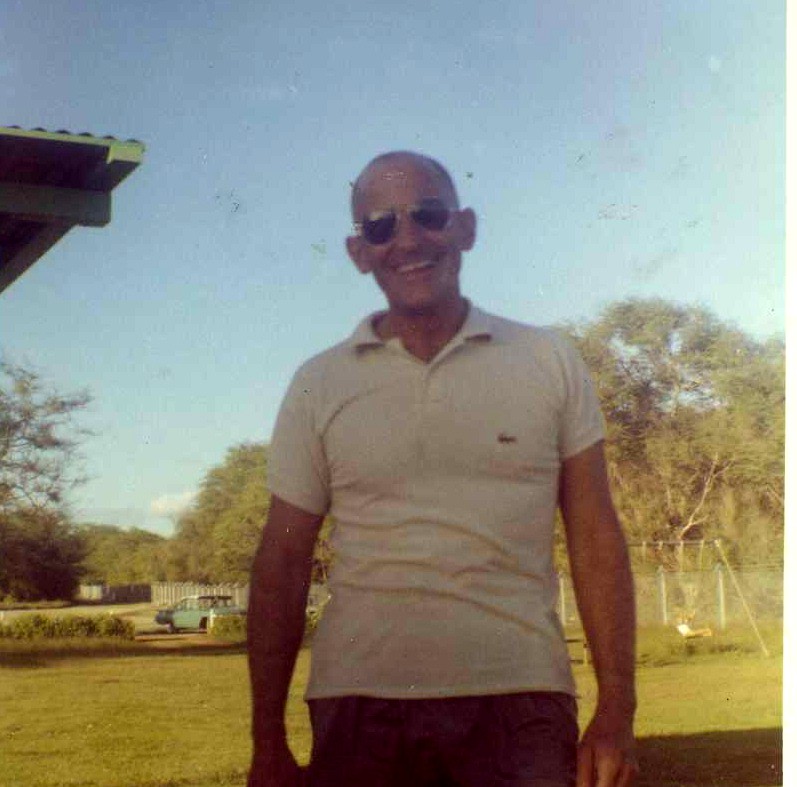
Riding the waves of my Dad’s memories

You never know what’s going to trigger a memory.  For me this afternoon, it was strawberry ice cream.  Not just any ice cream, but my Grandmother’s strawberry ice cream.  I made a batch for our Norwegian cousins last week and finished it off today.  It took me right back to sharing Independence Day with the Lukens clan in Seattle, when we hand-cranked a behemoth ice cream freezer for the better part of a day.  (Of course, it’s a lot easier to make it with a little electric appliance I have now.)

It’s very frustrating for my Dad – any of us, really – not to be able to access memory on demand.  With my Dad, it’s usually not that the memory is gone, it’s just not within reach when he wants it.

Instead, his memories seem to float up out of the depths like flotsam, submerge again, only to return again the next day.  It’s as if a recirculating pump brings them back time and time again, until the pattern shifts and it’s a new set of memories that begins their rotation.

For the past month or so, Dad has been remembering me riding on his shoulders in the waves at Barber’s Point on Oahu.  Dad was stationed at CINCPac in Honolulu, and I was five.  I loved the water but I couldn’t swim, and Barber’s Point had a notorious riptide.  The moment he remembers may have been the day before, even the day of, his massive heart attack.  Back in the early 60s, no one knew if you would recover from a big cardiac event.  At some point, it dawned on him that he could just as easily have had that heart attack while jouncing me in the waves.  Perhaps that’s why that particular day is so firmly etched in his mind.

Sometimes I think his memories are things he’s trying to work through.  He often asks me, “Do we have any business left?”  It’s his way of asking if his affairs are in order, recognizing that he doesn’t have forever.

Not long after my mother died in 1999, he perserverated on the memory of my sister’s death from leukemia.  He remembered her calling out to him, “Daddy, help me,” and his deep feeling of helplessness.  During another period, it was the bloody beach on Iwo Jima.  In recent months, many memories were of his father, with whom he did not have a warm relationship.  He wonders why his father didn’t take him fishing or have the interest in him that my father had in his sons.

Listening to some of his memories breaks my heart.  Others give me comfort, because I know that they bring him comfort.  Like today, when he remembered my brother older Dean at about age five, hands on hips, waiting for him in the driveway when he came home from work.  Dean was such a little man, even at that age.  Dad smiled.  And so did I.

3 Comments

Filed under Uncategorized

Rx for aging #1: Get outside and walk

I call my Dad a miracle man for good reason.  Besides surviving Iwo Jima and personal tragedies, he has come back time and time again from serious medical conditions.  After his third heart attack and subsequent bypass surgery at the age of 82, his cardiovascular surgeon told the family that he likely would only have five years before his arteries became clogged and life-threatening.  I thought of it like shelf life.  Dad’s “expiration date” was therefore 2004.

Since then, he’s had two small strokes and one big one.  In 2004, the physicians and stroke rehab specialists told us he would probably never be able to walk independently or without dragging his weakened left leg.  When he was assessed following his small stroke last month, the various physicians who checked his strength said that they couldn’t detect any difference in his left side strength.

So what keeps Dad keepin’ on, besides the discipline of being a retired Marine?  I think the number one thing that contributes to Dad’s physical and mental well-being is walking. We’re a funny sight in my neighborhood or on the levee beside the American River: me pushing Dad’s walker, while he holds on with his left hand and steadies himself on the other side with a cane.  Our double-wide approach to walking overcame what he didn’t like about walking with the walker — freedom of stride — while providing stabilization on both sides.

I realize that Dad is unusual — and lucky — for having someone who will take the time to walk with him, almost daily.  But what if walking buddies were a part of senior care programs, or a popular volunteer program?  If we can have dog-walkers, why not “Dad walkers”?

On the “about” description for this blog, I explained my vision: …a celebration of (my Dad’s) indomitable personality and wisdom, a rant about the injustice of the challenges of aging, a plea for better models of healthcare and support services for older people, a prayer for forgiveness — especially my own — when my patience runs low.  This post falls into the category of pleading for better models of healthcare and support services for older people.

Lots of clinical evidence attests to the health benefits of walking (strength, balance, release of endorphins), but I see several benefits that make me think there are more benefits than just getting out there and exercising your heart and leg muscles:

  • The outdoor connection – Getting outside provides a connection with nature that you lose if you’re confined inside your home or senior community
  • Personal validation – A “good day” provides hope and inspiration that helps to counterbalance fears that one is declining and deteriorating toward the final finish
  • Touch and community  – Walking with someone can provide a gentle moment of communion and love that feeds and sustains.

The outdoor connection:  My Dad has always been an outdoorsman — an avid game hunter, skeet shooter and fly fisherman.  I never liked to hunt, but I loved crunching through frozen wheat fields in the cold pre-dawn hours in Eastern Washington as my Dad hunted pheasant, dove, Hungarian partridge, quail or chukkar.  One of his fondest memories was hiking the Sand Ridge Trail with high school classmates near Rimrock Lake in Eastern Washington.  But for anyone, it seems unnatural and disorienting to spend your days indoors.  You miss the details that Dad always notices: new buds, bird calls, beautiful cloud formations.  When nature is removed from our world, we suffer.

Personal validation:  My Dad doesn’t have troops to order anymore, so he orders himself.  So many of our walks begin with him saying, “I think I’m gettin’ old.”  But then he regroups and starts saying things like, “C’mon, Henry.  You can do better than that.”  And when he starts to loosen up, he comments on that, too:  “That’s better.”  Not every day is a good day, or a good walk.  But when things go well, it helps him feel more confident that he is not beginning “the big slide” toward the end.  Yesterday’s walk ended with, “I’m encouraged.”

Touch and community:  A friend who did massage on the side once told a story about an elderly widow who cried after her massage.  “No one ever touched her anymore,” my friend said.  My Mom and Dad were big on hand-holding and patting one another.  Now there is no one who pats him as a part of his daily routine.  So when we walk, and Dad rests, I make it a point to put my arm around his shoulders, and give him a pat-pat-pat.  “We’re three-pat people,” he always said.

Leave a comment

Filed under Uncategorized

What D-Day means to my Dad

Henry at the 23rd Marine’s base camp in Maui, 1945

Two weeks after my father’s recent (and, thankfully, small) stroke, we were in his internist’s office for a follow-up visit.  It was June 6, D-Day.  Dr. F. asked him, “So where were you on D-Day?”

I knew what was going through my Dad’s mind.  Which D-Day?  D-Day for my Dad was February 19, 1945, the invasion of Iwo Jima.  For most Americans, D-Day is Normandy, Saving Private Ryan, Band of Brothers.

Until Dad was in his early 80s, about the time my Mom died, he never talked about the war.  When he did begin to describe it, interrupted by long buried tears, he often began by describing the long, narrow beach at Iwo Jima where anti-aircraft guns rained fire from their unobstructed vantage points above.  I wrote notes as we sat on the couch in my parents’ home in Tacoma:

When we pulled in offshore, the light was growing.  You’re up on the deck and you see this ungodly, ghostly tower rising 600 to 700 feet in the air.  It was a volcanic spire — the goddamnedest thing I ever saw.  Scary.

On the night of D+2, he described sitting in a Japanese pillbox that had become the 23rd Marines first command post:

There was a tremendous concussion over my head. Sand came raining down.  I think a round bounced off (the pillbox).  The next night, the Japanese fired 240 mm mortars, as big as a trash can.  You’d see it go up, but you wouldn’t know where it would come down.  They dropped one about 30 yards outside the pillbox.  Afterwards there was just a crater where 15 or 16 people had been standing.  Just like that, they were gone.

The American victory at Iwo Jima was a crushing blow to the Empire of Japan.  Despite the superior numbers of the American forces — roughly 70,000 battle-hardened Marines to 22,000 Japanese — winning the island and its two strategically located airfields took more than seven weeks to win.  The topography of the island, and the preparation of the Japanese with thousands of bunkers, hidden artillery and a warren of underground tunnels, made it the Marine’s toughest challenge of the War of the Pacific.

What everyone remembers is the famous photo of the American colors being raised on Mt. Suribachi.  And Dr. F. asked about that, too.  Years ago, I asked Dad that same question:

What you saw in the picture was the second time they put up the flag.  One officer had a flag in his back pocket.  When they took the hill, they ran the flag up.  Later, they sent in a full-sized holiday flag.

As I listened to my Dad, I couldn’t imagine how he had the guts to face the enemy fire that they did on Iwo Jima.  At 28, he was just a few years older than my daughter is now.  I asked him how he did it.  Wasn’t he afraid to go ashore?  “You did it for the guy next to you,” he said.

Like many WWII vets, my Dad is always a little surprised when people thank him for his service or call him a hero.  He was twice decorated, the second time for his efforts as operations officer for the 23rd Regiment, 4th Marine Division, during the Iwo Jima campaign.  But when he thinks “heroes,” he thinks of moments like this:

The island was shaped like a pork chop – a volcanic mound with steep sides, honeycombed with caves. It overlooked the beaches we landed on — perfect visibility.  Down at the far end was another escarpment looking the other way.  We had one fine officer who took a posthumous award for scooping up men without leaders and taking the key point.  They got all shot up.

As for his own moments of fear, he tended to make light of them:

Some days later, maybe D+4, we were in reserve because we’d  lost about a third of our troops by then.  My job was to prepare to take over and I needed to know where everyone was, their weaponry, etc.  So I went down to Division HQ.  Enough of the island had been taken by then that you could move around.  I had to walk about one mile to the other end of the island.  The shooting had died off.  The map was surrounded by officers and I couldn’t see anything.  Then, the Japanese started firing high velocity rounds from their position on a cliff.  Division HQ staff bailed out and I took all of the information I needed and walked out.

But Monday, as we talked with my Dad’s physician, it saddened me to think that most people no longer see “the Colonel.”  They may see a 94 year old man with a number of chronic conditions and assume he is frail.  They may hear a gravelly voice and assume he’s crotchety.  They may take his hearing loss — “too many bombs,” he says — to mean that he is stupid when he cannot understand them. Or they may not see him at all, and just treat him as invisible.

When my father was being discharged from Sutter General two weeks ago, two staff members made the mistake of discussing Dad — three feet away — without involving him in the conversation.  He said:

I am not a defective person.  Why are you not addressing me?

He may not look like the Major that he was in 1945, much less the Colonel, but he still knows how to command.

For more first-hand reports from Marines who served at Iwo Jima, here’s a source I recently found when looking for news of Dad’s friend, Col. Shelton Scales.

6 Comments

Filed under Marines and those who serve, Uncategorized