Category Archives: Uncategorized

Markings

Experiences mark you.

When we recount the past, most of it consists of moments so small that they slip through a sieve, or even cheesecloth. They don’t stick. But some moments do, the memories that brand us.

When I was about four, I threw a knife at a neighbor boy in a fit of anger. I watched a lot of Lone Ranger in those days and maybe I had seen too many cowboy-and-Indian battles that pitched men with rifles against men with blades. (The Indians always lost.)  I was mad as hell and yelled at the neighbor from the end of our walkway. Then I cocked my arm, holding the point of a kitchen knife, and flung it end over end, just like I’d seen on television. After it hit him in the calf, I was stunned. There was blood and screaming.

When I was eight, I was walking myself to school, up the steep sidewalk of Edgar Street overlooking Portage Bay, through the diagonal pathway of Roanoke Park and down the alley that I had been shown to use as a shortcut to reach the bridge over the freeway that you had to cross to reach Seward Elementary. An older boy was ahead of me a little. He said something mean. I said something back. With three older brothers, and their friends around, I learned to give as good as I got. At the street corner where we waited for the light to change, he whirled around and kicked me in the groin, right where you’d kick a boy for maximum effect. The pain exploded me. I felt the pain fly out from my pubis, from my belly, from my chest, from my head, out into space and quickly back again with a second wallop of intense pain, then waves of it. It ripped the breath out of me and I crumpled to the ground, couldn’t stand, couldn’t walk. When I got to school I was still crying. I thought something had been broken. My third grade teacher took me into the cloakroom outside our classroom and asked me to pull up my dress and pull down my panties to show her. This hurt even more. Having to pull down my panties for my teacher. I blamed myself for talking back to the older boy, for egging him on until he hurt me. And I was ashamed, terribly and awfully ashamed to have to reveal this private part of myself to my beloved teacher, fearing it would change her view of me forever.

When I was twenty, I got really drunk at the end of finals. My roommate had left for her family home in California. I was alone in our townhouse, heavily asleep. I felt a movement at the end of the bed, and opened my eyes. A blond haired guy from college was sitting there, taking off his shoes. I knew who he was, at least that his name was Bill and what fraternity he was from. I’d been introduced somewhere along the line when I was dating (if you could call it that) a guy in his house. I asked him what he was doing. He calmly answered that he was going to sleep with me. Oh god he is going to rape me. The phone was on the other side of the room, past him. At the end of finals in an apartment building emptied of  students, no one would hear me if I screamed. Nothing was within reach to defend myself. He told me he had been watching me, had seen me leaving dressed for a dance. He described what I wore. Said I looked pretty. He told me he loved me. I told him with a slur that I was too drunk to sleep with him. I closed my eyes, laid back down. He was quiet. I feigned sleep. He did not move. And at some point, I fell asleep. I awakened a little while later and opened my eyelids the tiniest slit to see if he was still there. He was gone.

When I was forty-eight, I moved my Dad to California. He would turn eighty-nine that year. I had lived almost all of my life fearing he would die from a heart attack, ever since the big one that upended our lives when I was five. His cardiovascular surgeon had told us, five years earlier, that he would probably have five years with this one. He didn’t say “before it kills him” but my brothers and I finished the sentence in our head. And then, strangely, unbelievably, seven years went by. He lived for seven years.

I often say everything I learned, I learned the hard way. I learned I have a temper. I learned my temper can provoke. I learned I am not invulnerable. I learned I am not always in control.

You cannot know me unless you know these things about me.

[Post script: I started an MFA at Bennington in Creative Nonfiction on June 19. As I write this, I should be at a lecture given by one of the graduating seniors. Instead, I am thinking about meeting people here – hearing their experiences and getting to know them. I started thinking about how we have all been marked, long before we arrived here. Some have tattoos; some in a foreign language so that others cannot read the message. We are all tattooed. You just can’t always see them. So I’m writing, writing instead of listening. And I’m gonna keep writing.]
 

1 Comment

Filed under Uncategorized

Driving Dad

My Dad gave lots of feedback, just not the critical kind. A while back I mused on the topic of my horrible adolescent makeup choices (tarantula-like eyelashes) and wrote:

I remember few rules from my youth. I wasn’t harangued to make my bed, come home at a certain time, do my homework, achieve better grades or get off the phone. I wasn’t told when I could start shaving my legs, or wearing makeup or start dating. I did want approval, my father’s approval in particular, and I knew what he admired without him ever saying a word. I was more interested in the brass ring of admiration than avoiding the sting of criticism or the pain of punishment.

When he moved to Sacramento in 2006, I was his driver. He had taken himself off the road in 2003, after he hit a newly installed curb and blew out a tire.

Unfailingly, when we were going from Point A to Point B, he would say something about my driving:

“I like the way you drive.”

In my impatient youth, it drove me nuts that Dad edged into the shoulder to let faster cars pass. “You’re going so slow,” I would think. Over time, I stopped thinking of this habit as disadvantaging our progress and started noticing the effect of his polite road manners.

He made room for cars trying to merge, waving them in. Seeing a pedestrian waiting on the curb on a heavily trafficked street, he stopped to let them cross. When someone politely waited for him while parallel parking or slowed slightly to let him enter a lane on the freeway, he extended his arm through the window and gave a brief salute. He was the kind of driver that made other drivers smile.

When he told me he liked the way I drove, he was acknowledging that I had internalized his road manners.

This was how he taught us: he initially explained something, then modeled the behavior, and then shut up. Except when we did something right. Then he said something complimentary.

One of his concerns about me was that I would never be physically active. With his history of heart disease, he knew that exercise could make the difference between life and death, or at least ability and disability. During my adolescent years, when my highest level of volition was moving from the couch to the dinner table, he went so far as to hand me the Canadian Air Force exercise manual, chock full of isometric exercises. I tried them a few times and quickly bored of them.

He must have been shocked to see me work out with a personal trainer in my 50s. She had me doing situps and jumping jacks, step ups and mountain climbers. She worked my tail off. (And I was paying for it.)

As I worked out on my back deck, I could see him watching me through the window from his regular seat at my kitchen table. He would pump his fist in the air, silently cheering me on.

“Atta girl,” he was saying.

When I drive, workout, and starting Thursday, return to graduate school to begin a Master’s in Fine Arts in Creative Nonfiction at Bennington College, I still hear it:

Atta girl.

1 Comment

Filed under Uncategorized

On Waiting

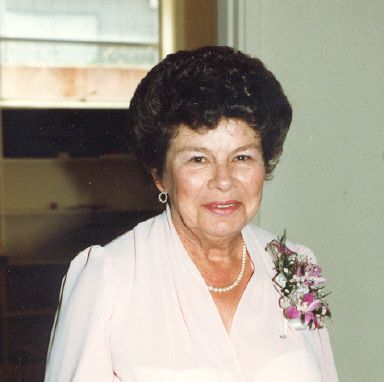
Mom as mother-of-the-bride

When I married, I knew I would never again live in Western Washington. Although I would return to visit my parents, the pleasures I took for granted would no longer be mine by right of residency. The thrill of accelerating up a steep road bracketed by thick stands of Doug Firs, glancing into the thick underbrush for signs of ripe red huckleberries on clear cut stumps or small animals making their way on padded moss floors. The contentment of walking along an isolated rocky shoreline, examining shells with a mental dichotomous key – one valve or two? – while overhead seagulls wheeled and screamed their victory cries. The rhythmic symphony of rain outside my bedroom window: the soprano tick-tick-ticking of droplets hitting the concrete sidewalk accompanied by baritone beats from the downspout and occasional bursts as pooled water slid through the slats of the upstairs deck.

When I returned to my family home in Tacoma in the early years of my marriage, I took mental inventory even before I got out of the rental car. Was it the same? Sometimes I could tell Mom had been out dead-heading the rhodies, noting a tidy pile next to the giant that reached to the gutter. Or I could see her handiwork in newly planted annuals in the front flower bed along with evidence of a futile attempt to sweep up the loose dirt that had spilled onto the concrete.

Anticipating my return, the front door would be unlocked, so I’d enter and set my suitcase down on the green slate entry floor. Did it shine, as it did when one of my chores was polishing it? Before Mom developed dementia, you could count on seeing an arrangement of fresh flowers – whatever was in season in the yard — placed on the drop leaf mahogany table in the entryway.

By then, Mom would have noticed my arrival. She would push the kitchen pocket door open, shoo the dog from underfoot and approach me. Her warm smile and twinkling eyes felt like an embrace from six feet away. What did she say? “Welcome home, honey,” I think. Did she call me honey? Or was it dear? Or just Betz? (It was rarely “Betsy.” She said she really meant to call me Betz but didn’t have the gumption to spell it that way.)

What I remember most, however, was not the visual details. It was the feeling.

I had the feeling that old 8601, my parents’ home, waited for me. Mom, Dad, the house and the dog (Meg, the Brittany Spaniel, in later years) all waited for me. The deadheading of the rhodies, the planting of the annuals, the fresh flowers in the hallway: they felt like preparations for my arrival. I don’t think I’m being egotistical here. I knew that I was important to my parents, and they waited in expectation on the afternoon when I arrived.

Something in me waited, too. When I met my husband a couple of years after graduating from college, I said to myself, “This guy is not going to leave Sacramento. If you get serious about him, Sacramento will be where you live.”

Hot and flat. Those were my two initial impressions of the Central Valley town. From the air, the valley floor looked like a crazy quilt of browns and greens, embroidered by curving ridges that partitioned flooded rice fields. After the lush tall forests of the Northwest, the ground looked bald. Colorful but bald. During the first summer of our marriage, Sacramento experienced 45 days over 100 degrees. Or as locals like to say, temps “in the triple digits.” It left me speechless. I didn’t even have a vocabulary for that kind of extreme heat. When I climbed into my VW rabbit, with its cloth and vinyl seats, it had to be over 200 degrees.

For many years – 10? 15? – I still felt like a foster child of Sacramento’s capitol. By then, I was a mother twice over, my career was established and I had a large network of friends and colleagues. When would it really feel like home?

Something in me had waited for that moment when I would arrive at 8601 43rd Street West. I inhaled, my lungs filling with crisp air cooled by the inland sea, smelling slightly of salt, earth and vegetation. Moisture penetrated my skin, plumping it after the desiccating dryness of California. I smiled, imagining the regeneration of the webbing between my fingers and toes – a Northwesterner’s inside joke.

My parents, the house, the area — all seemed to wait for me. But a part of me had been in suspended animation, too. I had been waiting.

Sometime in the past 15 years, Sacramento (finally) started feeling like the place I belonged. Maybe it happened after the death of my mother in 1999. Or perhaps it was after my father moved to be with me in his late 80s.

I thought about all this two weeks ago, as I waited for the arrival of my son from college. He had spent a couple of weeks tooling around Washington after graduating. I sped toward Sacramento from Santa Cruz, intending to arrive before he did. I wanted to be waiting.

During the two-and-a-half hour drive, I realized what a privilege it was to wait, and to be waited for. Perhaps my parents did not put their lives in abeyance when I visited, but it felt like they did. I felt cherished.

With both of my adult children now living in Sacramento, I doubt they have this feeling. Our lives are busy, bustling here and there. I’ve got stuff to do, and they know it. My world doesn’t screech to a halt when they’re around.

I cherish them, nonetheless. I should wait more often.

3 Comments

Filed under Uncategorized

Connections

Dreaming

Next to me, my great nephew sleeps on, lips occasionally twitching, elbow thrown across my chest, lifting now and then in dream-driven movement. Perhaps he hears the call of the referee while he stands at bat, primed to swing.

He crawled in at 6:55 a.m., having been told by his mother that he could come down and snuggle with me when he awakened in the morning. He pulled back the corner of the comforter of the guest bed and laid down quietly next to me. Within moments, his breathing slowed. He settled into a steady rhythm of deep inhales followed and forceful expulsions as he wandered the realm of dreamland.

Time has met the timeless. I am right here and nowhere else, reluctant to move lest I disturb this rare morning moment.

But simultaneously I am remembering how my mother and father snuggled grandchildren of similar ages.  When my brother, Bruce, began his family — a little earlier than he expected — he and his wife lived with us, along with his daughter, Sandy, who quickly grew into a bright and sunny toe-headed urchin with a ready giggle.

Dad was intense in those days, feeling the weight of financial responsibility for two children still at home, and Bruce’s new family. His proud Marine Corps frame slumped into a chair in the living room when he returned from work. He regrouped with a scotch on the rocks. Dean and I knew to leave him alone.

But Sandy did not. She toddled in to the living room in her little dress. Dad set the paper down in his lap and picked her up. It was time for their game. Sandy showed Papa her protuberant belly; Dad immediately pressed the frigid cocktail glass against her tummy whereupon Sandy exploded into waves of giggles. With each repetition, the pressure sloughed off Dad a little more.

As serious as Dad could be, he was always game for a round of Patty Cake, “Tom Tinker” or plain old “Sausages.” When holding a baby, he would lightly touch her forehead and say “Tom Tinker.” Moving down the little one’s face, he found “eye blinker,” then “nose smeller,” “mouth taster” and finally, “chin chopper.” At this last label, Dad tickled the baby’s chin and said in a low voice at double-time speed, “chin chopper chin chopper chin chopper!” After initial surprise, small eyes looked expectantly at him, ready for another go. Which Dad obliged, again and again.

I return to the moment, to the sweet child sleeping next to me. Son of that toe-headed urchin. I pull my arm out of the covers and lightly touch his forearm: utterly smooth, skin stretched tight over thin bones, not an ounce of flesh to spare. The tendon twitches just enough to twist his wrist ever so slightly to the left. He sleeps on, the arm bone connected to the wrist bone, the wrist bone connected to the hand bones.

Connected to me, to his mother, and before me, Mom and Dad.

Leave a comment

Filed under Uncategorized

The Guilts

Tommy handprint and booties

Two weeks ago, a younger friend of mine called to ask my advice about achieving work-life balance. She has a three-year-old, is in the middle of a challenging pregnancy and is less than a year into a new leadership position. How did I do it, she asked.

I didn’t, I told her. I oscillated between roles rather than achieving balance. Like her, I was pregnant when I took a challenging new job — and I, too, had medical complications. My boss approved the normal six week maternity leave. When I came back to work, my infant daughter still cried much of the day and night. (The only thing that seemed to sooth her, during these colicky periods, was a bouncy swaying back and forth reminiscent of low impact aerobics, which I had continued during pregnancy.) I pumped breast milk sitting on the john in the bathroom. But my daughter soon caught on to the fact that drinking out of a bottle was a lot faster and easier than breast feeding. My milk dried up.

After I had been at that company for more than nine years, I cut back to part time. Then I left and ended up taking a new full-time executive role in a consulting firm. After four years, I cut back to part time. Then I left and took an even bigger full-time job in large company. Guess what I did after four years?

When my little girl was still a babe in arms, I fretted so much about the time I spent away from her that I logged when she slept and when she was awake. Then I calculated how many of her waking hours were spent with me rather than with her in-home caregiver. It made me feel better to know that more than half her waking hours were spent with me.

I tortured myself with questions. Would she be secure in herself and in my love for her? Would her personality develop as it should? What would she think of my choices in the future?

And I got plenty of sidelong glances and snarky comments from others. One of my favorites, from the mother of another little girl: “Your daughter is remarkably well adjusted considering you work full time!” That was meant to be a compliment.

I did maternal guilt really, really well.

The years rolled by. I completed an M.B.A. while working full-time, after which my husband and I had our second child, a baby boy. (Perhaps this is on my mind this morning because I jut had a dream about him as a two-year old, so sleepy that he fell asleep against my chest, and I laid him gently on the couch for a nap.)

Then came the death of my mother in 1999. Before she was diagnosed with late stage lung cancer, I felt that loss coming. I had begun to notice changes seven years earlier, when my son was born. Always helpful, Mom had come down to help, as she had done after the birth of my daughter. When I came home from the hospital less than thirty hours after giving birth, exhausted, I laid down on the couch. My mother hovered over me and asked, “What did you have planned for dinner?”

Her question startled me. I had nothing planned for dinner. I had been busy having a baby!

Her dementia increased noticeably in the following years. She could still dress herself, but more often appeared with stains on her clothing, something she would never have allowed, had she been normal. When Dad encouraged her to do her Albuterol treatment using a nebulizer, she fought him. One night as I laid in my old bed, I heard her yelling in their room above mine. She was shrieking that she didn’t need a breathing treatment, even though she was stopping periodically to catch her breath.

After Mom died, I fully expected Dad would be one of those men who followed their wife to the grave within six months. Though neither used the phrase, they were soul mates: a couple who fit together magnetically with complementary intellect, humor, affection and — yes — sexual enjoyment.

Dad didn’t die. But after a few years, he decided to take himself off the road, and he moved to an assisted living community near my brother. In his apartment, where a little pale Seattle light came in through one window, he seemed to shrink.

The question of work versus family asserted itself. Again. By this time, my daughter was a junior in high school and my son, in seventh grade. I hadn’t missed their childhoods, but I certainly hadn’t been present for large parts of it.

This doesn’t come around again, I thought to myself. By “this,” I meant time. Time with my father, time to do what I could to ease his final years. We had every reason to believe — based on what his cardiovascular surgeon had told us in 1999, after Dad’s third open heart surgery — that his final years, maybe even his last year, was upon us.

I would have time with my children in their teenage years and young adulthood (presuming they wanted to be around me at all). I would not have time with my father. That window would close.

If you’ve read my blog before, you know what happened next: I retired and moved Dad to California. He lived an expectation-blowing seven years under my care.

So why guilt? Because I wonder, why was I able to give up my career for my father and not my children?

I have lots of things I say to make myself feel better about it, but it doesn’t make the feeling completely go away.

The Guilts. I think of them as forming a place, a dark, swampy bog that smells acrid, of things decomposing, where quicksand sucks you in and pulls at your ankles. I know it well.

I hear the voice of my own mother, the woman who knew how to soldier on, seemingly without regrets.

“The world needs you,” Mom told me on her death bed. Sometimes I have to remind myself.

2 Comments

Filed under Uncategorized

“I Pray to Float”

momfigure

Only two young children were brave enough to join Rev. Mary when she asked for help with the sermon this morning. They shyly approached the front of the church where Mary awaited with pens and index cards.

Staying engaged in the liturgy had been a struggle. I kept turning over and over in my head a comment that really bothered me. At a recent memorial service in the same Episcopal church, a visitor — someone I know well — remarked that they really hated canned prayers. “In our church, we think you should just talk straight to the Big Guy,” she said to me. “There shouldn’t be anyone between you and God.”

As I sat in church, surrounded mostly by gray haired people, reciting prayers together and warbling through nineteenth century tunes with eighteenth century lyrics, I could see how it would seem foreign, formal, maybe even forced to someone who gravitates toward a Big Box evangelical church.

But I found it welcoming and comforting, like being held in my mother’s arms.

For once upon a time, I did lean against my mother’s ample breast as she added her voice to the church choir. I, too, was a little shy. I disliked church school, which my brother dutifully attended during the grown up part of the service. Rather than sit alone, I joined my mother in the choir, and sang along as best I could.

I was also thinking about Memorial Day. Last year, I remember a man rose during the service and paid homage to a friend of his who fell in battle, long, long ago, when they were both young men. “I will never forget,” he said.

As the children stared up at Rev. Mary this morning, she explained that she would give them index cards and some pens to write a prayer. Their prayer would be read during the Prayers of the People, which came next. They were asked to give the cards and pens they didn’t need to someone in the congregation.

With trepidation, little Carrie began walking down the aisle. Mary said, “Just close your eyes and give it to someone.” Her blue sparkly shoes advanced methodically, first the right heel, then the toe, then the left heel, and the toe.

“Pssssst,” I whispered to her. “Psssst.” Her eyes still closed, she inched in my direction. At last she opened them and handed me a card.

On it, accompanied by hand-drawn symbols, I wrote this message: “For love and healing for those who served (and serve), and those who waited (and wait). May their hearts find peace.”

Ripples extend each time someone dies. They flatten in widening circles with time and distance. But the ripples remain even when they move beyond our sight.

Church for me is a time of communion. I’m not referring to the gathering of a supportive Christian community (though it is that), or the sharing of the sacrament that we call communion.

Church is a place where I feel close to my parents, and my mother in particular, who was a dyed-in-the-wool Episcopalian. It is a place that lives out of time, a place between this world and whatever follows it.

Poet David Whyte recently published this line:

“Beauty especially occurs in the meeting of time with the timeless; the passing moment framed by what has happened and what is about to occur.”

When it came time for the Prayers of the People, Rev. Mary read what little Carrie had written, her heart’s longing:

“I pray to float.”

This morning, I floated — thinking of those who have died, praying for those who remain, and held by the familiarity of a liturgy that is embedded in my bones.

(I wrote about my father’s service during WWII last year in this post and about my mother’s role holding down the homefront in this one.)


1 Comment

Filed under Uncategorized

The Dam Burst

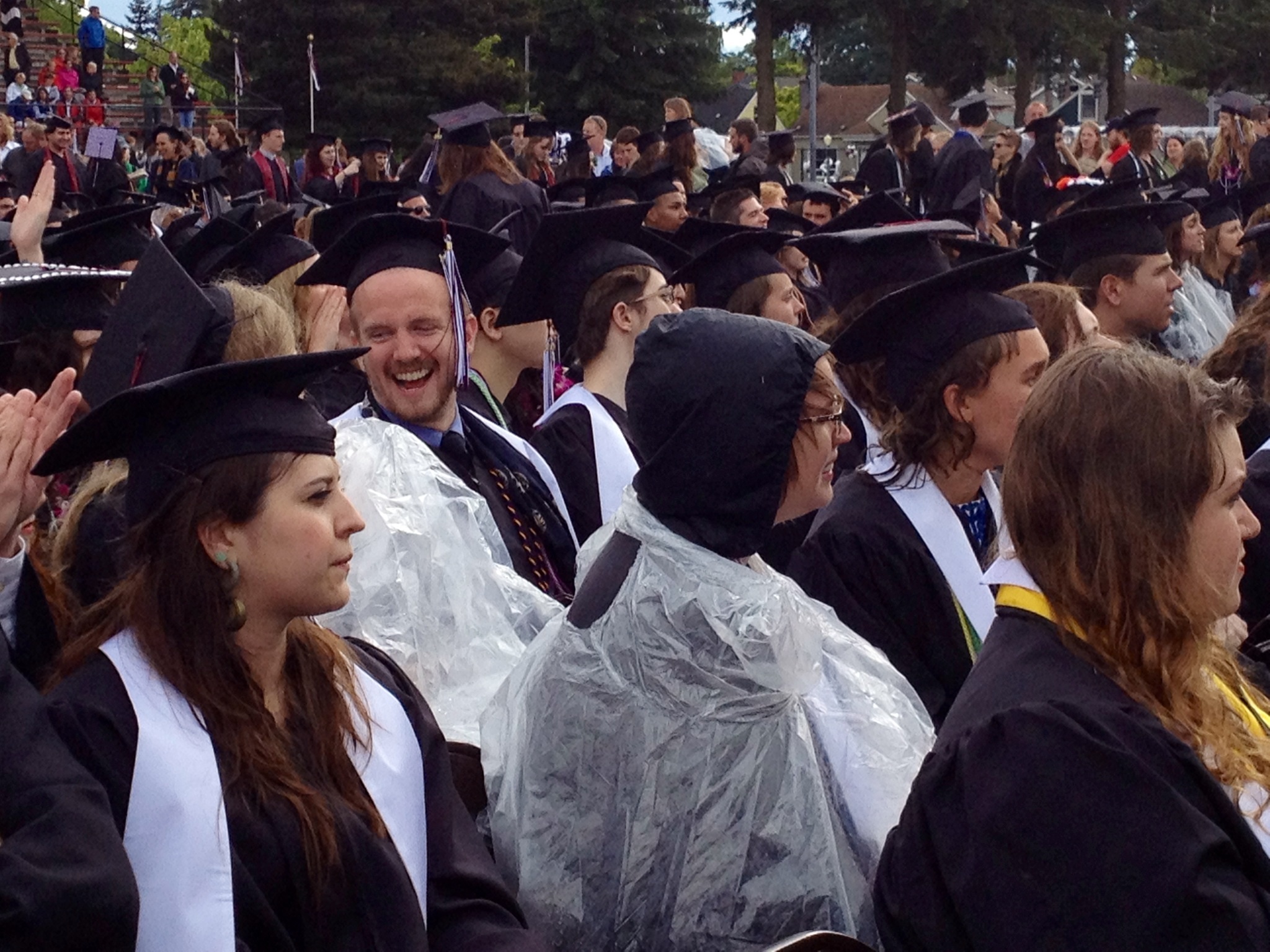
imageI wondered if I would cry — could cry — when my son graduated from college over the weekend. Water turned out to be the theme of the day.

At the interfaith baccalaureate service in the morning, where my son would sing with the Adelphian choir, a series of students shared their reflections one after another. They told personal stories, stories of coming out and trying to find a new way to relate to God and find a community, stories of hope lost and hope regained. They spoke with whatever vocabulary fit their understanding of Divine Mystery.  They sang and prayed for others.

We sat there, parents and family, faculty and staff, students and friends, listening and reflecting. For an hour, we became a community.

The morning light flooded through the chapel windows from the east, bathing my son’s face in gold. To close the service, the Adelphians sang Stephen Paulus’ “The Road Home.”

Oh where is the road that will lead me home?”

The song took me back to that day in October 2012 when my “other mother” teetered between life and death. As her children and grandchildren gathered around her bedside, my best friend and I sang that song. And as we sang, “Miss Ann” slipped to the other side, to the place where her faith guided her, where her husband and mother awaited.

Four months later, a small group sang it at my father’s memorial.

As I listened to the choir, I could almost see my mother and father hovering. Was it a daydream? Was it my heart’s longing that brought me their image? Were they really there? It felt as if they were.

The dam burst, and I cried. My stomach pulsed with withheld sobs as I cried tears of joy for my son’s safe passage, of happiness for the moment of reunion with my parents, of compassion for the tribulations that many of the students had experienced.

Water turned out to be the abiding symbol of the day. Rather than the typical, somewhat overly long commencement ceremony, in which one waited for one name out of more than 600, Yahweh (for it had to be the angry God of old) decided to interrupt things with an outburst of Biblical proportions.

The wind picked up as the class representative gamely soldiered on with her remarks. The skies above us swirled in a circular pattern. If we had been in the Midwest, we would have been heading for storm shelters.

Next came the rain. It did not “droppeth as the gentle rain from heaven.” Each was a swollen bubble that splattered into inch wide rings where it struck heads, blouses and trousers. Within minutes, those initial marks were obscured by rivulets from the flood that pounded the crowd on the field.

Then came hail and lightning. Running through sideways rain that rapidly filled gutters, those who didn’t leave in the initial downpour – the hardy families who were determined to hear that one name called – evacuated to the field house. We sheltered for nearly an hour before university officials made the call to resume the ceremony.

This morning, the words of “The Road Home” returned to me:

After wind, after rain, when the dark is done, as I wake from a dream in the gold of day

Through the air there’s a calling from far away, there’s a voice I can hear that will lead me home.

Rise up, follow me, come away is the call

With love in your heart as the only song

There is no such beauty as where you belong

Rise up, follow me, I will lead you home


Leave a comment

Filed under Uncategorized

My Son Is Graduating. Will I Cry?

Tommy handprint and booties

I don’t know a lot about tears. They tell you that laughing is good for you, that it can add years to your life, even help cure cancer. But what about tears? What does it do to you if you rarely cry?

My earliest memory of crying was soon after my father’s massive heart attack forced him to retire and us to relocate to Seattle. I got in trouble for something. Dad was home, and I heard the slip and snap of his belt as it slid out of his trousers. I fled to my room and wailed.

“Stop sounding like a fire engine!” my mother yelled.

I cried because I didn’t want to be punished. I cried with rage at the injustice of it all. I cried because inside me was a great knot of feelings: grief over the death of my grandmother, shock over the jarring moves from familiar Maryland to foreign Honolulu and then overcast Seattle, fear that my father could die from a second heart attack, and profound loneliness because I was lonely.

Oh how I cried.

Eventually I got the message. I wasn’t supposed to cry.

My parents were of hardy western stock. Mom, only child of a short, scrappy attorney, learned to drive at 11 years of age so she could accompany her father while he hunted on the benches around Boise. Given his blood pressure problems, there was always the possibility she might need to drive for help. Dad grew up in Yakima under a “severe” father – his words — in a household where shit rolled downhill. His father criticized the eldest brother. The eldest took it out on Dad. His was the kind of family home where children were seen and not heard. His mother behaved civilly — as people would expect of the daughter of the town’s “grand old man” — while her husband left each night to sleep with his mistress. An open secret.

When bad things happened, my mother was unshockable. It wasn’t just that she was unflappable. It was as if a switch was flipped and she went into sergeant mode. She dealt with it — whatever it was — without fuss.

She expected the same of me. My brothers, all older, knew the rules without being told. They were the sons of a hunter, sons of a Marine.

Somehow I thought the rules would be different for a girl. I felt different. I wanted to share my enthusiasm, my indignation, my pain. I wanted to be held and comforted.

Rather than provoking sympathy, my expressions of emotion exasperated my mother (she would say outbursts). In early grade school, she would let me lean against her for a while — but only a while — before eventually complaining, “Stop clinging.” Mom was a big believer in shaking things off. Her biggest hero was her grandmother, who lived into her hundreds and was famous for her advice about illness, “Just make up your mind and shake it off by morning.”

Mind over matter.

I don’t mean to whine. (See? I had a pop up message in my head that said, “Quit whining.”) Or to blame my parents for being the stoics that they were. Stoicism has a lot going for it. Stoicism got Mom through the loss of her father while she was still in college, supported her through WWII, and saw both Mom and Dad through the loss of their daughter to leukemia.

This whole topic came up because I’ve been really mushy the last 24 hours. (Mushy? I know. It’s hard not to be pejorative.) I was looking for an old piece of family memorabilia and stumbled across a plaster mold of my son’s handprint and his first pair of real walking shoes. I almost lost it.

You see, he’s graduating from college tomorrow.

When I posted a picture of my find on Facebook, a friend advised, “Be sure to take tissues tomorrow!”

I wondered, will I cry? It’s not that I avoid crying. I simply can’t.

I’m not the family crier. My husband is. When we go to a movie with any kind of emotional moment, my daughter and I look over to him to see if he’s tearing up. He usually is. My husband comes from a whole family of criers. My best friends are criers. My children are criers.

When I was in therapy as a young mother, my homework assignment was to let the feelings in, to sit with sadness, to let myself cry. Crying, for me, took effort. When I finally would cry, it was as if the dam broke. I couldn’t stop.

So I wonder, will I cry?

I can feel my heart threaten to explode out of my chest. My son has overcome some really awful stuff to take that walk across his commencement stage. At times, in the past two years, I have felt as vulnerable as a new mom looking down at that gentle baby who looked in awe at the world around him. Wondering, how did this miracle happen? Will I be able to give him what he needs and keep him safe?

I don’t know if I will cry. I’ve been well trained. But I can tell you my heart is cracked open, hovering outside my body, waiting for tomorrow.

2 Comments

Filed under Uncategorized

Caregiver Love Stories

Rick and Marianne Rayburn (photo: Capital Public Radio)

Rick and Marianne Rayburn (photo: Capital Public Radio)

I just finished listening to the premiere of Capital Public Radio’s multi-media documentary series looking at the lives of family caregivers, aired in its slot, “The View From Here.” If you missed it, it airs again tonight at 8 p.m. (listen live here).

Our local NPR affiliate chose to name the special, “Who cares?”

That provocative title was chosen in recognition of the financial, physical and emotional strains that an estimated 65 million Americans face as family caregivers.

I’ve been a family caregiver, and I know two — right now — who are dealing with the kinds of challenges the special describes. I won’t kid you. This special does not pull its punches when describing the hard, day-in, day-out grind of caregiving for children, parents or spouses who are unable to care for themselves. As caregiver Rick Rayburn put it in his interview for the special, “It’s like Groundhog Day every day…”

The special asks an important question, “Who cares for the caregivers and what are they doing to care for themselves?”

Rick’s story really struck me. In it, I could hear echoes from both of my friends who are caregivers right now. For several years, one has been caring for her husband at home; her husband was diagnosed with Alzheimer’s more than 10 years ago. On Monday, he was admitted into hospice, recognizing his accelerating decline and weight loss. The other is also a spouse-caregiver, but a husband who is caring for his wife after a rare disease caused her to have six strokes in a row last summer, at just 60 years of age. Both are loving and devoted spouses, but man, what they are doing is HARD, and they do it largely alone.

In the radio series we meet Rick Rayburn and his wife, Marianne, who contracted a viral brain infection two years ago, and ended up in coma. But even before the encephalitis, the family had noticed signs of dementia. She is able to walk and talk, but has virtually no short term memory, needs to be guided through daily tasks, and alternates between reality and fantasy.

Rick says, “I’m 100% responsible for her wellbeing.” Sometimes, perhaps after he lays out her clothes for the day, she will say, “I don’t know who you are.” “I can run out and empty the trash cans,” Rick says, but he worries about staying away for more than a short period.

Meanwhile, he is facing health issues of his own — light headedness and dizziness that doctors have not been able to explain. He recognizes that his ability to care for Marianne depends on his ability to keep going. He tries to go to the gym and wishes he could go for a run, but when he does, fatigue and vertigo get in the way. When he cannot, he is self-critical.

This caregiver story shines a light on one of the hardest aspects of caregiving: isolation. Rick has a great family, but their network of friends has slowly melted away. It’s a practical problem — as a caregiver, you just can’t get out much — but it also has to do with avoidance by others, and their discomfort with the changed reality.

Rick explains: “Less frequently, people are asking, ‘How are you doing?’ This sucks when  you lose your wife or your best friend. It’s hard to relate to people… in a way that doesn’t turn them off. …Sometimes you don’t see people you used to see. …I’ve read that caregivers die before their patients, generally speaking. The kids are going, ‘whoa.’… My daughter wants to know how I am doing, both physically and mentally. She’s the one person I talk to about the difficulties I’m having.”

The radio special included a taped conversation between Rick and his daughter, in which he describes an unpleasant incident earlier in the week. Marianne was trying to go out the front door to wherever she thinks is home.

“She gets kind of entrenched,” Rick told his daughter. “I hollered at her. … You feel kind of helpless at moments like that…. It’s one of those things that degenerates…. She gets mad and gets her stuff, and I have to take her stuff away… She doesn’t want to be with me. I have to go grab her on the porch. That’s atypical. The evenings have been really good.”

His daughter says that she is most worried about her Dad. I know what she means. With my two friends, I know their loved ones are as comfortable as they can be, even happy most of the time. They’re doing a great job of providing loving care. I worry most about them. She says, “He’s doing the best he can. I worry that he’s wearing  himself out… And it’s lonely, it’s really lonely.”

Rick talked about the erosion of friends. I’ve heard from family members of head trauma survivors that most of their loved one’s friends can’t adjust to the changed person. “You just wish that good friends of Marianne would drop by every now and then,” Rick told the interviewer. After a brief visit by some friends, Marianne stood on the porch and waved to them. “She said, ‘Thanks for coming, guys.’ It was so heartfelt. I appreciated that they came by. It was something so simple. That moment just struck me so much, how important that was to her…. It is human nature, things begin to fall off. It’s sad to see that happen. What you need to do and I need to do is make those things happen.”

Rick’s mission is “to make every day a good day, despite dementia.” I see my friends trying to do the same thing. “Rick is on his toes all the time, just to keep her in the present,” comments Rick’s daughter, “He is now Marianne’s tether to reality.”

Somehow, when I was a caregiver, I kept going. Even at times that I felt I was crumbling. I see my friends doing the same thing.

How do caregivers keep going? They pray, they accept help, they give themselves pep talks. Rick notes “there are the moments you get really sad. Then you say, ‘let’s get with it. Quit feeling sorry for yourself…. stick with it’. Oddly enough, it does work. It takes you back to ‘this is the deal’ and it’s too bad, but this is the deal.” Another clip of the interview with Rick had this: “With change there’s an upside and a downside… knowing that you will get through it. That’s done a lot to ease the anxiety in this whole deal.”

The other stories are also well worth listening to. Believe me, they will make you count your blessings.

Loretta Jackson cares for both her father, who has dementia, and her sister, who suffered a stroke and is severely disabled. She says she does what she just has to do. She says her doctor tells her, “Quit stopping em, sit back, accept the help.” She admits, “I had to learn how to accept help from others.”

The Lees are parents of Justin, a 16-year-old boy who was born with a brain abnormality that resulted in cerebral palsy. He is nonverbal, has seizures, can’t use his limbs, and is gastric tube fed. He can give a long eye blink to indicate “yes.” Justin’s disabilities are so severe that he would need institutional care if not at home. His parents are deeply committed to making his life as good as it can be, and keeping him at home.

Toward the end of this morning’s piece, Rick tells the interviewer, “Your love doesn’t change,” noting that he and Marianne have been married for 42 years. “Changed as she is she’s still a wonderful person, and thank God she’s still with me.”

Full length stories can be found on Capital Public Radio’s website, which also lists resources to help caregivers (and those who love them).

Author’s note: I typed quotes as fast as my little fingers could go. My apologies if I didn’t capture every quote perfectly. Hat tip to my Dad, who made me take typing in case I ever needed to support myself. Grin.


Leave a comment

Filed under Uncategorized

My Oldest Bestie Visits


How I looked when I met Ellen

How I looked when I met Ellen

We’re grown ups now, and yet we’re not. My oldest best friend flew down to California yesterday and we quickly fell into the bubble that is our friendship. And shed about 40 years.

Ellen said, “I was braver with you. There are lots of things I never would have done if I hadn’t had you in my life.”

Funny. I remember it the other way around. I wasn’t a popular teen with lots of friends. I was friendly with lots of people but that’s different than the kind of friend you tell everything, and who probably knew it before you said it anyway. We were Tina Fey and Amy Poehler except for the funny part. (We were funny to ourselves, but no one else seemed to get what we were cracking up about.)

We did some truly embarrassing things, shored up by friendship. When Ellen ran for class secretary (something I wasn’t brave enough to do, though I disguised it as disinterest), our skit consisted of singing “Hey Big Spender,” altered to promote spending a vote on Ellen. When Ellen’s vocal talent made her a shoe-in for a big role in “No, No, Nanette,” I had to audition, too. Turns out I am pretty wooden on stage, but I could swish my hips well enough to punctuate my one line as a 20s floozy, “I’m Betty. Betty from Boston.”

Over it all, our fathers watched in mild amusement. With our mothers, we had that mother-daughter thing. We know they loved us deeply, but they were annoyed with us most of the time. Ellen’s mother once grounded her for a month for failing to unload the dishwasher. (The injustice! I’m still mad on her behalf.)

Ellen’s Dad, Terry, was the first of our parents to go. He was my “other father,” and losing him to cancer was a terrible blow. Two months later, my Mom was diagnosed with lung cancer. They died seven months apart. Last year, Ellen’s Mom and my father died within three months of each other.

Now we are orphans. People say that you’re never completely an adult until both of your parents have died. Only your parents knew who you were from the very beginning. And their quirks, talents, mannerisms, and appearance are baked into you.

We’re grown ups, and yet we’re not. Because when I am with my bestie, my sister wife, I shed my maturity. I am back to being the unsophisticated, not-truly-confident girl that used to lie next to my friend on my gigantic antique four poster bed, talking the night away. With Ellen, I can just be me, and I know she’ll love me unconditionally, as I love her.


Leave a comment

Filed under Uncategorized