Monthly Archives: August 2014

Going The Distance

Dad on January 8, 2012

Dad on January 8, 2012

On a good night, when the wine was flowing and we were gathered as a family around the dinner table, my father told jokes. My brother Bruce and I were given to puns of the worst sort, and for a time I specialized in the foul humor I picked up from the ad agency where I worked, but Dad was the family story teller. One of us usually handed him a cue, a short sidelong reference like, “There’s a pony in there.” Off to the races he’d go.

He straightened, there at the head of the table, and made eye contact with his audience as if to ask if we really wanted to hear that old story. His pause, his expectant look, was all he needed to gather us in.

There was one about the boy who found a strange spotted creature he called a “rarey” that began to grow so fast it threatened hearth and home, prompting the boy to load it in a truck and attempt to drop it over the edge of a cliff on a high mountain peak. The punch line? “That’s a long, long way to tip a Rarey.” (Insert groan here.)

But my favorite was the one about the optimist and the pessimist.

He avoided the usual start. No “once upon a time.” My father launched right into the action of the story, setting the stage. In the setup for the optimist and the pessimist, he described a family’s problem with a pair of twins. One looked on the bright side of everything, so much so that he could imagine no problem that could not be surmounted or that wouldn’t dissipate all by itself. The other saw only gloom and doom, and no matter what wonderful opportunities arose, he felt he was sure to fail. The parents decide to engineer a resolution by giving the optimist truly terrible Christmas presents and the pessimist, truly wonderful ones. The story ends with the parents standing by, confounded, while their optimist son gleefully digs in a huge pile of horse manure, exclaiming, “There must be a pony in here somewhere!”

My father loved to tell stories, but in the end, he left me a riddle. My father, who was doled out more than his fair share of dung in life, never gave up, never became bitter, never stopped believing in the possibility that things would get better. While many people become curmudgeonly as they age, he became gentler. Why? What drove him?

If my mother had her druthers, the answer would be faith. Her faith sustained her through the loss of her father while still in her twenties, the war, the loss of her daughter to leukemia, the death of her mother, and the long frightening years of my father’s struggle with heart disease. Resting on the levee of the river during one of our many walks, I asked my father if he believed in God. I wanted to hear him say yes. I wanted that little bit of reassurance that, when the time came, he would be welcomed into heaven to join my mother, even as the little doubter in my own mind wondered if that’s what really happens after we die. “I wish I could believe,” he told me. He just couldn’t make the leap from concrete reality to ephemeral faith. The closest he ever came to saying he believed in an afterlife was to say he looked forward to seeing my mother again.

Perhaps it was love that fueled him. Love, to my father, wasn’t about what you said, it was what you did. His place in the middle of three sons, with an emotionally abusive father and a bully for an older brother, had a lasting effect on his dedication to others. My grandmother lived out her last years in a convalescent home in our community. After he ate with us, my father took her dinner every night. I’ll be honest. I didn’t like my grandmother, and she didn’t like me (she thought I was entirely too outspoken, my father confirmed much later). Why my father would want to spend time with such a sour old woman I couldn’t understand. But in his last years, I saw my grandmother as my father saw her: she was a gentle woman trapped in a loveless marriage with a philandering egotist. I remember how her face softened, how something flickered across her features, when my father spoke to her. His nightly visits were driven by more than filial duty. They were borne out of love.

Or maybe it was hope that kept him going. Within a week of his death, he still believed he could recover his strength, if he just got out there and started walking again. Anthony Scioli, a professor at Keene State College in New Hampshire, has been investigating the link between hope and health. Writing in Spirituality & Health magazine, Louise Danielle Palmer summarized his conclusion, that “…hopeful people tend to be more resilient, more trusting, more open, and more motivated than those less hopeful, so they are likely to receive more from the world, which in turn makes them more hopeful.”

I’ve used a lot of trite quips to explain my father to others. “Like a Timex, he took a licking and kept on ticking.” His health challenges alone would have flattened most men: three heart attacks, three open heart surgeries and three strokes.” While we were growing up and he still had our college educations on the horizon, I know he felt he had to recover. He had to provide. That was duty. But how do you explain his dedication to come back from strokes after my mother died, after his duty was discharged?

He did it a step at a time. With the help of a physical therapist, he learned to concentrate on swinging his weaker left leg and striking with his heel. He had to think about each step to avoid stumbling. When he was in acute rehab at the UW Medical Center, I remember how proud of himself he was when he demonstrated the new skill he had relearned with the occupational therapist: he made me a cup of instant hot cocoa. Even now, when I write about it, I cry. To be so reduced by a stroke that completing the steps – take out a cup, fill it with water, microwave it, pour in the cocoa and stir – was an accomplishment. It could have been humiliating, but it wasn’t. It was a milestone. A good day. The medical professionals predicted he would be wheelchair bound; then they revised it to “he’ll never walk independently without a walker.” But he did. For years, he just used a cane.

Every day on our walk, he set a goal. Sometimes it was to make it no farther than the third driveway down. He felt the load in his chest, was breathing hard, but he rarely stopped short of his goal. When I said that most people would quit when they started to feel the strain, he simply said, “Every day I try to go a little farther.”

My father went the distance.
Leave a comment

Filed under Uncategorized

Break In

Theft

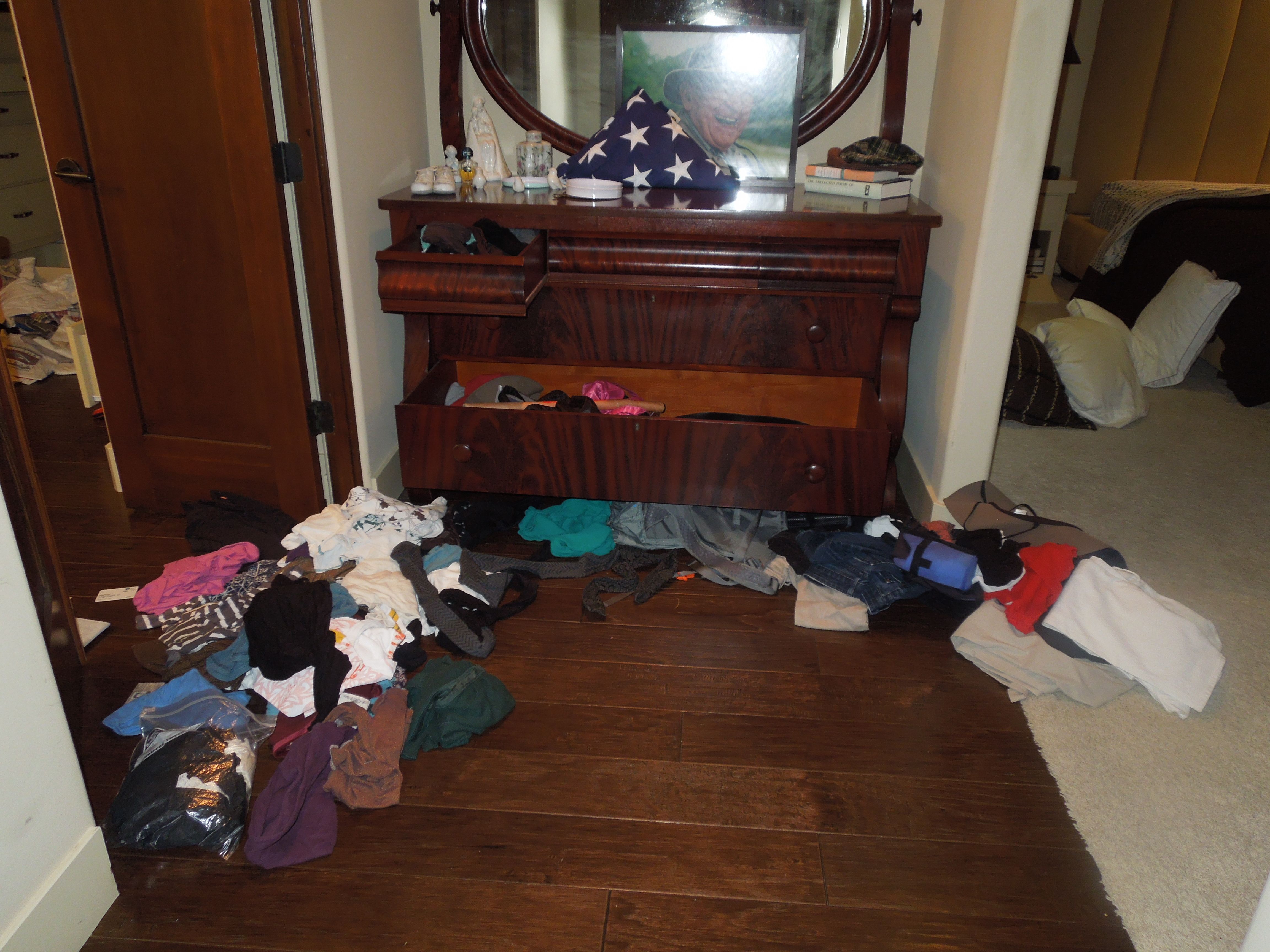
One kick to the door was all it took. My first thought when I saw the splintered door frame was: thank God my son wasn’t home; he would have slept through the noise. The CSI detective showed me how they entered by shining her light down the surface of the front door: the clear print of a boot. Waffle stompers we called them in college. “That’s exactly where you kick,” she said.

The thieves who came in the night took their time, dumping drawers, opening cabinets and sorting through my jewel boxes. Things were strewn throughout the house. A Mexican five peso bill from my husband’s bathroom drawer was next to the dining room curtain. A stained pillow was lying next to it.

I thought (with some satisfaction) that it couldn’t have been a very gratifying haul for them. I keep the little good jewelry I have in a safety deposit box. The burglars went to the trouble of removing two wall-hung TVs. The TVs were eight years old and worthless. They took a huge silver plate serving tray that I’ve never used; new “princess” trays sell online for about $75.00. No prints, the detective said, they even used a new kind of glove that left no smudges. They were pros.

I thought (with some relief) that they didn’t break anything. The old Chinese tea caddy that I use for a jewel box was on the floor, drawers emptied but undamaged. They could have vandalized things just for the hell of it, dumped condiments from the refrigerator, graffitied the walls.

I thought (with effort) that it was just stuff. While rushing home, my friend called with the news that her husband had just passed away. I had been with her most of the week while he lay “actively dying.” For eight days, he had been unable to take in liquids. For seven days, he had been in a hospital bed, lying in that state that hospice calls “transition.” I remember “transition” from giving birth; with this version there’s no happy ending.

After CSI left, I went to see my friend, then came home and fell asleep. I awakened some time later. I thought I heard a thump through my husband’s open window. Had someone hopped the fence? I listened, willed myself awake. No sound, not even crickets. Had the crickets been startled into silence?

I drifted. The image of my grandmother’s pendant watch floated before me. My mother’s mother – I called her Nana — died when I was five. I entered her bedroom after my afternoon nap, expecting to find her resting, too. I couldn’t awaken her. My mother hurried me out of her room while she called our neighbor the doctor. Nana had always been a gentle presence. I remember her softly curled gray hair. Her soft lap. Everything about her was soft. The edges of her frameless glasses caught the light and sparkled around her eyes. I have two things that were hers. Correction: had. I unconsciously looked toward my dresser for one when I approached my bedroom after the break in: my grandmother’s jar of potpourri. It was untouched — a white porcelain jar painted with a delicate pink chrysanthemum, a red-and-white morning glory and a tuxedoed magpie. I lifted the lid and inhaled. The scent of summer roses wafted across sixty years. I didn’t think about her watch then, the round ball with tiny face. It was enameled with tiny pink flowers against a turquoise background. Throughout my childhood, when I stood by my mother as she chose accessories for an evening out, I took it out of her jewel box and let the links trickle into my hand before I dropped the cool globe into my palm. When my daughter was young, she would hold it and ask me to tell her about my Nana. The watch would have gone to her.

My nights are still like this: I fall asleep reading and rouse with the memory of something I will miss. A sterling spoon engraved “Ella’s baby.” That was my Nana. The gold butterfly necklace my father gave me. My mother’s silver earrings with the dangling bells that tinkled when she moved her head. The things that connected me to those who came before.

1 Comment

Filed under Uncategorized

An Anniversary Tale

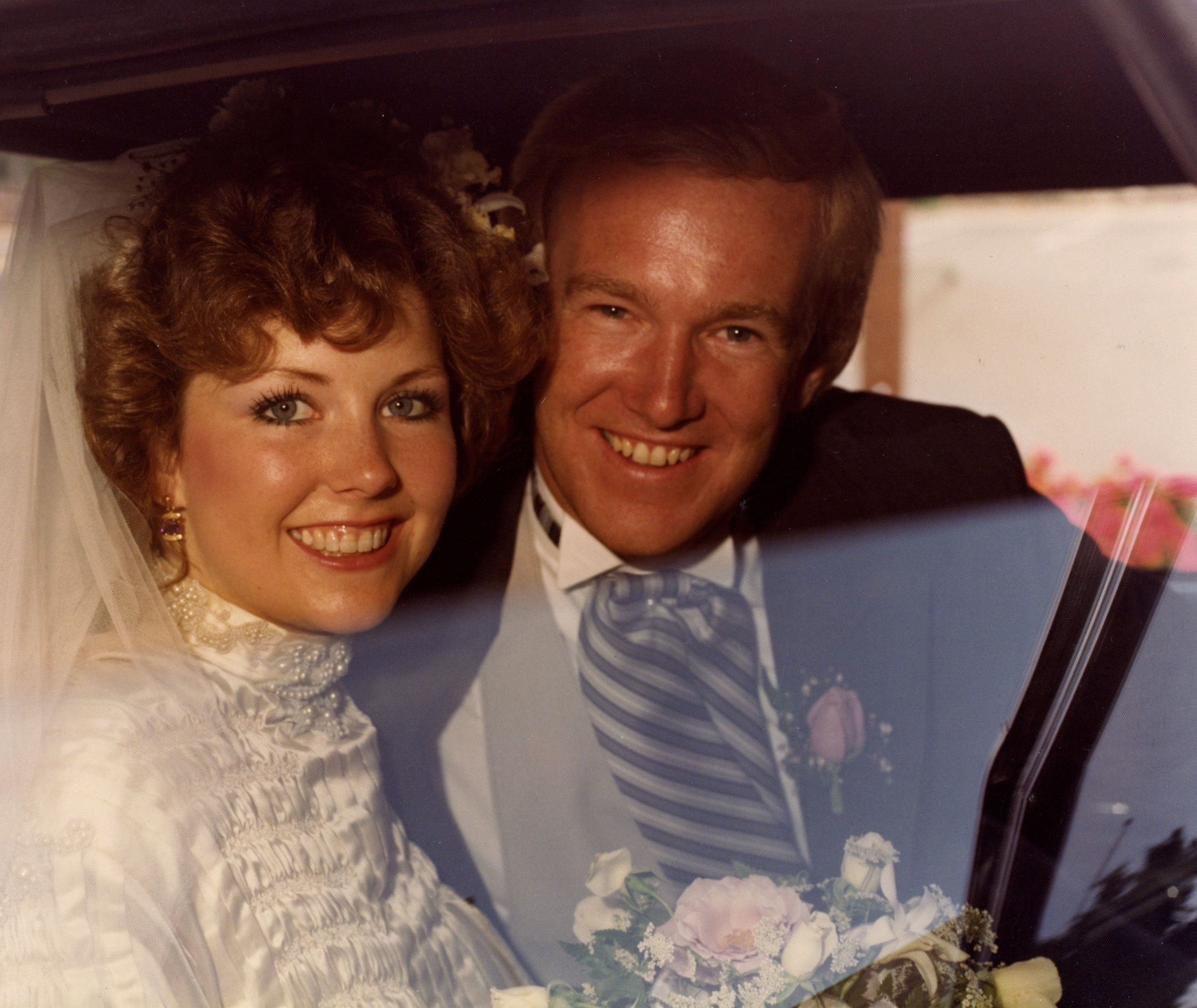
The happy couple - wearing a 1906 wedding dress and tux in 100+ degree heat!

The happy couple – wearing a 1906 wedding dress and wool tux in 100+ degree heat!

A few minutes ago I saw my classmate’s post after she received her first feedback from her advisor since beginning our graduate writing program. Within the space of minutes, she reported that went from feeling curled in a fetal position to feeling Determined.

After my first workshop at graduate school didn’t go so well (the most favorable comment was “weird but interesting”), someone at home asked me if I was going to continue. Well, of course! It’s not so much that I’m a when-the-tough-get-going kind of girl, but that I’m a tell-me-what-I-can’t-do-and-I’ll-try type.

This characteristic has led to some stunningly stupid outcomes. When I was in fourth grade, my brother told me I wasn’t brave enough to jump off the roof where it was two stories high. Well, of course I was! It worked out well for him and for me: he got a chance to practice his Boy Scout first aid skills and I got street cred with my brother.

In the still-early years of my career, I was told I shouldn’t apply for a promotion because I was pregnant. Well, of course I would! Though I didn’t regret it in the long run, I would never advise someone to take a new job when six months along.

Trouble arises when my narrative collides with someone else’s. For example, my husband’s. About nine months after the birth of our first child, we talked seriously of continuing our family. He had waited eight years for his sister, and he believed that having a sibling was a good and a joyful thing. Then I returned home from work one day, fresh from my performance review, and announced to my husband that I’d made a decision. He looked at me expectantly. I’m going to get my M.B.A., I told him enthusiastically. Dead silence. He had his own story arc in mind: happy couple marries, happy couple has some time to enjoy their freedom before settling down, happy couple starts family, happy couple has baby number two within three years (three years seen as ideal spacing), and the family is complete. We were telling different stories to ourselves.

Here is why this is an anniversary story. Today, my husband and I have been married 32 years. Looking for something else over the weekend, I found the notebooks into which we wrote our hopes and fears when we attended an Engaged Encounter retreat four months before our marriage. He wrote of his hopes for five years out, “I want to raise a family with you, badly. To nurture, protect, and to love.” I was a little more tentative. I wrote, “I’d like to be about ready to have our first.”

Marriage and family hadn’t been part of the stories I told myself in my early 20s. It was the Seventies, and I was Going Places. Then I met Todd. I couldn’t imagine life without him, and my narrative changed. I’ve always been the type that opened door number one without much idea of what might lie behind it. When he proposed — complete with a fake plane ticket made out for Mr. and Mrs. Todd Stone to Hawaii — I said yes. Here I come, I said, and there I went.

I wasn’t prepared for marriage. I didn’t know how the story would unfold. I called him “my puppy and my knight in shining armor” when I wrote my betrothal pledge at age twenty-four. (Yes, I really used those words.) Deciding to say “yes” to my love’s proposal was the scariest thing I ever did. And the wisest.

I wrote that I wanted to be “sensitive, supportive, vulnerable, loving, protective, and broad shouldered.” Turned out that my husband was. Every time that I suddenly changed the story line, he wove himself right back in to the narrative.

My story would be incomplete without him.

Dear knight in shining armor: you still are.

6 Comments

Filed under Uncategorized